By Oke Peter
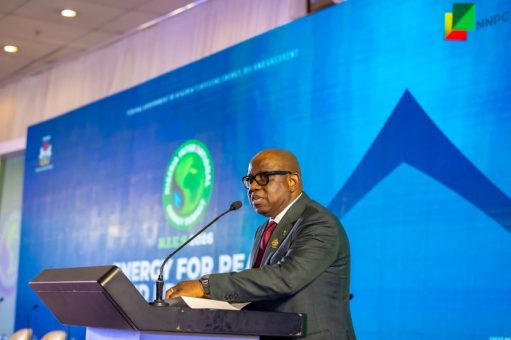
The decision by the Group Chief Executive Officer of the Nigerian National Petroleum Company Limited (NNPC Ltd), Bayo Ojulari, to suspend operations at Nigeria’s state-owned refineries has sparked national discussion. Speaking at the Nigeria International Energy Summit (NIES), Ojulari explained that the move was a deliberate and economically responsible step aimed at protecting public resources and repositioning Nigeria’s refining sector for long-term sustainability.
Ojulari said an extensive internal commercial review showed that continued refinery operations under the existing framework were eroding value and placing an unsustainable burden on national finances.
“Our responsibility is to safeguard Nigeria’s resources,” he said. “Operating assets that consistently destroy value is not in the national interest.”
Nigeria’s four government-owned refineries—two in Port Harcourt, one in Warri, and one in Kaduna—have a combined installed capacity of 445,000 barrels per day. However, for many years they operated far below capacity, consuming significant funding while delivering limited output.

According to Ojulari, maintaining operations merely to demonstrate activity, without a realistic path to profitability, was neither prudent nor sustainable.
“When an asset converts crude into lower-value products while costs continue to rise, it becomes a drain on the economy,” he noted. “Sound leadership requires tough decisions.”
Between 2010 and 2023, the Federal Government invested more than ₦11 trillion in refinery rehabilitation and turnaround maintenance. Despite these efforts, Nigeria continued to rely heavily on imported petroleum products, exerting pressure on foreign exchange reserves and exposing the economy to global supply disruptions.
Ojulari explained that while Nigeria’s refineries performed strongly in earlier decades, structural shifts over time weakened in-house operational capacity and maintenance culture. In this context, the 2025 decision to halt refinery operations represents a strategic reset — one designed to stop ongoing losses and lay the groundwork for a more resilient refining model.
He acknowledged public frustration but emphasized that leadership requires honesty and fiscal discipline.
“Leadership is not about preserving broken systems for appearances,” Ojulari said. “It is about stopping the losses, reassessing the model, and rebuilding properly.”
He stressed that the shutdown should be seen not as a setback, but as an act of responsible governance.
“This is not failure,” he said. “It is discipline. It is transparency. And it is the first step toward doing things the right way.”
Ojulari also highlighted the role of the Dangote Refinery, describing it as a significant national asset that has provided Nigeria with strategic flexibility.
“It is a Nigerian refinery, built in Nigeria and operating in Nigeria,” he said. “Its presence gives the country the breathing space to rethink how best to optimize its own assets without risking fuel shortages.”
Looking ahead, Ojulari outlined a new strategic direction for Nigeria’s refinery assets, noting that refineries must be managed as long-term commercial businesses, not short-term projects.
“To succeed, you need financing, strong engineering partners, and world-class operational expertise,” he said. “Historically, we emphasized the first two. Now we are correcting that imbalance.”
Under the new approach approved by the NNPC board, Nigeria will seek partnerships with experienced global operators who can bring capital, technical expertise, and long-term operational accountability.
“We are not selling Nigeria,” Ojulari clarified. “We are strengthening Nigeria by bringing in partners who have real stakes in success.”
He added that international interest is already emerging, with several major petrochemical firms inspecting the assets.
For Ojulari, the reform marks a clear departure from decades of inefficiency.
“This is the end of a system that benefited from dysfunction,” he said. “Nigeria is choosing value, accountability, and a sustainable future.”