By Oke Peter
The Africa Energy Forum (AEF) 2026 opened in Cape Town on Tuesday with a strong focus on accelerating electricity access, mobilising investment and building the infrastructure needed to power Africa’s industrial future.
Held at the Cape Town International Convention Centre (CTICC), the four-day gathering has attracted hundreds of policymakers, investors, utilities, developers, financiers and technology providers from across the continent and beyond under the theme “Building Africa’s Industrialised Future.” More than 448 speakers are expected to participate in discussions throughout the forum.

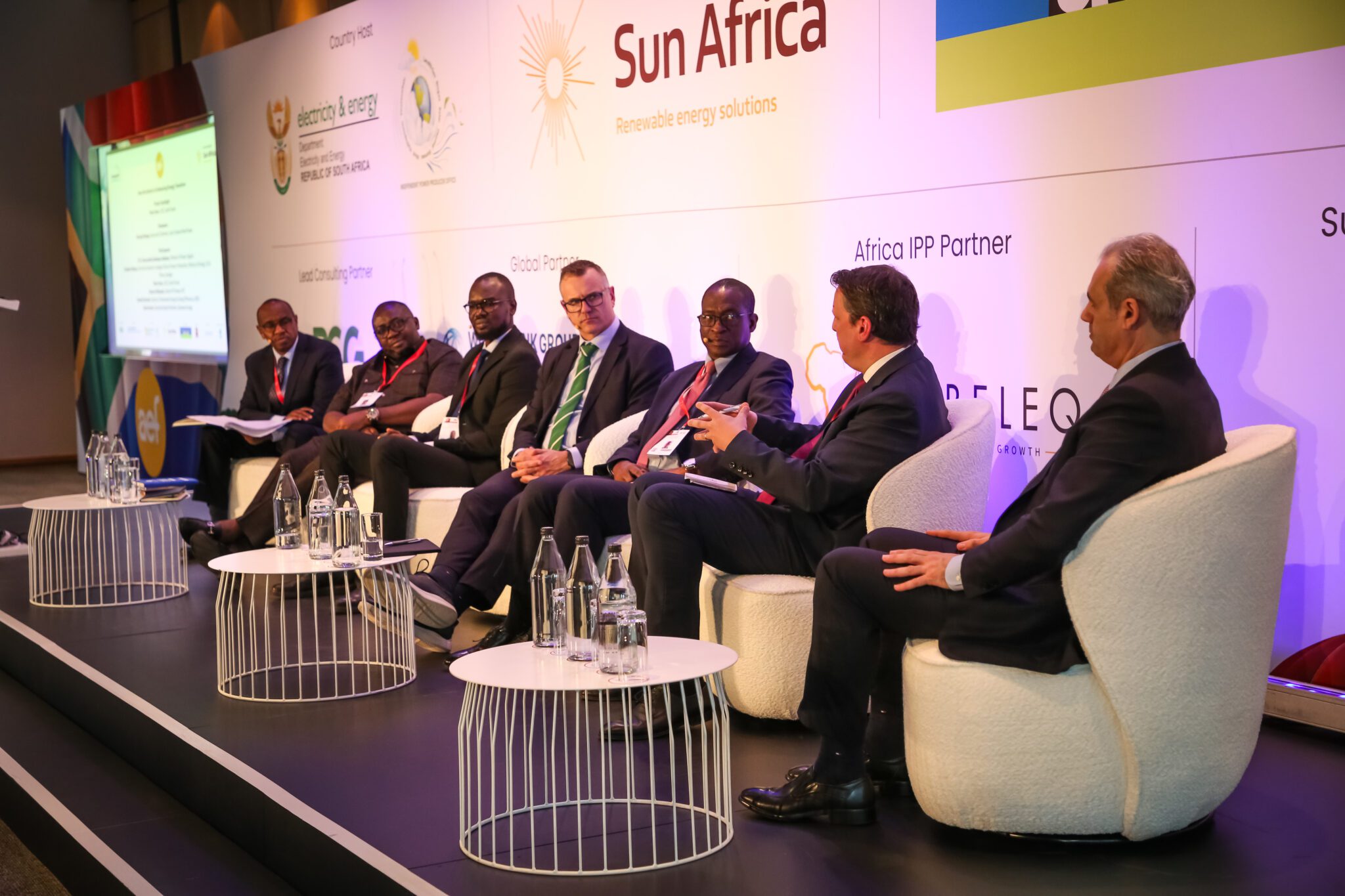
•Energy stakeholders discussing during a session at the event.
The opening plenary set the tone for the event, with delegates emphasizing that Africa’s next phase of development will depend on reliable electricity, stronger transmission networks, regional power integration and greater private-sector participation in energy projects. Discussions highlighted the need to move beyond energy access alone toward energy systems capable of supporting manufacturing, mining, digital infrastructure and broader economic growth.
A major talking point on Day One was Mission 300, the joint initiative of the World Bank Group and the African Development Bank aimed at connecting 300 million people in Sub-Saharan Africa to electricity by 2030. Delegates noted that the programme is gathering momentum as governments, financiers and development partners align investments around grid expansion, mini-grids and standalone solar solutions. Mission 300 was presented as a critical vehicle for reducing Africa’s electricity deficit, with nearly 600 million Africans still lacking access to power, representing about 83 percent of the global energy access gap.

Several sessions focused on financing Africa’s energy transition, with investors and lenders discussing innovative funding models capable of unlocking large-scale infrastructure projects. Speakers stressed the importance of blended finance, risk-mitigation instruments and bankable regulatory frameworks to attract long-term capital into generation, transmission and distribution assets.
The forum also featured discussions on the growing role of critical minerals in Africa’s industrialisation agenda. Participants examined how countries can leverage their mineral resources to create local value chains while simultaneously expanding electricity infrastructure needed to support processing and manufacturing activities.

Transmission development emerged as another key theme, with stakeholders highlighting the urgent need for regional interconnections and stronger power pools to improve energy security and facilitate cross-border electricity trade. Discussions underscored the importance of long-term planning and investment pathways that can unlock greater regional integration and strengthen electricity markets across the continent.
Renewable energy, gas-to-power projects and grid modernisation also featured prominently in Day One conversations. Industry leaders argued that Africa will require a diversified energy mix to meet growing demand while maintaining affordability and reliability for households and industries.
Beyond the conference sessions, the opening day witnessed a flurry of bilateral meetings, investment discussions and networking engagements among governments, utilities, development finance institutions and private-sector players seeking to advance energy projects across the continent.

As delegates wrapped up the first day, the message was clear: Africa’s energy conversation is increasingly shifting from ambition to implementation. With electricity demand rising rapidly and industrialisation at the forefront of national development plans, stakeholders used Day One of AEF 2026 to push for practical partnerships, stronger financing frameworks and accelerated project delivery capable of transforming the continent’s energy landscape.