By Oke Peter
Nigeria and other African countries are projected to attract more than $50 billion in energy investments this year, driven by renewed global interest that is strengthening the continent’s position in the evolving energy landscape, the Nigerian Upstream Petroleum Regulatory Commission (NUPRC) has said.
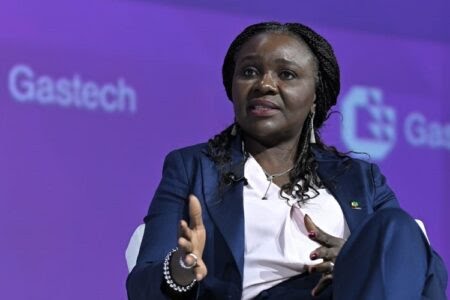
The Chief Executive of the Commission, Mrs Oritsemeyiwa Eyesan, disclosed this while welcoming delegates to the 2026 Sub-Saharan Africa International Petroleum Exhibition and Conference (SAIPEC).
According to her, Africa’s share of global energy capital expenditure has risen significantly over the past three years, signalling a strong recovery in investor confidence. Of the estimated $520 billion projected for global energy capital investment this year, Africa is expected to attract between $48 billion and $50 billion—representing over eight per cent of the total.
She noted that this marks a sharp improvement from previous years when the continent accounted for less than four per cent of global energy investment.
Eyesan attributed the resurgence to renewed exploration and production activities in countries such as Nigeria, Namibia and Mozambique, as well as other prolific African basins. She added that while the trend presents significant opportunities, it also places greater responsibility on African nations.

“This momentum reflects renewed confidence in Africa’s energy potential. However, sustaining it will depend on our ability to attract and retain capital, deploy advanced technology, develop our workforce, and maintain governance frameworks that are predictable, stable, transparent and rules-based,” she said.
She stressed the importance of strengthening domestic capital formation alongside foreign investment, noting that African-owned energy companies are increasingly playing a leading role in project development, particularly in Nigeria.
In this regard, Eyesan highlighted the establishment of the Africa Energy Bank, hosted in Nigeria, as a major milestone that will support long-term energy financing across the continent.
The NUPRC chief also underscored the critical role of technology in enhancing efficiency in mature basins, unlocking opportunities in frontier areas and reducing risks in complex operating environments. She called for increased intra-African technology transfer, particularly in seismic imaging, drilling techniques and petroleum operations, to ensure sustainable industry growth.
On governance and regulation, Eyesan noted that investor interest alone would not translate into final investment decisions without strong institutional frameworks. She pointed to Nigeria’s Petroleum Industry Act (PIA) 2021 as a landmark reform that has addressed longstanding regulatory uncertainties and strengthened transparency and investor confidence in the upstream sector.
As part of efforts to expand resource development, she disclosed that Nigeria has launched its 2025 licensing round, offering 50 oil and gas blocks across various terrains, and invited credible investors to participate.
Eyesan also highlighted the growing impact of regional cooperation through initiatives such as the African Petroleum Regulators’ Forum (AFRIPERF), which she said is helping to harmonise policies, promote energy justice and strengthen Africa’s collective voice on the global stage.
She described SAIPEC 2026 as a vital platform for collaboration, investment mobilisation and solution-driven engagement, urging stakeholders to leverage renewed interest in Africa’s energy sector to deliver sustainable growth, shared prosperity and long-term energy security for the continent and beyond.