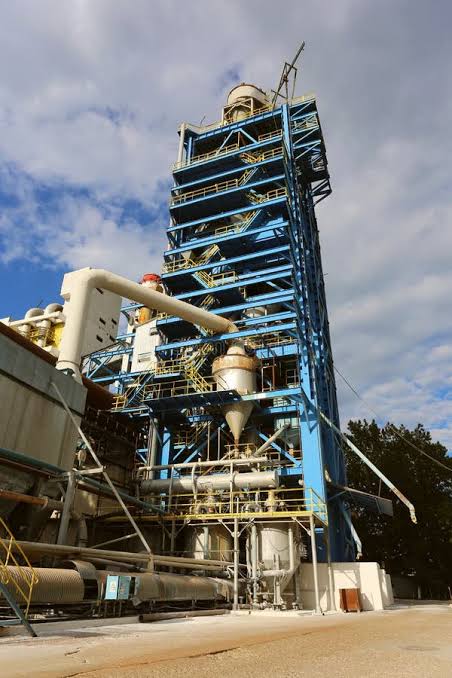
As bauxite producers shift from raw exports to high-value alumina, African Mining Week 2026 will spotlight refinery projects driving industrialization, local beneficiation and investor opportunities across the continent.
CAPE TOWN – Africa’s leading bauxite producers are accelerating a strategic shift from raw ore exports to value-added alumina production, marking a pivotal step in the continent’s industrial evolution. Although Africa holds nearly 30% of global bauxite reserves, it accounts for less than 1% of alumina output—highlighting both a significant industrial gap and a compelling investment opportunity.
With the global alumina market projected to reach $67 billion by 2032, Africa’s downstream mining sector is rapidly emerging as a key frontier for long-term growth, value retention and economic diversification.
African Mining Week 2026 (October 14–16, Cape Town) will serve as a central platform for connecting investors, project developers and policymakers with these opportunities. A featured panel, “Unlocking Refining Investments,” will explore strategies to scale refinery projects, overcome operational challenges and maximize local economic impact across the bauxite value chain.

Nigeria leads with gas-powered refining
Nigeria is advancing its first large-scale alumina refinery, backed by $1.3 billion in financing from the Africa Finance Corporation and the Solid Minerals Development Fund. The one-million-ton-per-annum facility is expected to produce 19 million tons of alumina over 20 years and contribute an estimated $1.2 billion annually to GDP.
Powered primarily by domestic gas, the project aligns with Nigeria’s Decade of Gas initiative, reinforcing the link between energy security, industrialization and local beneficiation. It also supports the government’s ambition to increase mining’s contribution to GDP from 1% to 10%.
Speaking in February, Nigeria’s Minister of Solid Minerals, Henry Alake, emphasized the shift in strategy: “We don’t want corridors exporting internationally; we want factories across borders to create jobs and generate value locally.”
Guinea and Ghana scale refining ambitions
Guinea is targeting the development of six alumina refineries by 2030, with a combined capacity of 7 million tons per year. Agreements are already in place with major industry players, including State Power Investment Corporation, Aluminum Corporation of China, Alteo and Alcoa.
Construction is underway on the first facility in Boké—a $1.2 billion, 1.2 million-ton-per-annum refinery led by Winning Consortium Alumina Guinea.
Ghana is also advancing plans to build between 4 and 6 million tons of annual alumina refining capacity through partnerships with Mytilineos SA, strengthening its push for local beneficiation.
Meanwhile, Canyon Resources is progressing a feasibility study for a refinery linked to its Minim Martap project in Cameroon, with results expected in Q3 2026.
A strategic opportunity for investors
Together, these developments reflect a broader continental shift toward capturing downstream value in the mining sector. Alumina refineries not only enhance export revenues but also create skilled employment, stimulate local supply chains and attract sustained foreign investment.
By integrating energy infrastructure, industrial policy and mineral processing, these projects have the potential to transform bauxite-rich nations into competitive regional manufacturing hubs.
African Mining Week 2026 will play a critical role in advancing this agenda—facilitating deal-making, fostering partnerships and shaping the operational roadmap for refinery deployment. As governments and industry leaders intensify efforts to convert resource wealth into industrial output, alumina refining stands out as one of Africa’s most tangible pathways to economic transformation and long-term value creation.
Source: APO Group