By Oke Peter
Nigeria is entering a new phase of execution-driven growth in its energy sector, the Group Chief Executive Officer of NNPC Limited, Bayo Ojulari, said at CERAWeek 2026 in Houston, United States.
Speaking to a global audience of energy leaders, Ojulari positioned Nigeria as a reliable destination for energy investment, stressing that the country’s fundamentals are now firmly in place.
“Capital goes where value is clear, and Nigeria has that value,” he said, signaling a shift from rhetoric to results in the country’s engagement with investors.
Ojulari revealed that President Bola Tinubu has granted NNPC Limited the autonomy to act on behalf of the Federal Government in driving commercially viable and sustainable energy solutions. The move, he noted, is aimed at accelerating long-term investment and strengthening energy security.
At a session themed “Convergence and Competition: Energy, Technology and Geopolitics,” Ojulari outlined a strategy built on realism, partnerships, and value creation.
He emphasised that Nigeria will maintain a balanced energy pathway—leveraging oil for immediate revenue while scaling gas and energy transition investments.
“We are not choosing between today and tomorrow; we are funding the future with the present,” he said.
Ojulari highlighted Nigeria’s vast gas reserves—estimated at over 600 trillion cubic feet—as a key driver of industrialisation and long-term growth, describing gas as central to the country’s energy transition strategy.

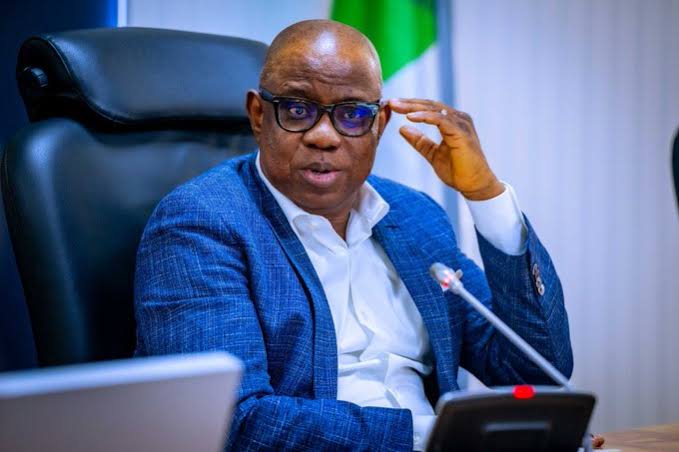
NNPCL GCEO, Bayo Ojulari
On upstream opportunities, he pointed to deepwater assets such as OPL 245, noting that they offer scale, lower security risks, and strong investor appeal. He added that partnerships with international oil companies like Shell and Eni remain critical for capital, technology, and project execution.
Addressing Nigeria’s “Decade of Gas” agenda, Ojulari said the focus is now firmly on execution, anchored on commercial pricing, infrastructure development, and contract certainty.
He cited the Ajaokuta-Kaduna-Kano Gas Pipeline as a major backbone project for boosting domestic gas utilisation and supporting industrial expansion.
On gas allocation, he said Nigeria would adopt a flexible, value-driven model balancing domestic supply needs with export opportunities, including LNG.
“It is about portfolio optimisation—allocating gas where it delivers the highest combined national and commercial value,” he said.
Ojulari also expressed confidence in Nigeria’s regulatory framework, noting that the Petroleum Industry Act has improved investor certainty, while ongoing security and infrastructure investments are addressing legacy challenges.
CERAWeek, hosted by S&P Global, is one of the world’s leading energy forums, attracting over 10,000 participants annually.
For Nigeria, Ojulari’s message underscores a strategic pivot—from highlighting potential to delivering measurable performance—as the country competes for global energy capital.