Excellencies, delegates and friends.
Australia and Türkiye have founded a special and constructive partnership this year for the delivery of COP31.
I acknowledge my dear friend and partner COP31 President Murat Kurum. I think I speak for all of us when I say the Government and people of Türkiye and Antalya have excelled themselves when it comes to preparing for COP31.
The eyes of the world are on us and Türkiye has given us the very best possible platform.
As we have done all year, we repeat our request to all parties to come to COP31 in the same spirit of cooperation, respect, determination and focus on the real issues that matter the most.
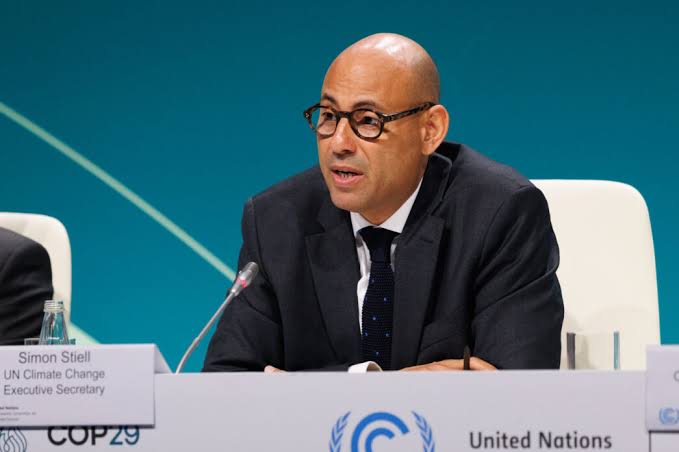
I acknowledge the COP30 President, Andre Corea Do Lago of Brazil, the UNFCCC Secretariat, and Executive Secretary, Simon Stiell.
I also want to acknowledge all Indigenous Peoples joining us here in Antalya and their leadership in climate action.
Drawing on their unique relationship with lands, skies and waters they have had stewardship since the millennia.
I also acknowledge our Pacific family as close partners and hosts of the recent Pre-COP in Fiji and Tuvalu – representing in a very real way those who have done the least to cause climate change but have the most at stake.
It has been a long road to reach this place and be here with you all today.
This year, we have witnessed again the devastating consequences of climate change – and welcomed the inspiring solutions and response.
The latest science tells us that we will overshoot 1.5.
But we can still return if we work together and act with urgency, solidarity and resolve.
That is our challenge here over the next fortnight.
To come together to meet the challenges and seize the opportunities ahead of us.
The Pacific
We saw the spirit of Talanoa, of dialogue and cooperation, at the Pacific Pre-COP.
We welcomed delegations from right across the globe.

From India, Nepal, Brazil and the EU.
From Saudi Arabia, Ethiopia, and the island nations of the Caribbean.
The message from the world that came out of Fiji and Tuvalu was clear:
Keep 1.5 degrees within reach. Speed up our climate action.
Make finance easier to access and deliver on our commitments.
Strengthen the resilience of our communities, our economies and our ocean.
And ensure no country faces climate impacts alone.
I know that the same sense of determination is present here in Antalya.
The moment before us
We meet at a moment of consequence.
Whether it be glacial collapse in Nepal, heat deaths in Europe, or an intensifying El Niño.
Climate change is here.
It is not a forecast. It is not a prediction. It is the lived reality for billions of people.
Its impacts are growing more frequent and intense.
Every fraction of a degree, and every delay, increases the risks to lives, communities, economic growth and the environment.
Raising the cost of adaptation, deepening future losses and making the task ahead harder.
Paris is working, but we must move faster
While the challenge is growing, so is our response.
Before Paris, the world was heading for warming approaching 4 degrees.
Today, projections are closer to 2.6 degrees.
Since 2015, global renewable electricity generation has almost doubled.
Around US$2.2 trillion was invested in clean energy last year, nearly twice the amount flowing to fossil fuels.
More than 160 countries have submitted updated NDCs.
More than 130 have now submitted their first BTRs.
This should give us confidence.
We are seeing our efforts turn into action on the ground.
The clean energy transition is not only reducing emissions.
It is reshaping investment, industry and employment across the global economy.
But we must move faster.
We have the tools.
The technologies we need are proven, commercial and scalable.
What we need is to speed up deployment.
Priorities
This year, I have talked to Parties from around the world on their priorities and key ambitions for COP31.
And for those that I haven’t yet met personally – my door remains open.
One of the strongest messages I’ve heard is:
There is enormous momentum on electrification.
Electricity supplies only around one-fifth of global final energy consumption.
Much of the remainder still comes from burning fossil fuels in transport, buildings and industry.
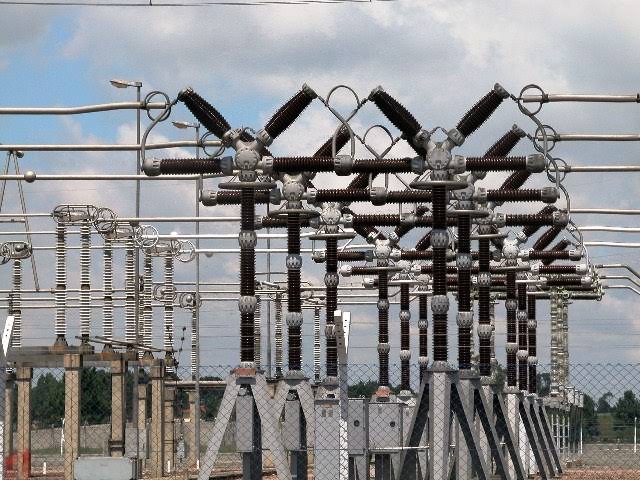
Accelerating electrification, powered by clean and resilient energy systems, is key to setting this right.
We need to shift electricity from a fifth to a third of global energy consumption.
Not only is this good for our planet. It strengthens nations’ energy security, reduces emissions and helps us better shield households from volatile bills and price shocks.
This is why the Action Agenda goal of a global effort to increase electricity's share of final energy consumption to 35 per cent by 2035 is so important
Delivering on that ambition requires investment in renewable energy, modern grids, energy storage, efficiency and skills.
Of course, countries will take pathways that best suit them, and each country will pursue electrification in their own way.
Just as clearly, I’ve heard that
we need to unlock finance.
This includes both scaling up climate finance, but also making it easier to access.
Too many countries with credible energy transition and adaptation plans can't access finance at the speed, scale or terms required to put those plans into action.
The countries that need climate finance the most are getting it the least.
That is why at the Pacific Pre-COP, Australia launched the Access to Finance Statement and Action Plan for SIDS and LDCs focused on a practical objective:
Making access to finance faster and simpler.
We must strengthen project pipelines.
Mobilise public and private investment together.
And ensure climate finance reaches countries and communities when they need it.
Finance must be disbursed faster.
More simply.
And more fairly.
We have made our commitments. Now we must deliver on them.
Parties have demonstrated their ambition, and ensuring timely, accessible and scaled up climate finance is critical to supporting climate action.
Delivering on commitments builds trust, trust in the process, trust from communities that we are collectively working for their future and trust between us as parties.
Through this process we have shown we can deliver new and innovative streams of finance.
Finance is part of the engine that drives our efforts and we will not let it falter here.
We must also address and strengthen adaptation and resilience.
Climate impacts are already disrupting lives, economies and development.
Countries need stronger infrastructure, stronger communities, stronger early-warning systems and stronger institutions.
We must help countries prepare for, withstand and recover from climate impacts.
And we must ensure that countries most exposed to climate risk have access to the partnerships, support and finance required to build resilience, both before and whenever disaster strikes.
What success looks like
More broadly, success in Antalya means making progress across every front.
This year, there are over 160 items and 60 substantive negotiations mandates on our agenda.
Each an opportunity to make progress and advance climate action.
This includes:
Operationalising the Just Transition Mechanism to provide practical support for countries, communities and workers as the world changes.
Strengthening the Mitigation Work Program to speed up real world implementation, cooperation and investment.
Taking forward the Global Goal on Adaptation by establishing the technical taskforce.
Giving confidence to climate finance delivery and investment flows, including through improving access.
Taking forward our work in the Climate Finance Work Program.
Finalising the transition of the Adaptation Fund.
Following up on the tripling of adaptation finance, and enhancing action and cooperation under Article 2.1c.
And importantly, we need to keep science central to our work.
We must make progress across all these mandates, as well as a range of other important mandates due for decision this year.
Presidency-initiated decision
Friends, after extensive consultations with Parties throughout this year, Minister Kurum and I have agreed to take forward a Presidency-initiated,
Party-led decision for COP31.
The decision will be led by the Presidencies but it must be owned and driven by the Parties. Ensuring it respects national circumstances
and responds to the global moment.
We will build it together, from the ground up.
We have spoken clearly about our intentions at the Pacific Pre-COP and in virtual consultations since.
Because transparency, consultation and inclusion remain central to our approach.
There will be no surprises.
This is not about duplicating negotiations.
It will not be a lengthy political declaration.
But a focused, practical and concrete response to the challenges and opportunities before us.
A decision that reflects the urgency of the climate challenge and the enormous opportunities created by the global transition.
One that gives confidence to governments, investors, businesses and communities that the world is moving faster and working together.
Such an outcome could:
Recognise the progress we have made together.
Reflect on the world we face and the challenges and opportunities before us.
And accelerate high-impact, concrete solutions that can help keep 1.5 within reach and strengthen resilience, means of implementation
and international cooperation.
We can send a message to the world:
That despite our challenges, the world is committed to implementing our Paris goals and moving faster.
We know there will be a difference of views. On the value of the decision, on its elements, on how far we go.
But our job is to work to close those differences and provide the most ambitious, most outcome-orientated decision that consensus will allow.
Conclusion
Australia is proud to serve as President of Negotiations in our partnership with Türkiye.
This partnership has been built on trust, solidarity and a shared resolve to go further, faster.
Throughout the year, we have asked Parties to come to Antalya with this same spirit of cooperation.
To build confidence for governments to act.
For businesses to invest.
For communities to plan for a safer and more prosperous future.
No country can achieve this alone.
But together we can and we must.
Friends, let’s show the world that multilateralism works.
Let’s show the world we are equal to the challenge.
Let’s join in a spirit of cooperation and respect.
Let’s show future generations that this generation was equal to the moment, equal to the challenge.
Let’s rise to this moment together.