By Oke Peter
Dangote Industries Limited (DIL) has entered into a major $4.2 billion natural gas supply agreement with China’s GCL Group to support its large-scale fertilizer expansion in Ethiopia.
The 25-year deal, finalized in Lagos, marks a significant milestone in China–Africa industrial cooperation. Under the agreement, GCL will provide a steady supply of natural gas to Dangote Group’s planned urea fertilizer plant in Ethiopia.
The facility, valued at $2.5 billion, will have an annual production capacity of three million tonnes. It is being developed through a partnership between Dangote Group and Ethiopian Investment Holdings (EIH), with ownership split 60:40. Operations are expected to commence in 2029.

Once completed, the plant will be the largest fertilizer production hub in East Africa. It is expected to meet Ethiopia’s entire urea demand and supply nearby countries, reducing dependence on imports and boosting regional agricultural productivity.
Gas for the project will be sourced from the Calub Gas Field in Ethiopia’s Ogaden Basin and transported through a dedicated 108-kilometre pipeline to the fertilizer complex in Gode, located in the Somali Region.
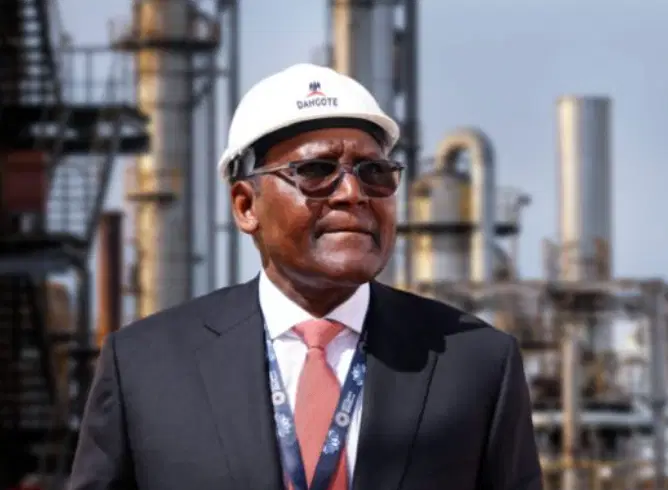
Speaking on the deal, Dangote Industries President Aliko Dangote emphasized the need for Africa to move beyond exporting raw materials and instead focus on value-added production. He noted that the partnership with GCL will create an integrated system linking gas extraction to fertilizer manufacturing, helping strengthen the continent’s food security.
GCL Chairman Zhu Gongshan also highlighted the importance of the collaboration, noting that it was supported by the Ethiopian government. He said the partnership would expand opportunities in energy, chemicals, and agriculture while enhancing both companies’ reach across Africa.
The project is expected to deliver broad economic benefits, including job creation, infrastructure development, and increased industrial activity in Ethiopia’s Somali Region. Analysts say it could also help the country achieve full self-sufficiency in fertilizer production.
Additionally, the use of natural gas as a feedstock aligns with global efforts toward cleaner industrial processes, positioning the project as a model for sustainable development in Africa.
By linking gas production, transportation, and fertilizer manufacturing, the initiative establishes a fully integrated value chain. It also represents a new model for China–Africa collaboration by combining Chinese technology with Africa’s natural resources.
Overall, the agreement is seen as a landmark step toward strengthening energy independence, industrial growth, and food security across Ethiopia and the wider region.