By Guido Brusco
In an energy system that is increasingly interconnected, volatile, and fragmented, natural gas and LNG are moving to the centre of the global energy debate. They offer a reliable and flexible source of energy to meet rising demand, while also strengthening energy security. Asia is now the primary driver of global energy demand growth, offering a vantage point from which to consider the future of gas and LNG markets.The challenge is no longer only to produce more energy but to build systems capable of providing continuity, competitiveness, and sustainability in a more complex geopolitical landscape.
For Eni, addressing this challenge starts from a clear principle: diversification.
Diversification in a changing energy landscapeThis begins with geography. A presence across multiple basins — from Africa and the Mediterranean to the Americas and Asia — reduces exposure to individual geopolitical contexts and strengthens portfolio resilience. But diversification also means connecting resources, infrastructure, and markets, and capturing synergies across the entire value chain, from upstream production and liquefaction to shipping and trading, supported by risk management capabilities.
Recent years have shown how quickly market balances can shift.
In this environment, portfolio resilience depends on the ability to combine diversification with integration and access to multiple markets.

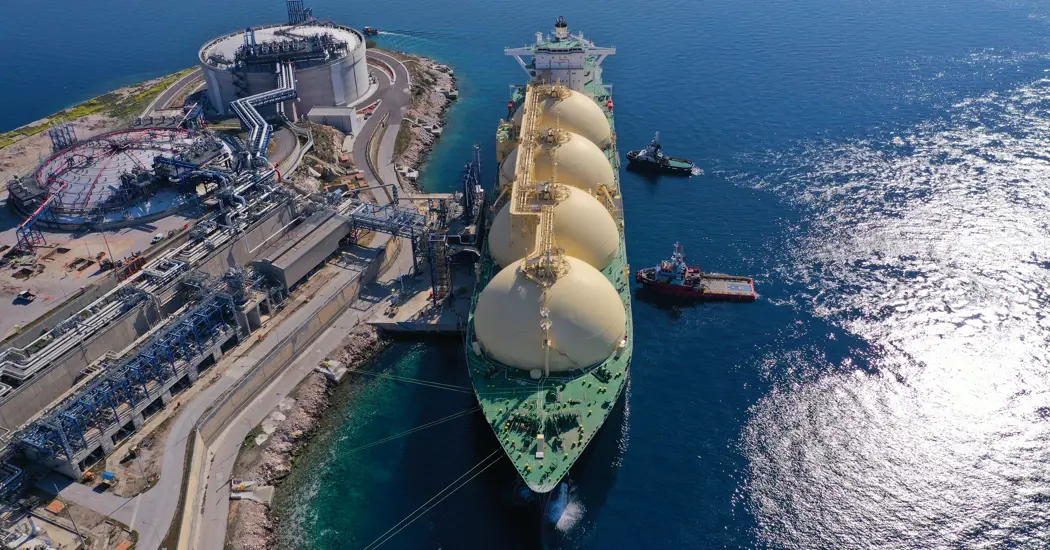
LNG is the clearest expression of this evolution. By connecting producing basins with demand centres around the world, it enables supply flows to be flexibly redirected in response to evolving market conditions and changing customer needs.
This is why Eni has strengthened its position in gas and LNG through an integrated approach spanning the value chain.The expansion of our equity gas production, strong partnerships, worldwide long-term contractual arrangements, and advanced commercial and risk-management capabilities are key to building a portfolio that is global, flexible, and responsive to evolving regional dynamics.
Southeast Asia’s growing role in LNG markets
In Southeast Asia, this strategy is taking shape through Searah, the independent joint venture established with Petronas to combine key assets in Indonesia and Malaysia. Searah is designed to support production growth and contribute to the energy security of a region set to play an increasingly important role in global gas markets.
Eni is also developing a substantial gas portfolio in Indonesia by integrating new discoveries with existing liquefaction facilities, together with new development projects such as in the Kutei Basin. It offers an efficient model for growth: shortening development timelines, maximising asset value, and strengthening our ability to serve both regional and international markets with reliable and competitive supplies.
FLNG and the future of gas development
Developed with YPF and XRG, the Argentina LNG project aims to unlock the country’s vast resources through an integrated value chain via floating LNG facilities, positioning Argentina as a significant LNG exporter while drawing on Eni’s expertise in FLNG. FLNG technology is proving to be one of the most effective tools to accelerate the development of gas resources in complex environments.
Our experience in Mozambique and Congo has shown how modular, phased, and replicable development models can reduce time-to-market, optimise capital deployment, and mitigate execution risks. Reflecting the growth of this model across Africa and the Americas, Eni expects to expand its LNG portfolio to around 20 million tonnes per annum by 2030, supported by a diversified pipeline of equity projects and significant contributions from FLNG developments.
Looking ahead, LNG growth will be driven not only by rising demand but also by the need for greater flexibility and security across the global energy system.

•Guido Brusco
Companies able to combine diversified resources, integrated value chains, and access to multiple markets will be better placed to navigate volatility. At Eni, this strategy is part of a broader commitment to lower-carbon energy solutions. Natural gas is part of a wider pathway that includes methane emissions reduction, zero routine flaring, carbon capture and storage, biofuels, and the development of infrastructure capable of supporting more sustainable energy systems.In this context, Gastech 2026 offers an important opportunity for collaboration between all stakeholders. But it must translate into investment decisions, resilient infrastructure, and projects capable of looking beyond short-term volatility. Natural gas and LNG will remain fundamental to this equation.
•Guido Brusco is the Chief Operating Officer – Global Natural Resources and General Manager, Eni
Source: Energy Connects