By Kelechi Onwujuba
The global energy market entered October under renewed pressure as geopolitical disruptions continued to threaten oil and refined-product supplies, while countries across Africa intensified efforts to strengthen domestic energy security. In Nigeria, rising gas availability, improving crude production and major power-sector interventions dominated the week.
Nigeria: Gas supply crosses 2bcf/d as power infrastructure gets attention
Nigeria recorded a significant gas milestone during the week, with domestic gas supply crossing 2 billion cubic feet per day (bcf/d). The Federal Government said the increase would help improve gas availability to power plants and industries and reduce one of the major constraints on economic activity.
The development is particularly important for Nigeria because inadequate gas supply has frequently limited thermal electricity generation despite the country's large gas reserves.

The country also continued to strengthen its upstream position. The Nigerian Upstream Petroleum Regulatory Commission (NUPRC) reported that August crude oil and condensate production averaged 1.678 million barrels per day, up 0.4% from July. Crude oil alone averaged 1.50 million barrels per day, allowing Nigeria to meet its OPEC quota for the fourth consecutive month.
In the gas sector, the $800 million Final Investment Decision for the Ima Gas Project also provided a boost. The offshore project, being developed by AMNI International and TotalEnergies, is expected to produce about 300 million standard cubic feet of gas per day at peak and provide feedgas for Nigeria LNG's Train 7 expansion, which will raise LNG capacity from 22 million tonnes per year to 30 million tonnes.
Nigeria's power sector equally recorded important developments. The Transmission Company of Nigeria restored the 330kV Kainji-Birnin Kebbi transmission line, improving electricity supply to parts of the North-West after the line was knocked out by the collapse of a transmission tower in September.
FG targets 24-hour electricity in major economic corridors
The Federal Government moved closer to its ambition of delivering reliable electricity to major economic centres after the Minister of Power, Joseph Tegbe, held a strategic meeting with selected electricity distribution companies (DisCos) on the proposed Energy Zones.

•Representatives of Abuja Electricity Distribution Company, Ikeja Electric, Eko Power, Ibadan Electricity Distribution Company and Sahara Energy during a meeting with the Honourable Minister of Power, Joseph Tegbe on the proposed Energy Zones.
The proposed zones will initially focus on the Lagos axis, Abuja-Kaduna-Kano corridor and Enugu-Port Harcourt corridor, with the objective of providing stable, potentially 24-hour electricity to homes, businesses and industries in high-demand areas.
Tegbe said Nigeria's electricity challenge was not limited to generation and transmission, but also involved the ability of the distribution segment to take up available power and deliver it efficiently to consumers.
Representatives of Abuja Electricity Distribution Company, Ikeja Electric, Eko Power, Ibadan Electricity Distribution Company and Sahara Energy participated in the discussions. The government said strengthening distribution infrastructure in high-demand areas could unlock commercial and industrial demand while improving DisCos' revenue and collection performance.
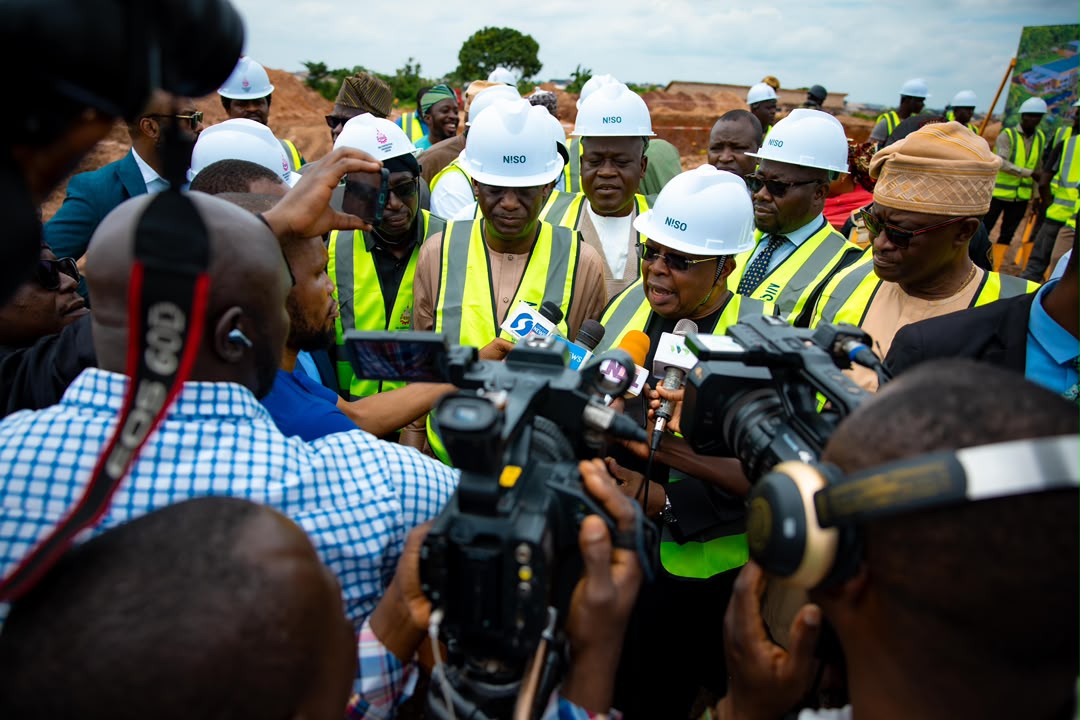
The Federal Government also began construction of a new National Control Centre for the Nigerian Independent System Operator (NISO) in Osogbo, Osun State, replacing a facility that has served the national grid for about 64 years.
The project, formally launched on September 30, is designed to improve real-time monitoring, coordination and management of the national grid. The new centre is expected to incorporate advanced SCADA technology, large-format displays and analytical systems, enabling operators to identify faults faster, improve preventive maintenance and respond more effectively to disturbances.
The facility is also expected to strengthen Nigeria's participation in the West African Power Pool and improve the integration of renewable electricity into the national system.
Meanwhile, the Nigerian Electricity Regulatory Commission's second-quarter report was released, while its August operational data showed an average 4,758MW of available generation capacity, of which about 4,102MW was utilised, representing an 86% load factor.

The week also highlighted Nigeria's growing refining ambitions. Demand for shares in the $1.6 billion Dangote Refinery IPO was described as enormous, with proceeds expected to support expansion of the Lagos refinery's capacity towards 1.4 million barrels per day. Dangote is simultaneously advancing plans for a 700,000-bpd, $16 billion refinery in Lamu, Kenya, signalling a wider African refining strategy.
Africa: Gas and refining return to the centre of the energy debate
Across Africa, energy security remained closely linked to domestic production and infrastructure. Senegal's September power shortages exposed the vulnerability of its electricity system, with demand reaching an unexpectedly high 1,400MW in August against installed capacity exceeding 2,300MW. The government said it plans about 340km of gas pipelines to transport domestic gas and reduce dependence on expensive imported diesel.
Kenya, meanwhile, moved ahead with Dangote's proposed refinery, although the project faces legal challenges from local residents and a consumer-rights group. The proposed facility is expected to process 700,000 barrels of crude daily, demonstrating the growing push for African countries to process more crude locally rather than remain heavily dependent on imported refined products.
Also, in Côte d'Ivoire, tenders advanced for multi-hundred-megawatt solar and battery-storage projects, while Ethiopia continued efforts to expand electricity exports to Kenya. African Energy also reported new renewable investments in Nigeria and renewable-project developments in Chad and Mauritania.
World: G7 moves to release 100 million barrels
The biggest global energy development of the week came from the G7, which agreed to coordinate with the International Energy Agency to release 100 million barrels of crude and refined products from emergency reserves over four months, with a substantial diesel release front-loaded into the first 20 days. The decision reflects the severity of the continuing disruption to global fuel markets.
Oil prices responded by easing. Brent crude settled at about $102.25 per barrel on October 2, while West Texas Intermediate settled at $91.11, although Brent remained higher for the week.
Attention now turns to the OPEC+ meeting on October 4, where producers are expected to consider keeping November production targets unchanged amid continuing supply uncertainty.

Beyond oil, the energy transition continues despite the supply crisis. The IEA says solar PV was the largest single source of global energy-demand growth in 2025, while global renewable capacity additions reached a record 800GW, including almost 110GW of battery storage.
The message from the week's developments is clear: energy security is no longer simply about producing more oil and gas. It increasingly depends on reliable grids, domestic refining, gas infrastructure, storage, diversified supply chains and faster deployment of renewable energy.