By Energy Worth Online
Nigeria’s energy sector had a particularly busy week, with developments spanning upstream oil and gas investment, electricity regulation, power supply, local content and human-capital development. Across Africa, fresh exploration and LNG investments reinforced the continent’s determination to monetise its energy resources, while globally, geopolitical tensions continued to unsettle oil and gas markets.
Nigeria: Offshore investment meets electricity reform
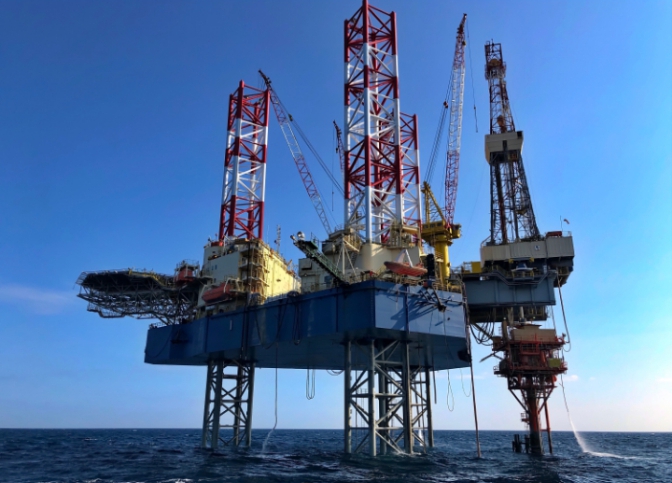
Nigeria’s upstream sector continued to build momentum around a potential new wave of offshore investment. The Nigerian Upstream Petroleum Regulatory Commission (NUPRC) says 22 major offshore projects are expected between 2026 and 2030, with an estimated investment potential of $30 billion to $50 billion. The regulator says the projects could raise production, create jobs, expand infrastructure and strengthen energy security. NUPRC also disclosed that it has approved more than $57 billion in Field Development Plans since 2024, some of which have progressed to Final Investment Decisions.
The opportunity, however, comes with an equally important requirement: Nigeria must develop the skilled workforce, infrastructure and supporting services needed to execute the projects. Without adequate technical manpower and stronger local participation, a new investment cycle could create production without delivering its full industrial and employment benefits.
The electricity market also recorded a significant development as NERC formally transferred regulatory oversight of Akwa Ibom State’s intrastate electricity market to the Akwa Ibom State Electricity Regulatory Commission. The order, issued on August 19, represents another step in Nigeria’s transition towards subnational electricity markets under the Electricity Act 2023.

The development is significant because states are increasingly taking responsibility for shaping electricity markets within their territories. It also places greater responsibility on state regulators to attract investment, protect consumers and create commercially viable electricity systems.
NERC simultaneously moved to address the worsening condition of Kaduna Electricity Distribution Company (KAEDC). The commission inaugurated an interim board after dissolving the company’s existing board over persistent failures to meet market obligations and performance requirements. NERC said the new board must work to reset the company and restore it to a sustainable trajectory within 12 months.
In Lagos, Governor Babajide Sanwo-Olu brought together power-sector stakeholders at a high-level strategic town hall focused on ending persistent blackouts and building a sustainable 24-hour electricity economy.

•Governor Babajide Sanwoolu of Lagos State
The Lagos Government is targeting about 3,500MW of available electricity supply, with interventions expected across generation, transmission, distribution and metering. Stakeholders acknowledged that simply producing more electricity would not solve the problem without corresponding investment in gas supply, transmission, distribution and metering infrastructure.
The meeting highlighted one of Nigeria’s biggest energy realities: electricity shortages are not solely a generation problem but a value-chain problem requiring simultaneous action from gas suppliers, generators, transmission operators, DisCos, regulators and investors.

Local-content development also featured prominently. The Nigerian Content Development and Monitoring Board (NCDMB), Renaissance Africa Energy Company and Lee Engineering onboarded 24 youths, principally from Rivers and Imo States, for a two-month vocational Human Capital Development programme covering critical technical skills. The initiative is linked to the Assa North-Ohaji South Gas Project and illustrates the growing emphasis on preparing Nigerians for opportunities created by new energy investments.
Africa: New oil and gas frontiers attract capital
Africa’s upstream sector produced another major development as Chevron announced an oil and gas-condensate discovery offshore Angola. The exploration well in Block 0 encountered a hydrocarbon column exceeding 600 metres, including more than 90 metres of net pay. Chevron is assessing the possibility of developing the discovery through existing nearby infrastructure.
The discovery reinforces Angola’s continuing importance as a major African oil producer and demonstrates how infrastructure-led exploration can reduce development costs and accelerate potential production.
Ghana also attracted fresh international exploration interest. Brazil’s Petrobras entered negotiations for four offshore blocks in Ghana’s Keta Basin, following approval from Ghana’s Ministry of Energy and Green Transition. The move forms part of Petrobras’ strategy to replenish reserves and expand its exploration portfolio beyond Brazil, with Africa increasingly important to its international exploration plans.
Mozambique, meanwhile, is seeing renewed momentum around its long-delayed Rovuma LNG project. ExxonMobil has advanced pre-investment activities on the approximately $30 billion project, reflecting growing interest in African LNG as global buyers seek supply diversification amid continuing geopolitical risks.
World: Hormuz crisis keeps oil markets nervous
The global energy market remained heavily influenced by the continuing conflict involving the United States and Iran and the resulting disruption around the Strait of Hormuz, one of the world’s most important energy checkpoints.
Oil markets increasingly began pricing in the possibility that the disruption could last longer than initially expected. Reuters reported that crude markets were increasingly treating the Hormuz crisis as a potentially prolonged supply shock rather than a temporary disturbance.

The impact is extending beyond crude oil. Iranian oil supplies to Chinese buyers have fallen sharply, forcing refiners to seek alternative sources, while concerns over restricted LNG and oil flows continue to influence prices and shipping costs.
The crisis is also reshaping investment decisions. With Middle Eastern energy supplies facing uncertainty, projects in other regions are becoming more strategically valuable. Mozambique’s LNG development is one example, while Africa’s oil and gas discoveries are receiving renewed attention as international companies seek diversified supply sources.
China, meanwhile, is advancing its own long-term energy-security strategy. Its new 2026–2030 oil and gas plan focuses on domestic production, infrastructure expansion, storage and greater integration of the energy system.
The week in perspective
The developments of the week point to a rapidly changing energy landscape.
For Nigeria, the challenge is to convert regulatory reforms and its enormous hydrocarbon potential into actual investment, production, jobs and reliable electricity.
For Africa, the opportunity lies in attracting capital to oil, gas, LNG and renewable energy while ensuring that resource development translates into industrialisation and wider energy access.
For the world, geopolitical instability has once again demonstrated the vulnerability of global energy supply chains—and the strategic importance of diversification.
The message for Nigeria is particularly clear: the resources are available, investment interest is returning, and reforms are gathering pace. The next test is execution.