Across the country, the story is familiar. Businesses still run on diesel; households buy fuel for generators before buying groceries; artisans close early because of blackouts; students read under streetlights; and manufacturers relocate to countries where electricity is not a gamble. Despite trillions of naira spent before and after privatisation, the national grid still collapses with embarrassing frequency. For many Nigerians, nothing significant has changed except the name of the institutions sending the bills.
Privatisation was built on a simple promise: private ownership would attract capital and expertise. Distribution companies were expected to meter every home, improve billing systems, upgrade lines and transformers, expand coverage and drastically cut losses. Generation companies were expected to boost capacity; while the transmission network — still under government control — was supposed to be stabilised. But Nigerians argue that the reality has fallen far short. What citizens see is a system where the problems of the old PHCN seem reborn in new private uniforms.One of the biggest complaints is the persistence of estimated billing. Even today, millions of Nigerians remain unmetered, leaving them at the mercy of arbitrary monthly estimates. Many say they pay more for darkness than they ever did under PHCN. In poorer communities, households receive bills for power they never saw. In wealthier areas, consumers argue that their bills rise without explanation. Metering was supposed to be the starting point of reform, yet it remains one of its biggest failures.
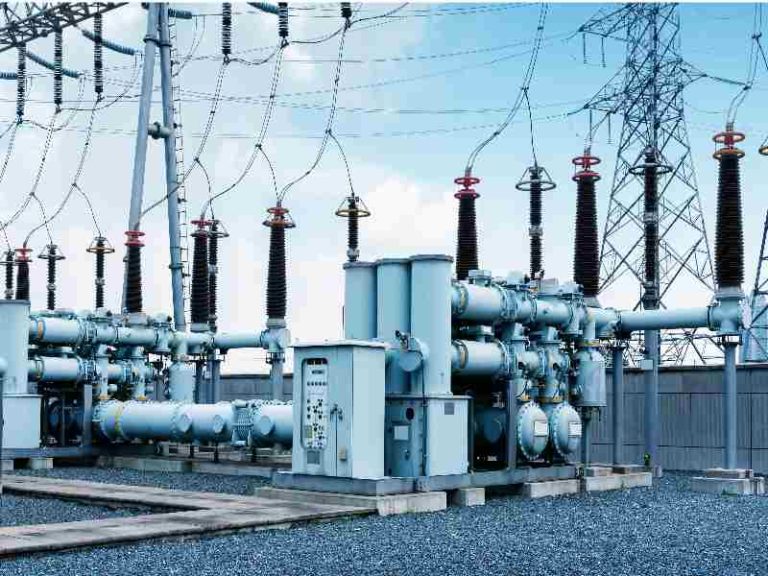
Another grievance is the state of infrastructure. Transformers routinely break down and stay unreplaced for months. Power lines remain dangerously exposed. Substations operate far beyond their carrying capacity. The result is not just outages, but voltage fluctuations that destroy appliances. Nigerians feel they are paying for a service that is not being improved alongside the bills they receive. Many communities still raise money to buy transformers and cables, only for the distribution company to take ownership of the same equipment afterwards.
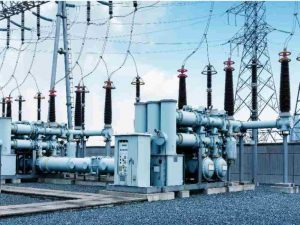
On the generation side, installed capacity has increased on paper, but actual output rarely rises above the same 3,000–4,000 megawatts that Nigerians have endured for years. Gas shortages, pipeline vandalism, outdated plants and weak transmission lines keep generation far below the country’s potential. Nigeria is a nation of more than 200 million people producing roughly the same power as a small European city — a comparison ordinary citizens now quote with frustration and disbelief.
The economic cost is enormous. According to several local assessments and energy-sector analyses widely debated in the media, Nigeria loses billions annually because of poor electricity supply. Manufacturers calculate that up to 40% of their production cost goes to power from generators. Small businesses close early or shut down permanently. Young people who could build tech startups or digital businesses find themselves held back by the most basic requirement for modern work: stable electricity. What should have been an engine of economic growth has instead become an anchor dragging development backwards.
Nigerians also question the transparency of the entire process. Many feel that privatisation simply transferred a public monopoly to private hands without proper oversight, accountability, or capacity checks. Some distribution companies reportedly lacked the financial and technical strength needed for such a huge national assignment. Workers within the sector say investment has been minimal, revenue collection is prioritised over service improvement, and consumers are blamed for technical failures they have no control over.
This sense of betrayal deepens every time tariffs are increased. Nigerians are told that cost-reflective tariffs are necessary for improvement, yet improvement rarely follows. Instead, citizens pay more for the same unreliable power they have endured for decades. The promise that the private sector would drive efficiency now feels hollow to many Nigerians who believe they are simply funding inefficiency instead of benefiting from reform. The relationship between electricity providers and consumers is now marked by tension, mistrust and a growing feeling that the system is designed to extract rather than deliver.
Still, it would be unfair to say there has been no progress at all. There are communities where supply has improved; there are companies that have made investments; there are officials working under immense pressure to deliver within a broken structure. But these pockets of success are overshadowed by national disappointment. Nigeria’s population has grown, industries have expanded and the demand for power has skyrocketed, yet supply remains stagnant. Privatisation alone could never solve this problem without strong regulation, massive infrastructure investment and a clear long-term strategy — all of which remain weak.
So, has power-sector privatisation met Nigerian expectations? For the ordinary person on the street, the answer is an emphatic no. Nigerians were promised light; what many feel they received instead is more talk, more excuses and more bills. The dream of a modernised, investor-driven electricity market has not materialised in their homes or businesses. What Nigerians want is not another reform, committee or policy paper. They want accountability, investment, competence and transparency. They want electricity that works.
Until privatisation begins to deliver tangible improvements — steady supply, fair billing, visible infrastructure upgrades — the Nigerian public will continue to view the reform as a well-packaged idea that never lived up to its name. The hope is not entirely dead. Nigerians are resilient and still believe that a functioning power sector is possible. But belief alone cannot power homes or industries. The time for promises has long passed; what the country needs now is honest action and measurable results. Only then will privatisation begin to look like the solution it was once claimed to be.