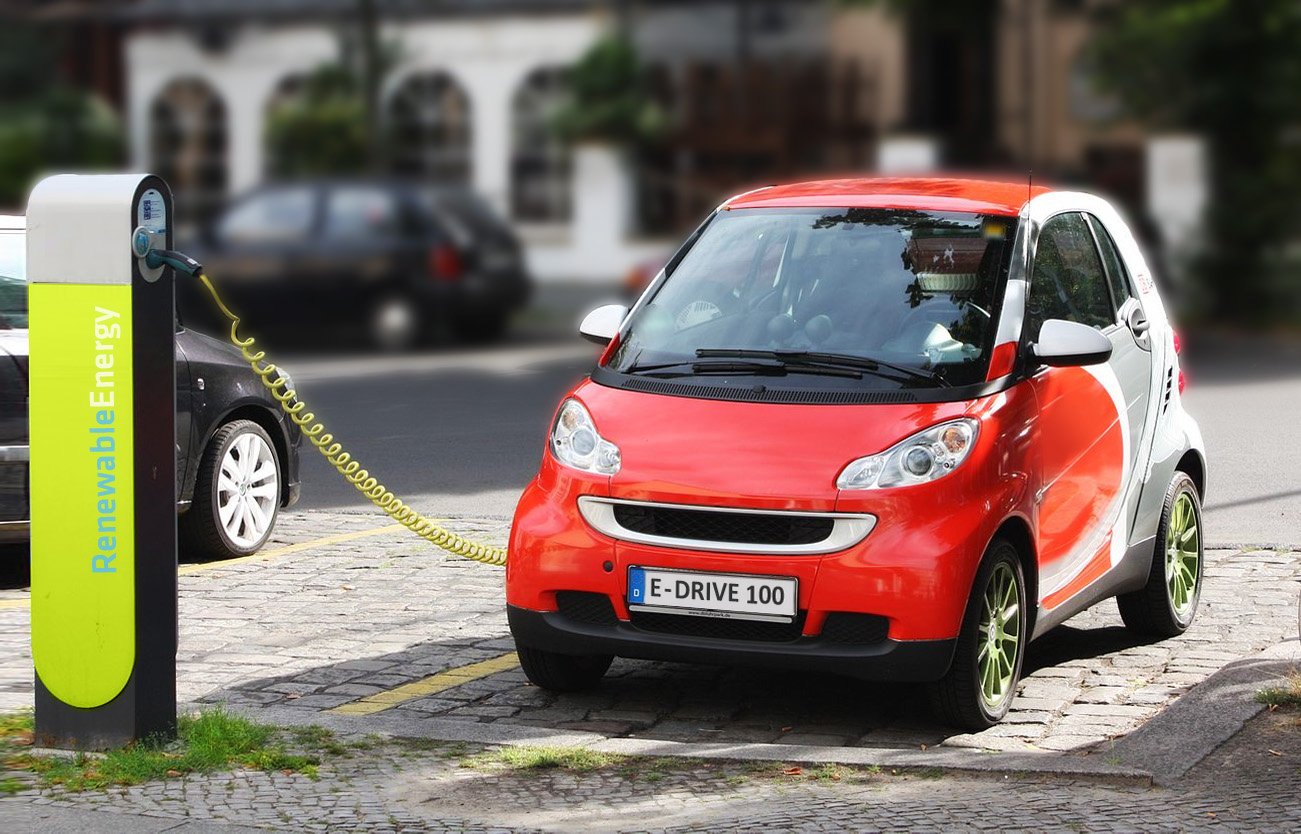
One in two German drivers who have owned an electric vehicle (EV) subsequently switches back to a car with an internal combustion engine (ICE). In China, the same holds true for four out of ten EV owners; in the United States – for one in four. These are the conclusions of a joint study by researchers from Ajou University in South Korea, the National University of Singapore, and the KAPSARC research center in Saudi Arabia.
For the first time ever, the researchers systematically compared the reasons why former EV owners on the world’s three largest electric-vehicle markets – China, the United States, and Germany – return to ICE vehicles. They surveyed nearly 1,800 current and former EV owners across these countries and contrasted the answers of those who chose an EV again with those who did not.

•An electric vehicle
The reasons for rejection differ markedly by country. In the United States, former owners’ main complaints were the lack of fast chargers along highways (15.2% of responses) and charging times that are too long (14.7%). Interestingly, the ability to charge at home, already available to more than 90% of owners, has almost no impact on their subsequent decisions. Much more important is whether a charging station is available at work: this significantly increases the likelihood that a driver will choose an EV again, especially when their daily commute exceeds 100 kilometers.
In China, the decisive factors are the technical specifications of the EVs themselves. The leading reason for rejection here was insufficient driving range, cited by 15.4% of respondents. Close behind were a shortage of fast chargers on highways and lengthy charging times, each mentioned by 14.8%. Chinese owners were also more likely than others to express concern over the high cost of potential battery replacement. The study further shows that having a home charging station reduces the probability of not repurchasing an EV by roughly 20%.
Germany presents a different picture: the main reason for returning to ICE vehicles was neither charging problems nor range anxiety, but the driving experience itself. Some 14.2% of former EV owners pointed to inadequate acceleration and insufficient driving enjoyment. At the same time, the study found that home charging lowered the likelihood of EV rejection by about 30%, while access to public charging stations encouraged repeat EV purchases.
A common pattern emerged across all three countries. When the EV was the only car in the household, owners were considerably more likely to buy another EV. In multi‑vehicle households, on the other hand, the probability of abandoning electric transport was higher – the difference amounted to 23.7% in the United States, 20.8% in China, and 16.7% in Germany. The researchers believe that owners of a single EV adapt more quickly to its characteristics and are less inclined to revert to conventional cars.

•An electric vehicle
In short, encouraging only first-time EV sales is not enough to drive further market growth. Retaining existing EV owners is equally vital. At the same time, there is no one‑size‑fits‑all solution: even a well‑developed charging network and low operating costs do not guarantee repeat EV purchases in countries with a strong automotive culture, where drivers set particularly high standards for vehicle performance.
Source: Global Energy