By Gold Jeremiah
For a country that holds Africa’s largest proven natural gas reserves, Nigeria is facing a paradox that is becoming increasingly difficult for millions of households to ignore: cooking gas is becoming less affordable and, in many areas, harder to access.
Over the past decade, Liquefied Petroleum Gas (LPG), commonly known as cooking gas, has been promoted as a cleaner alternative to firewood and kerosene. Government campaigns, private-sector investments and rapid urbanisation helped drive adoption across the country. Today, however, many families are questioning whether they can continue to afford the fuel once touted as the future of clean cooking.

Nigeria possesses more than 200 trillion cubic feet of proven natural gas reserves, yet the challenge lies within a value chain that struggles to deliver sufficient volumes of LPG to domestic consumers at affordable prices.
According to industry estimates, Nigeria’s LPG demand has risen to about 1.8 million metric tonnes annually, exceeding available domestic supply. At the same time, a significant portion of locally produced LPG continues to be exported to international markets, where returns are often more attractive.
Reports indicate that cooking gas now sells for as much as ₦2,000 per kilogramme in some parts of the country, compared to roughly ₦400 per kilogramme just a few years ago.

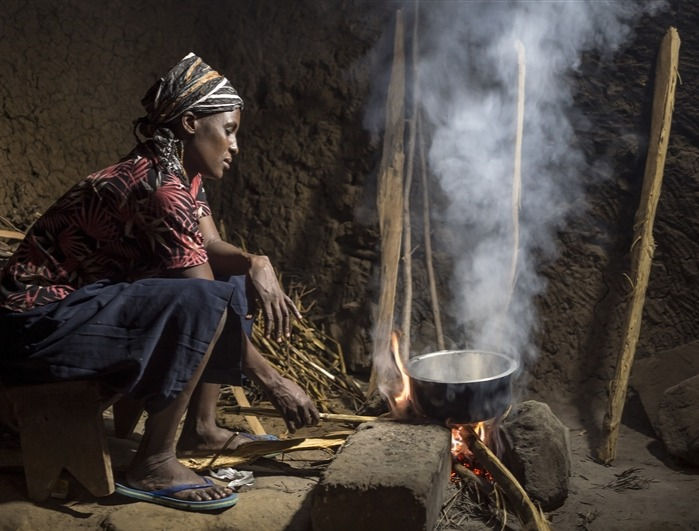
The impact is being felt most by ordinary Nigerians: “I now buy gas in small quantities because I cannot afford a full refill,” says Chidinma Eze, a trader and mother of three in Onitsha. “A few years ago, filling my cylinder was manageable. Today, it takes a significant portion of my monthly income. Sometimes, I return to charcoal when money is tight.”
Her experience mirrors a growing reality across the country as data released by the National Bureau of Statistics (NBS) showed that the average cost of refilling a 12.5kg cylinder climbed to nearly ₦19,653 in March 2026, while a 5kg refill averaged ₦7,656 nationwide.
Commenting, a Lagos-based LPG distributor, Ayo Oladipo, notes that transportation and storage remain major bottlenecks within the value chain. “Many people assume LPG prices are determined solely by production levels, but that is not the case,” he explains. “Moving gas from coastal terminals to inland markets is expensive. Poor road infrastructure, high trucking costs, depot charges and foreign exchange pressures all contribute to the final retail price paid by consumers.”
Indeed, market surveys show that transportation costs and access to depots significantly influence LPG prices across different regions of the country, leaving consumers in inland locations particularly vulnerable to price spikes.
Despite years of increasing LPG consumption, Nigeria still lacks adequate storage facilities, bottling plants and distribution networks needed to efficiently serve a rapidly expanding market.
Energy economist, Dr. Ibrahim Yusuf, believes policy inconsistency has also played a role in the current situation. “Nigeria has made commendable progress in promoting gas utilisation, but domestic supply obligations must be strengthened,” he says. “The country cannot continue to encourage LPG adoption while households struggle to access affordable volumes. The entire value chain requires coordinated investment, from production and storage to transportation and retail distribution.”
There are indications that policymakers recognise the challenge because the Nigerian National Petroleum Company Limited (NNPC) recently unveiled a Gas Master Plan aimed at increasing LPG supply from about 1.5 million tonnes annually to 5 million tonnes. The strategy seeks to boost domestic gas utilisation, strengthen infrastructure and support broader economic development.
However, industry observers caution that increased production alone may not solve the affordability challenge unless bottlenecks across the value chain are simultaneously addressed.

As gas becomes increasingly unaffordable, many households are turning back to firewood, charcoal and other traditional fuels, raising concerns about public health, deforestation and environmental sustainability.
The hidden crisis in Nigeria’s LPG value chain is therefore more than an energy story. It is a public health issue, an economic challenge and a social concern affecting millions of families already grappling with inflation and the rising cost of living.
Until production, infrastructure, transportation and pricing challenges are tackled in a coordinated manner, Nigeria’s vast gas resources may continue to remain beyond the reach of the very people they are meant to serve.