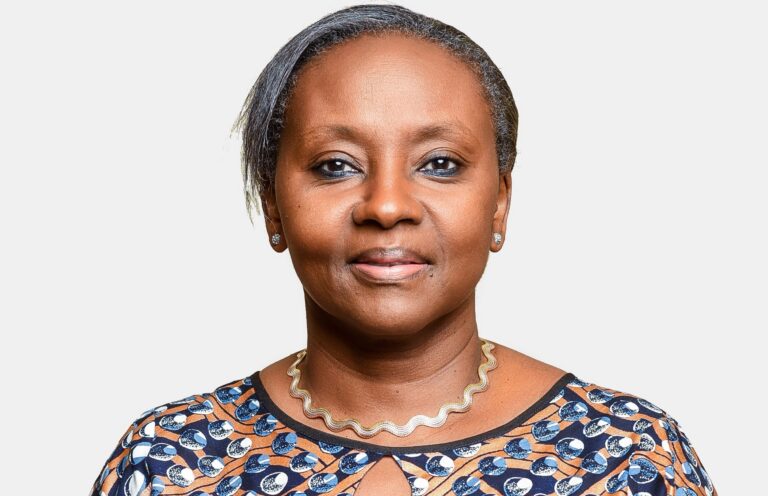
Marième Travaly, IFC’s Regional Industry Director for Infrastructure and Natural Resources in North, West and Central Africa, on where private capital can work in Nigeria and across the region. In written answers to ENN, she sets out the areas where IFC sees the strongest opportunities in Nigeria and explains what makes gas and water projects bankable.
In Lagos at the end of September, IFC signed a US$50 million subordinated debt facility with InfraCredit, the Nigerian credit guarantor that helps infrastructure projects raise long-term finance in naira. For Marième Travaly, who leads IFC’s infrastructure and natural resources work in North, West and Central Africa, it is one part of a wider aim to build “markets that can attract capital repeatedly and at scale”.
Speaking to ENN ahead of Nigeria NOW! in Abuja on 19 and 20 November, she sets out where IFC sees the strongest openings in Nigeria, and what she would need to see by the end of 2027 to say the infrastructure agenda has moved.
Nigeria is working to bring more private capital into its infrastructure, including power and gas. Where do you see the strongest opportunities for IFC in Nigeria right now, and what would bring more of them to financial close?
The strongest opportunities are in distributed renewable energy and power distribution. Demand is already there. The harder work is building the institutions, contracts and financing structures that turn that demand into projects investors will support over the long term.
First, distributed renewable energy. Nigeria has one of the world’s largest electricity access gaps, but also one of the most dynamic private-sector ecosystems. Through our DARES platform, we are helping address one of the sector’s biggest constraints, which is access to affordable long-term capital. As of September 2026, DARES was on track to provide more than US$160 million to 11 companies, supporting up to 129 MW of new capacity and electricity access for more than 5 million people.
Power distribution needs equal attention. Additional generation has limited value if the electricity does not reach customers reliably. Metering, network upgrades and digital systems reduce losses and improve collections. They also strengthen the commercial base on which better service depends. IFC works across the sector to improve utility performance and develop investment approaches that can be repeated beyond a single transaction.
Once the sector opportunity is clear, the financing structure becomes decisive. Many infrastructure businesses earn their revenues in naira, so borrowing in foreign currency leaves them exposed to exchange-rate movements. IFC’s recent US$50 million subordinated debt facility for InfraCredit expands its capacity to bring domestic institutional investors into infrastructure. It helps lay the foundation for a deeper local market that finances energy, digital networks, transport and climate-related projects in naira and over longer tenors.
Financial close is the outcome of work that begins much earlier. IFC develops and finances projects, mobilizes other investors and uses risk-mitigation instruments against specific constraints. We also stay engaged on the less visible work: credible contracts, consistent regulation and a clear allocation of risk to the parties best placed to manage it. That discipline helps turn an isolated deal into a market others are prepared to enter.

•Marième Travaly, IFC’s Regional Industry Director for Infrastructure and Natural Resources in North, West and Central Africa
That is the long-term view. A successful transaction should lower the cost and complexity of the next one. Over time, familiar structures and a record of performance give developers and investors more confidence to commit capital to Nigeria’s infrastructure.
Gas is a growing focus across the World Bank Group. How do you see gas fitting into the infrastructure your team finances, and what makes a gas project bankable for IFC?
We consider gas selectively, based on what a country’s energy system needs. In some markets, it can replace carbon-intensive liquid fuels and provide dependable power for households and industry while more solar and wind are connected to the grid. It has to sit alongside continued investment in renewables.
For a project to attract financing, we need confidence in its fuel supply and in the buyer’s ability to pay for the power. Sponsors must be capable of delivering it, and contracts need to allocate risk clearly. The project also has to fit the country’s least-cost energy pathway and meet IFC’s environmental and social standards.
It also needs to be consistent with the goals of the Paris Agreement. Our assessment considers whether lower-carbon options are feasible and whether the investment would create long-term emissions lock-in. The World Bank works with governments on sector policy and regulation. IFC advises on transactions, invests and mobilizes additional financing. Through the World Bank Group’s guarantee platform, eligible projects may receive coverage for specified credit or political risks.
For the customer, the test is whether the energy system provides dependable power at an affordable price while meeting the country’s longer-term development and climate goals.
Beyond energy, your remit includes sectors such as water. Where is private capital beginning to work in those sectors, and what does a project need to attract it?
In water, investors need to understand who will pay for the service and whether the operator can deliver it over many years. Utilities need sound finances and credible institutions behind them. In Morocco, for example, IFC announced a €100 million loan to OCP in September 2024 for a pipeline carrying desalinated water to its operations in Khouribga. The project was designed to reduce pressure on freshwater supplies, leaving more available for nearby communities and farmers.
The World Bank Group’s Water Forward initiative focuses on the work that often comes before commercial investment, including utility reform, project preparation and the selective use of blended finance or guarantees against defined risks. Public finance remains essential. The World Bank Group uses it alongside private capital to improve water services and strengthen the institutions that sustain them. The initiative aims to improve water security for 400 million people by 2030.
You cover North, West and Central Africa. Where is the pipeline strongest right now, and where is it thinner than the headlines suggest?
Energy remains the strongest part of our infrastructure pipeline. That includes distributed renewables and electricity networks, as well as work on gas-to-power and the financial and operational health of utilities. Digital infrastructure is growing too. Demand for connectivity and data services creates a clear commercial need.
Water and transport tend to need more preparation before projects are ready for financing. A government may announce a programme before contracts or payment arrangements are settled. Until those questions are resolved, there is a gap between the headline opportunity and a transaction an investor can assess.
Project readiness varies considerably across North, West and Central Africa. IFC works with governments and sponsors to resolve the issues that hold viable projects back and prepare them for investment.
What do international investors most often misread about the risk in your region?
Response: Investors have good reasons to be cautious. Political, regulatory and currency pressures are real, and they shape investment decisions. But risk is rarely uniform across a country or region. A power project with a creditworthy customer, clear payment arrangements and an experienced sponsor may look very different from another project in the same market.
IFC brings a project-level view, informed by our work with governments, sponsors, lenders and other development institutions. We look at how risks are allocated, what the underlying contracts provide and whether targeted support would strengthen the transaction. Guarantees can address defined exposures, although they do not remove every risk.
The Global Emerging Markets Risk Database (GEMs), co-founded by IFC and the European Investment Bank, adds another layer of evidence through default and recovery data from development-finance portfolios. Taken together, the project details, partnership experience and market data give investors a fuller basis for weighing both risk and opportunity.
What has to be true by the end of 2027 for you to say the infrastructure agenda has moved?
Infrastructure takes time, and the end of 2027 is close. By then, I would want to see clear progress from today’s project pipeline into financing and delivery, even where construction will take longer.
I would expect more projects to have reached financial close, with more private capital committed. Distributed energy providers should be financing their next round of connections, and investment in distribution should be translating into better service. More infrastructure developers should also be raising long-term funding from Nigeria’s domestic capital markets.
Most importantly, I would want to see improvements in people’s day-to-day lives. Is electricity more dependable? Is better connectivity helping a small business reach customers and take on staff? We should also be able to show that one successful project has helped others secure financing, so the benefits continue beyond the first investment.