By Kelechi Onwujuba
LAGOS – Stakeholders across Nigeria's energy sector have converged at the Landmark Event Centre, Victoria Island, Lagos, for the 2026 Lagos Energy Summit, with discussions centred on electricity market reforms, investment opportunities and sustainable solutions to the state's growing energy needs.
The summit, organised by the Lagos State Ministry of Energy and Mineral Resources, commenced on Tuesday, November 10, under the theme, “Lagos Energy Evolution: Transforming the Future.” It is designed to bring policymakers, regulators, investors, power sector operators, energy developers and technology providers together to examine practical approaches to transforming the state's energy landscape.
The gathering comes against the backdrop of the implementation of the Lagos State Electricity Law 2024, which provides the legal framework for the state's participation in electricity generation, transmission, distribution and regulation. Stakeholders are expected to examine how the emerging regulatory framework can encourage private investment, promote competition and improve electricity service delivery.
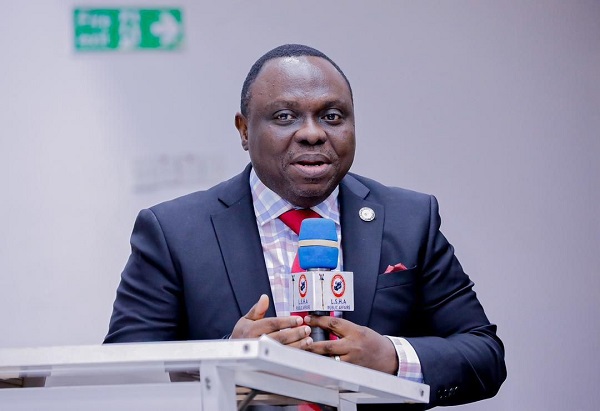
In his opening address, Lagos State Commissioner for Energy and Water Resources, Mr Biodun Ogunleye, assured Lagos State residents of stable and affordable electricity. He added that Lagos had been identified as a pilot corridor under the Federal Government’s 24/7 Energy Zones initiative. He said the reforms would be judged by the reliability, accessibility and affordability of electricity delivered to consumers, not merely by the creation of institutions or the passage of laws.

•Mr Biodun Ogunleye
He stressed further that Lagos was partnering with the Federal Government to address transmission constraints around Apapa and Ijora, following the establishment of a joint technical committee.
In his remarks, Seplat Energy Chief Executive Officer, Effiong Okon, said generators in Lagos homes and businesses had an estimated combined capacity of 19.2 gigawatts. Citing a study by Sustainable Energy for All (SEforAll) and the Lagos State Government, titled Beyond Gensets, Okon said households accounted for 8.8GW of the estimated capacity and small businesses 10.4GW. The study also put the number of generators in Lagos at about 4.5 million.
A major focus of the summit is attracting private-sector investment into renewable energy projects, mini-grids, solar home systems and other decentralised energy solutions. Lagos State is also seeking expressions of interest from prospective investors and project developers to accelerate the development of grid-scale renewable energy infrastructure and expand access to reliable electricity.
Discussions at the summit are also expected to address persistent challenges confronting electricity consumers and businesses, including inadequate infrastructure, metering gaps, energy affordability, supply reliability and the need for efficient distribution networks. Stakeholders are expected to explore practical interventions that can strengthen the electricity value chain and support the state's ambition of achieving energy sufficiency.

Panellists at the summit, however, warned that investment in state electricity markets could be held back by regulatory uncertainty and unresolved ownership issues involving distribution companies. Prof. Mobolaji Aluko, representing Ekiti State, said uncertainty over the ownership of distribution companies and their subsidiaries was delaying franchise agreements and investment decisions in Lagos. He said investors could remain unable to proceed with projects while ownership disputes or acquisition processes remained unresolved. He urged South-West states to cooperate on electricity planning, gas infrastructure and power supply for rail and electric transport.
The programme continues on Wednesday, November 11, while a technical tour of selected energy infrastructure projects is scheduled for Thursday, November 12.