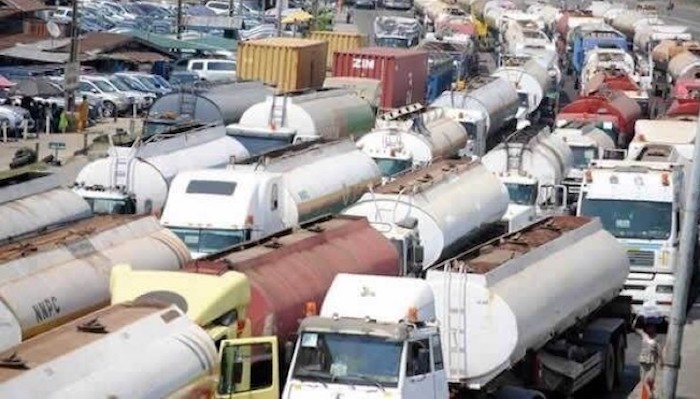
“We are not against the refinery. But the distribution model proposed is unsustainable. We saw what happened with NNPC's attempt to do the same—it led to refinery collapse,” Korie said.
Dangote Group, however, has defended its strategy. A senior official dismissed the backlash as “anti-Nigeria,” asserting the plan aims to reduce fuel prices by cutting out logistics middlemen.“We’re simply trying to remove the cost of distribution to make petrol more affordable. There’s enough market space for everyone,” the official said.
 Petrol price rises to N870/litre
Meanwhile, petrol prices at private depots surged to N870 per litre on Thursday, up from N815 the previous day. The increase follows Dangote Refinery’s abrupt suspension of petrol sales, further fueling uncertainty. In a memo titled “Important Update on DPRP Collection Account for PMS,” marketers were instructed to halt payments for product loading pending further notice.Depot operators have cited rising crude oil costs for the latest hike. Six major depots—including NIPCO, Aiteo, Rainoil, MenJ, Sahara, and Aipec—were selling at N870/litre, while Dangote’s depot offered a marginally lower price of N865/litre.Retailers, transporters back NOGASA’s concerns
The Petroleum Products Retail Outlet Owners Association of Nigeria (PETROAN) backed NOGASA’s position. President Billy Gillis-Harry warned that allowing one company to control refining, distribution, logistics, and pricing creates a dangerous monopoly.
Petrol price rises to N870/litre
Meanwhile, petrol prices at private depots surged to N870 per litre on Thursday, up from N815 the previous day. The increase follows Dangote Refinery’s abrupt suspension of petrol sales, further fueling uncertainty. In a memo titled “Important Update on DPRP Collection Account for PMS,” marketers were instructed to halt payments for product loading pending further notice.Depot operators have cited rising crude oil costs for the latest hike. Six major depots—including NIPCO, Aiteo, Rainoil, MenJ, Sahara, and Aipec—were selling at N870/litre, while Dangote’s depot offered a marginally lower price of N865/litre.Retailers, transporters back NOGASA’s concerns
The Petroleum Products Retail Outlet Owners Association of Nigeria (PETROAN) backed NOGASA’s position. President Billy Gillis-Harry warned that allowing one company to control refining, distribution, logistics, and pricing creates a dangerous monopoly.“We’ve seen it in the cement sector—what was once N115 per bag is now over N10,000. The same could happen with fuel,” he said.
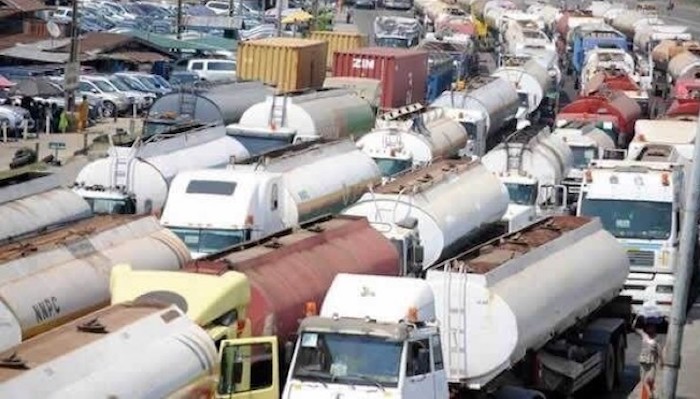
He noted that retail operators are already losing as much as N80 per litre due to price volatility and called for regulatory intervention from the Nigerian Midstream and Downstream Petroleum Regulatory Authority.Dangote’s plan and industry fears The $20bn Dangote refinery recently acquired 4,000 Compressed Natural Gas (CNG)-powered trucks to deliver fuel directly to manufacturers, telecom firms, aviation companies, and large retailers—bypassing traditional depots. The program, set to launch August 15, is projected to save Nigerians over N1.7tn annually and boost small business profitability.Despite the potential benefits, marketers are wary.
“The indirect effect will be massive. Over 50,000 filling stations and thousands of jobs are at stake,” Korie warned, urging Dangote to focus on refining and sell to depots for distribution.
IPMAN’s National Vice Chairman, Hammed Fashola, remained neutral but acknowledged industry anxiety.
“Naturally, intermediaries won’t like it. But the market is evolving. Let’s see how it plays out,” he said.