By Oke Peter
Nigeria’s energy sector recorded a week of major policy announcements, investment moves and industry developments, with efforts to stabilise the electricity market and strengthen domestic refining capacity dominating headlines.
The biggest talking point came from the power sector, where President Bola Tinubu disclosed that the Presidential Power Sector Task Force had been authorised to raise ₦4 trillion through a bond programme to settle verified legacy debts across the electricity value chain.
The intervention is aimed at addressing one of the industry’s most persistent challenges: liquidity. For years, mounting debts owed to power generation companies, gas suppliers and other market participants have constrained investments, weakened infrastructure development and contributed to the sector’s chronic inefficiencies.

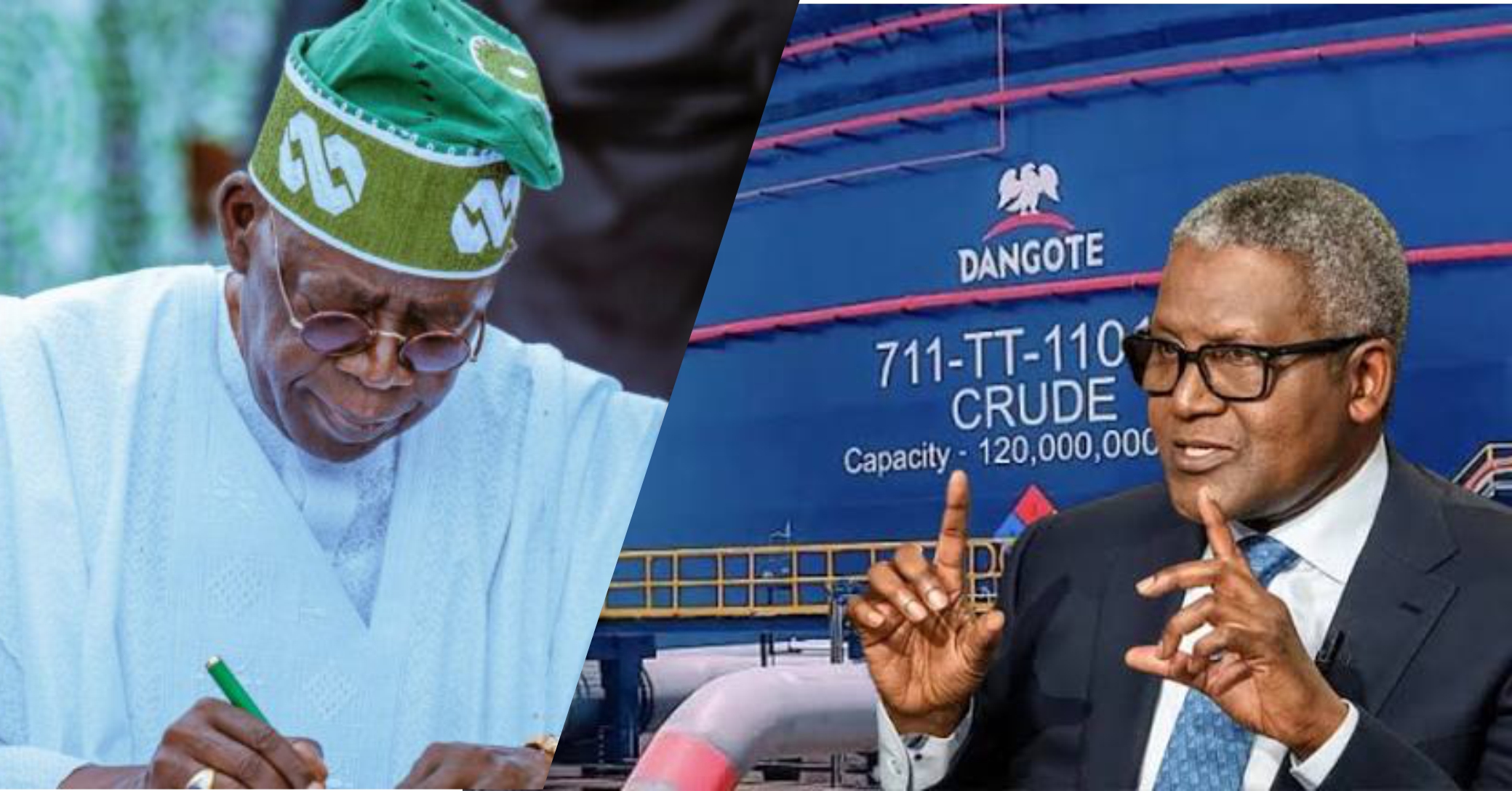
•President Bola Tinubu and Alhaji Aliko Dangote
Industry stakeholders view the proposed bond programme as a potentially transformative step. If successfully implemented, it could improve cash flow across the market, restore investor confidence and create the financial stability needed to support ongoing reforms in generation, transmission and distribution.
The announcement also reinforces the Federal Government’s broader efforts to reposition the electricity sector through market reforms, increased private-sector participation and improved service delivery. However, analysts note that the success of the initiative will depend largely on transparent implementation and sustained regulatory discipline.
Away from electricity, the downstream oil sector remained in focus as Dangote Petroleum Refinery intensified efforts to strengthen its financial position ahead of future expansion.
The refinery moved to raise about $1 billion through a private placement, a transaction that places its valuation at roughly $39 billion. The fundraising effort attracted strong investor interest, reflecting growing confidence in the refinery’s role as a key player in Africa’s energy landscape.
The move is expected to provide additional capital for growth initiatives while positioning the company for a future public listing. For Nigeria, the development further underscores the strategic importance of domestic refining in reducing dependence on imported petroleum products and improving energy security.
Operationally, the refinery also moved closer to restoring full output following reports that repairs on its gasoline-producing unit were nearing completion. The expected return to full operating rates is likely to bolster fuel supply and support regional exports at a time when demand for refined products remains robust across West Africa.
In the upstream segment, government officials continued engagements aimed at unlocking fresh investments in oil and gas projects. Discussions during the week centred on accelerating project development, improving investor confidence and advancing key final investment decisions that could bring billions of dollars into the sector.
The push comes as Nigeria seeks to reverse years of underinvestment and maximise the value of its vast hydrocarbon resources amid a rapidly evolving global energy landscape.
Meanwhile, conversations around energy transition gained further momentum. Stakeholders increasingly highlighted the need to balance investment in conventional energy resources with the expansion of renewable energy solutions, particularly as solar adoption continues to grow across the country.
The rapid deployment of solar systems is helping to bridge electricity access gaps, but it is also drawing attention to emerging challenges such as end-of-life management for solar panels and batteries. Industry experts say planning for future recycling and disposal infrastructure will be critical to ensuring that today’s clean-energy gains do not become tomorrow’s environmental burden.

Overall, the week reflected an energy sector undergoing significant transformation. From efforts to tackle long-standing power market debts to fresh capital raising in refining and renewed investment conversations in oil and gas, the industry continues to navigate a complex mix of opportunities and challenges.
The coming months will reveal whether these initiatives translate into tangible improvements in electricity supply, fuel availability and investor confidence. For now, the direction is clear: Nigeria is pushing ahead with reforms and investments aimed at strengthening energy security, improving market performance and laying the foundation for long-term growth.
As stakeholders across the value chain assess the week’s developments, one reality stands out—execution will be the ultimate test. Ambitious policies and investment plans have set the stage; delivering measurable results will determine their lasting impact on Nigeria’s energy future.