By Oke Peter
The Nigerian Upstream Petroleum Regulatory Commission (NUPRC) has approved 595 well re-entries, 145 new well-drilling operations and 39 Field Development Plans (FDPs) year-to-date in 2026, in a move to boost oil production, attract investment and strengthen Nigeria’s energy security.
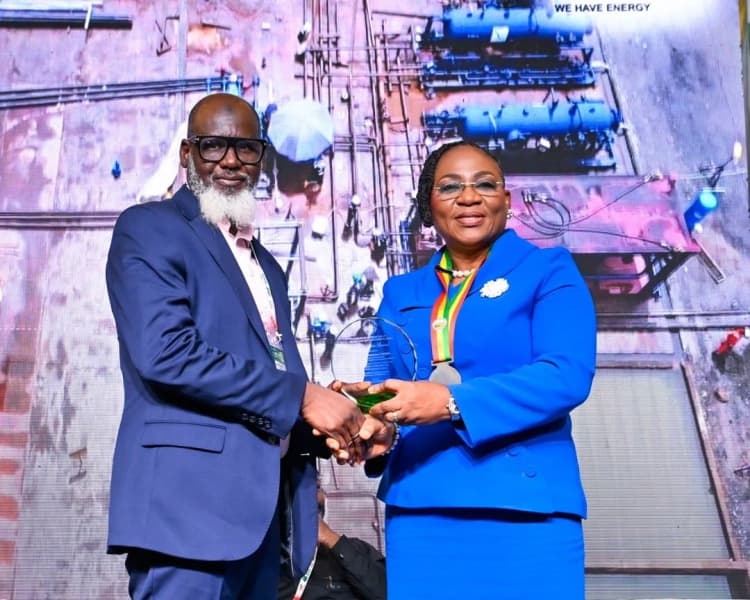
The Commission Chief Executive, Mrs Oritsemeyiwa Eyesan, disclosed the figures in Lagos on Tuesday, November 10, 2026, during a presentation at the management session of the 44th Annual International Conference and Exhibition of the Nigerian Association of Petroleum Explorationists (NAPE), held under the theme, “Energy Security in an Era of Global Disruption: Positioning Nigeria for Resilience, Competitiveness, and Prosperity.”
The CCE who was represented by the Deputy Director, Basinal Administration, NUPRC, Ahmad Abdullahi, explained that the approvals were part of the Commission’s strategy to ensure that regulatory processes support production growth and the availability of energy in the country.
The CCE announced, "Year to date, about 39 FDPs have been approved. About 145 new well-drilling approvals granted. Year to date, about 595 well reentry approvals were granted. That goes to tell that as a commission, we have improved our approval time level, which again reduce costs that is being wasted or for projects to continue to wait for approval.

“From the regulator’s perspective, to ensure that our energy security is not threatened, we must ensure that we approve Field Development Plans and new well-drilling applications to meet our production targets and guarantee energy availability."
The CCE noted that the rising number of approvals reflects improvements in the Commission’s approval processes, which have helped reduce waiting periods and the costs operators incur while projects remain on hold.
The NUPRC boss also disclosed that Nigeria’s total rig count now stands at 100 out of which 46 are currently active.
"We have more than 100 rigs in country. About 46 rigs are actively involved in drilling year to date. If you compare this with maybe what we had in 2021, you will see that you have more than about 300 percent increase," the NUPRC boss said.
Eyesan attributed the improvement to regulatory certainty, stressing that investors are more willing to commit capital when they have confidence in the policies and operating environment of the sector.
She further explained that the Petroleum Industry Act (PIA) has strengthened confidence in Nigeria’s upstream sector, particularly in seismic data acquisition, which is essential for identifying new oil and gas reserves.
According to her, multi-client seismic companies have invested more than $100 million in acquiring seismic data in Nigeria in the three years since the enactment of the PIA.
"Based on our record, in the last three years, from the enactment of PIA, multi-client companies have invested more than over $100 million in acquiring seismic data in Nigeria," she said.
The investments are expected to improve geological understanding of Nigeria’s sedimentary basins, provide better information for exploration decisions and support the discovery of new hydrocarbon resources.
On efforts to improve security in the oil and gas sector, Eyesan said the Commission had introduced initiatives, including the Advanced Cargo Declaration programme and coordinated surveillance involving the Nigerian National Petroleum Company Limited (NNPC), private security companies such as Tantita Security Services and the Nigerian Navy.
Eyesan who also spoke in a pannel at the management session stressed that the Commission’s responsibility goes beyond punishing errant operators and vandals, explaining that its broader objective is to create an environment where legitimate oil production is more profitable than crude oil theft.