The Federal Government has begun construction of the landmark $12 billion Lagos-Calabar Coastal Highway, a 700-kilometre infrastructure project expected to connect nine coastal states and enhance economic activities across Nigeria’s southern corridor. While the highway is projected to transform transportation and trade, experts warn that it faces significant climate and environmental risks that could threaten its long-term sustainability.
Balancing infrastructure development with climate realities
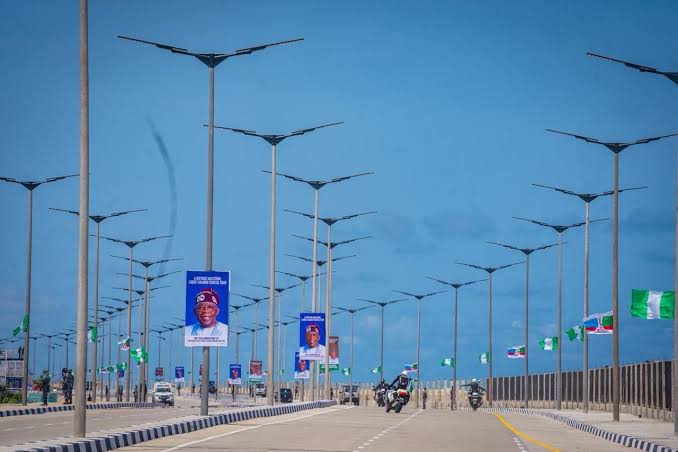
The six-lane coastal highway stretches from Lagos to Calabar, traversing low-lying coastal terrain, mangrove swamps and tidal channels along the Atlantic shoreline. Designed to improve connectivity and logistics, the project is being hailed as one of Nigeria’s most ambitious infrastructure undertakings.
However, engineering experts have expressed concerns over the vulnerability of sections of the road to coastal erosion and rising sea levels. Consultants note that the first 60 kilometres of the completed stretch lack sufficient natural coastal protection, such as mangrove buffers and offshore barriers, leaving the corridor exposed to the force of Atlantic Ocean waves.
To mitigate these risks, experts have recommended the urgent construction of reinforced sea defences and the restoration of natural barriers to protect the highway from erosion and flooding.

•A section of the Lagos-Calabar Coastal Highway
Coastal communities already feeling the impact
Residents living along the coastline say the effects of ocean encroachment are becoming increasingly visible.
“Two decades ago, the shoreline was a considerable distance away from our community,” said Lukmanara, a fisherman living about 30 kilometres from the start of the highway. “Today, the ocean has moved much closer, bringing the water dangerously near our homes.”
Such observations highlight the growing challenge of coastal erosion, which continues to reshape communities and ecosystems along Nigeria’s Atlantic coast.
Environmental concerns over Stubbs Creek Forest Reserve
Beyond coastal threats, environmentalists have raised concerns over the highway’s route through the Stubbs Creek Forest Reserve, one of Cross River State’s most important protected areas and a habitat for several endangered species.
Environmental impact assessments indicate that construction activities within the reserve could result in the release of approximately 3.51 million tonnes of carbon dioxide equivalent (CO₂e). The projected emissions come amid growing concerns over deforestation in Nigeria, where forest cover has continued to decline over the past two decades.
Data show that Nigeria has lost about 9 per cent of its forest area since 2000, while national tree cover has declined by 14.3 per cent between 2001 and 2024, underscoring the environmental significance of large-scale infrastructure projects.
Key project highlights
Estimated Cost: $12 billion
Length: 700 kilometres
Coverage: Nine coastal states
Route: Lagos to Calabar
Estimated CO₂ Emissions: 3,511,562 tonnes CO₂e
Key environmental concern
•Impact on Stubbs Creek Forest Reserve
•Major Climate Risk
•Coastal erosion and sea-level rise

Development ambitions amid climate concerns
The Lagos-Calabar Coastal Highway reflects Nigeria’s drive to expand critical infrastructure and stimulate economic growth. At the same time, it highlights the broader challenge facing many African countries: pursuing development while adapting to the increasing impacts of climate change.
As construction progresses, stakeholders say the project's success will depend on how effectively environmental safeguards and climate-resilience measures are integrated into its design and implementation.