By Oke Peter
President Bola Tinubu has assured global investors that Nigeria is recording improved foreign exchange stability following the removal of fuel subsidy, describing the policy as a major step in easing the economic burden on the country.
Tinubu gave the assurance in Paris, France, during a meeting with international investors, as part of his three-nation trip aimed at boosting investor confidence and attracting foreign capital into Nigeria.
Also speaking at the event, the Minister of Finance and Coordinating Minister of the Economy, Taiwo Oyedele, insisted that the Federal Government would not reinstate fuel subsidy despite growing public pressure over the rising cost of living.
According to Oyedele, subsidy payments created economic distortions and were unsustainable, stressing that the government would not return to price controls because it believes the market is capable of self-regulation.
“We will not bring back fuel subsidy because it creates distortions for the economy, and we won’t introduce price control because we believe in the market,” Oyedele said, adding that geopolitical tensions, including the situation in Iran, could open new investment opportunities for Nigeria as global players seek to diversify energy supply sources.

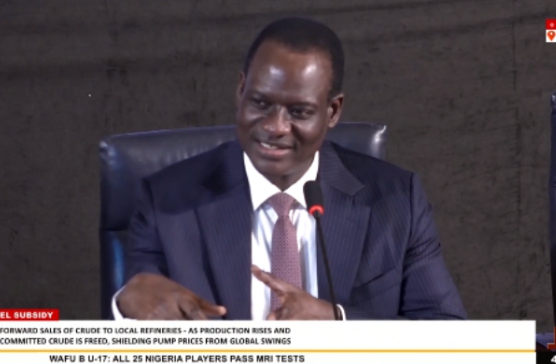
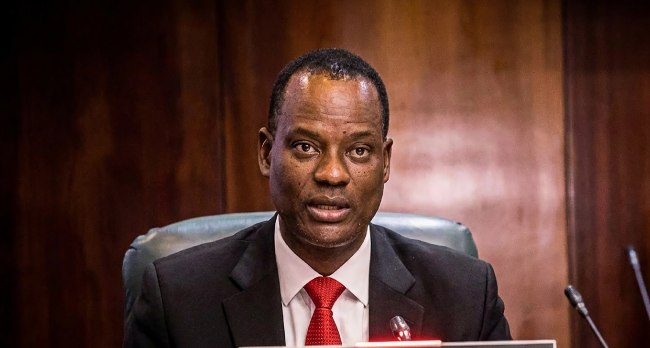
Minister of Finance and Coordinating Minister of the Economy, Taiwo Oyedele
Fuel subsidy removal, announced in May 2023, triggered a sharp rise in inflation and deepened economic hardship. Nigeria’s headline inflation surged from 22.41% in May 2023 to 34.19% by June 2024, while food inflation climbed above 39% by October 2024. The development, combined with naira devaluation, significantly increased transportation and living costs nationwide.
However, Tinubu told investors that the subsidy removal has helped stabilise Nigeria’s foreign exchange market.
“Subsidy that was a burden to the entire country was removed, and ever since we have achieved FX stability,” Tinubu said, according to a statement by his Special Assistant on Social Media, Dada Olusegun.
In a related statement, Tinubu’s Adviser on Information and Strategy, Bayo Onanuga, said the administration’s reform agenda was designed to remove long-standing distortions, stabilise macroeconomic indicators and create a foundation for inclusive economic growth.
Tinubu also reaffirmed his government’s commitment to transparency, fiscal discipline and reforms across key sectors, including the oil and gas value chain.
At the meeting, Oyedele highlighted Nigeria’s economic performance in 2025, stating that the country recorded 11.2% GDP growth in dollar terms last year, reinforcing the administration’s goal of building a $1 trillion economy by 2030.
He said the government’s priority is to ensure reforms translate into tangible benefits for Nigerians and pledged that quarterly financial data would be published to strengthen transparency.
Meanwhile, the Director-General of the Debt Management Office (DMO), Patience Oniha, assured investors that the Federal Government remains committed to responsible borrowing and sustainable debt management.
The investor engagement was attended by representatives of major financial institutions, including Citibank, France’s Amundi led by Valerie Baudson, BlueCrest, Ninety One, Kirkoswald Capital, Principal Finisterre, Prudential Global Investment Management (PGIM) and Mesarete Capital.

Tinubu told the investors that his administration is also implementing a multi-pronged security strategy, including police decentralisation and efforts to disrupt terrorist financing, to ensure stability and protect investments.
“The focus remains on policy stability and diligent execution to ensure these strategic shifts translate into concrete benefits for all Nigerians,” the President said.
Some of the investors reportedly commended the administration’s reforms and expressed optimism about Nigeria’s economic outlook, while one investor asked Tinubu about his agenda beyond 2027. The President responded by pledging stronger fiscal discipline, transparency and policy consistency.