By Oke Peter
The recent visit by the management of NNPC to Dangote Refinery marks a significant shift in tone and direction in Nigeria’s petroleum industry. Beyond a routine corporate engagement, the visit signals an intentional reset in relations between two institutions whose cooperation is critical to national energy security, market stability, and economic growth. At a time when Nigeria is striving to reduce fuel imports, conserve foreign exchange, and strengthen domestic refining capacity, alignment between both organisations is not just desirable but necessary.
Under the previous management led by Mele Kyari, the relationship between NNPC and Dangote Refinery was widely perceived as strained. The tension stemmed from a mix of commercial disagreements, policy uncertainty, and structural transition within the oil sector. As Nigeria moved from a subsidy regime toward a deregulated market, questions arose over pricing benchmarks, crude supply agreements, foreign exchange exposure, and market dominance. Dangote Refinery, as the largest single-train refinery in the world, entered the downstream market at a time of significant reform, and its scale naturally disrupted established supply chains and trading arrangements.

One major source of friction involved crude supply terms. The refinery sought stable and predictable access to domestic crude, while NNPC had to balance competing obligations, including joint venture commitments and international contracts. Disagreements over pricing formulas and payment structures were amplified by public statements from both sides, creating a perception of rivalry rather than partnership. Additionally, concerns were raised within policy circles about the implications of a dominant private refinery on competition and price control in a fully deregulated environment.
There were also broader institutional pressures. NNPC, transitioning into a limited liability company under the Petroleum Industry Act, was redefining its commercial identity. That transformation required it to operate more transparently and profitably, sometimes leading to cautious or defensive positioning in negotiations. Meanwhile, Dangote Refinery, backed by significant private capital and expectations, required operational certainty to meet production targets and debt obligations. These overlapping pressures contributed to a period of public disagreement that many observers described as unnecessary for two entities whose objectives should largely converge.

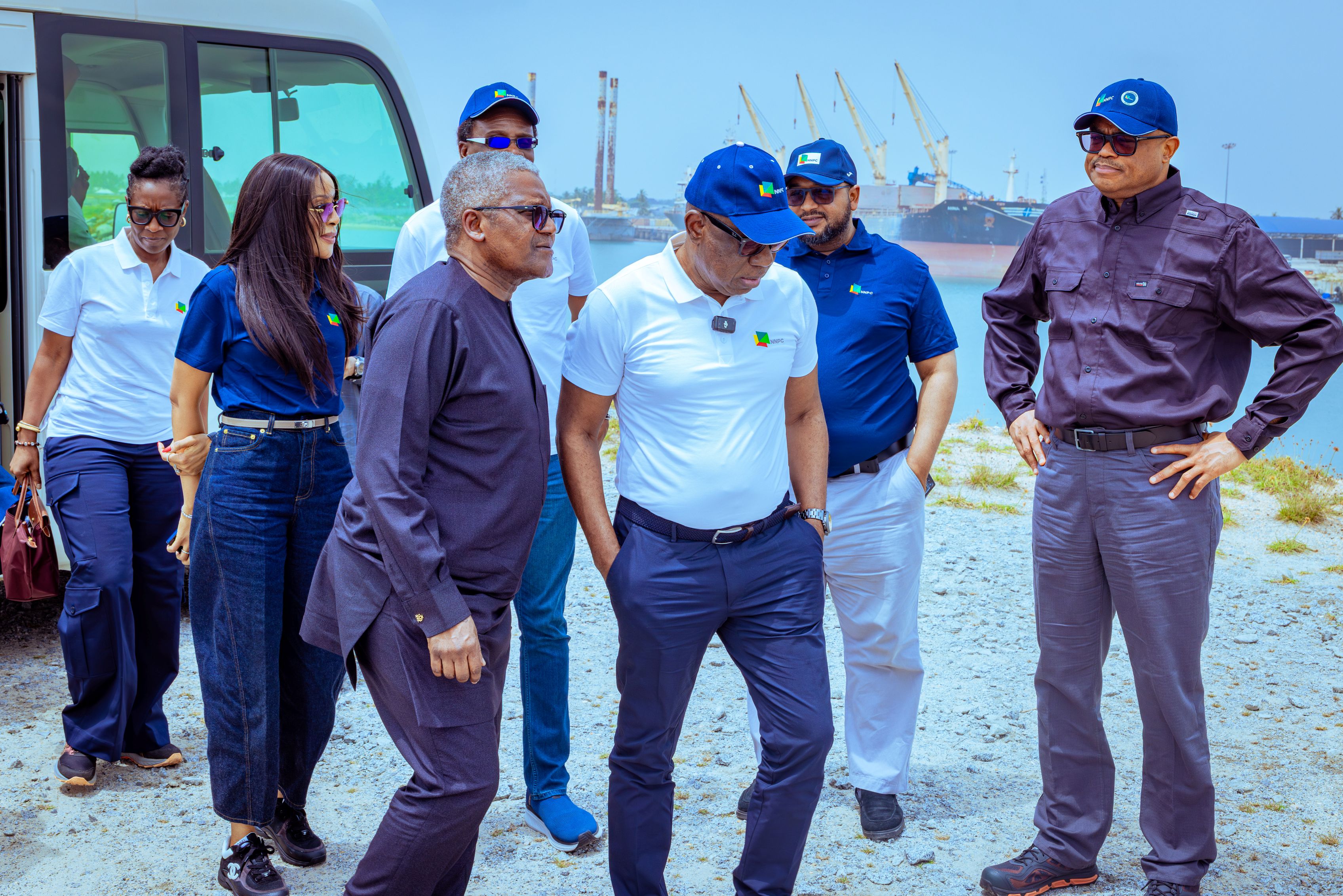
The entry of the Ojulari-led management represents a notable recalibration. Bayo Ojulari has approached the relationship with a tone that emphasizes collaboration, market realism, and long-term national interest. The recent visit to the refinery reflects more than symbolism; it underscores a recognition that domestic refining capacity must be fully integrated into Nigeria’s energy strategy.
Dangote Refinery itself, owned by Aliko Dangote, represents a transformative industrial investment. Its success reduces Nigeria’s reliance on imported petroleum products, cuts shipping and logistics costs, and potentially stabilizes domestic supply. For NNPC, partnering effectively with the refinery allows it to reposition from being a dominant importer of refined products to a strategic supplier of crude and a participant in value-added downstream operations.
The new management’s engagement appears grounded in pragmatism. Rather than framing the refinery as competition, the Ojulari-led team has signaled that both institutions can coexist within a competitive but mutually beneficial ecosystem. A stable crude supply arrangement supports refinery output; consistent refinery production supports market stability; and improved domestic supply reduces exposure to international price shocks. These shared interests provide a strong foundation for cooperation.

Moreover, improved relations could strengthen investor confidence. International partners closely monitor how national oil companies interact with major private investors. Public disputes can raise concerns about regulatory unpredictability or policy inconsistency. By contrast, coordinated engagement signals maturity in corporate governance and policy alignment. For a country seeking foreign direct investment in energy and infrastructure, this perception matters.
The visit also suggests a shift from public disagreement to structured dialogue. In complex commercial relationships, disagreements are inevitable, but their management determines outcomes. An approach that prioritizes quiet negotiation over public exchanges reduces market anxiety and encourages technical problem-solving. It allows both sides to address concerns such as pricing transparency, logistics integration, and export commitments without politicizing commercial issues.
From a broader economic perspective, the alignment between NNPC and Dangote Refinery could contribute to foreign exchange stability. Historically, Nigeria has spent billions annually on importing refined products. If domestic refining operates efficiently and receives consistent crude supply, pressure on foreign reserves may ease. NNPC’s role in ensuring supply chain coordination is therefore critical. A cooperative framework increases the likelihood that the refinery can operate near capacity, which in turn supports national macroeconomic objectives.
It is also important to view the relationship through the lens of market reform. Nigeria’s downstream sector is transitioning toward deregulation and price discovery. In such an environment, collaboration does not mean the absence of competition; rather, it means operating within clear rules and mutual respect. The Ojulari-led management appears to recognize that long-term institutional strength comes from predictable partnerships rather than adversarial positioning.

The tone of the recent engagement signals that both organisations understand their interdependence. NNPC controls significant upstream assets and trading infrastructure. Dangote Refinery provides large-scale domestic processing capacity. Together, they form complementary pillars of Nigeria’s petroleum value chain. The recalibrated relationship therefore reflects economic logic as much as corporate diplomacy.
Ultimately, the success of this renewed engagement will be measured by outcomes: stable product availability, transparent pricing mechanisms, reliable crude supply agreements, and reduced import dependency. Early indications suggest a willingness to pursue these goals collaboratively. By prioritizing national interest over institutional rivalry, the Ojulari-led management has positioned NNPC as a facilitator of industrial growth rather than a competitor to it.
In a sector long characterized by policy uncertainty and structural inefficiencies, the recent visit stands as a practical step toward alignment. If sustained, this cooperative approach could define a new chapter in Nigeria’s energy landscape—one where public and private capital work in concert to strengthen domestic capacity, enhance market stability, and advance economic resilience.