By Louis Strydom
Last year, I argued in my piece “Lean Carbon, Just Power”, that a limited and temporary increase in African carbon emissions is justified to meet the continent’s urgent electrification needs.
That position was not a retreat from climate ambition. It laid out a credible lean-carbon pathway that reconciles power systems development realities with climate arithmetic.
The central question remains: not whether emissions must fall, but how much temporary headroom is tolerable to accelerate energy prosperity for a continent responsible for roughly 4% of global CO2.
The flexibility equation
The future of Africa’s electrification is neither “all renewables tomorrow” nor “gas indefinitely”. Intermittent renewables alone cannot power the continent’s fragile grids at scale. Solar and wind require highly dispatchable power capacity to ensure the reliability of the system.
The real choice is not between renewables and fossil fuels in the abstract; it is between flexible firm power that complements solar and wind, and the de facto alternative: the increasing reliance on high-emissions diesel backup and widespread grid instability.
I argue that a realistic transition strategy must embrace “a capped carbon overdraft”: a strictly bounded, time-limited deployment of flexible power plants running on gas that supports the deployment of renewables and declines according to a binding schedule. This strategy means accepting minimal, temporary emissions to allow for a faster, cleaner and more resilient clean transition.
The response to this argument drew serious scrutiny. Three objections deserve a direct answer.
First: does the case for flexible thermal power hold on a full life cycle basis?
It does. Our power system studies in Nigeria, Mozambique, and Southern Africa consistently reach the same conclusion - the least-cost long-term system is renewables-led, with flexible engines balancing variability. That holds across capital, fuel, maintenance, carbon pricing, and decommissioning.

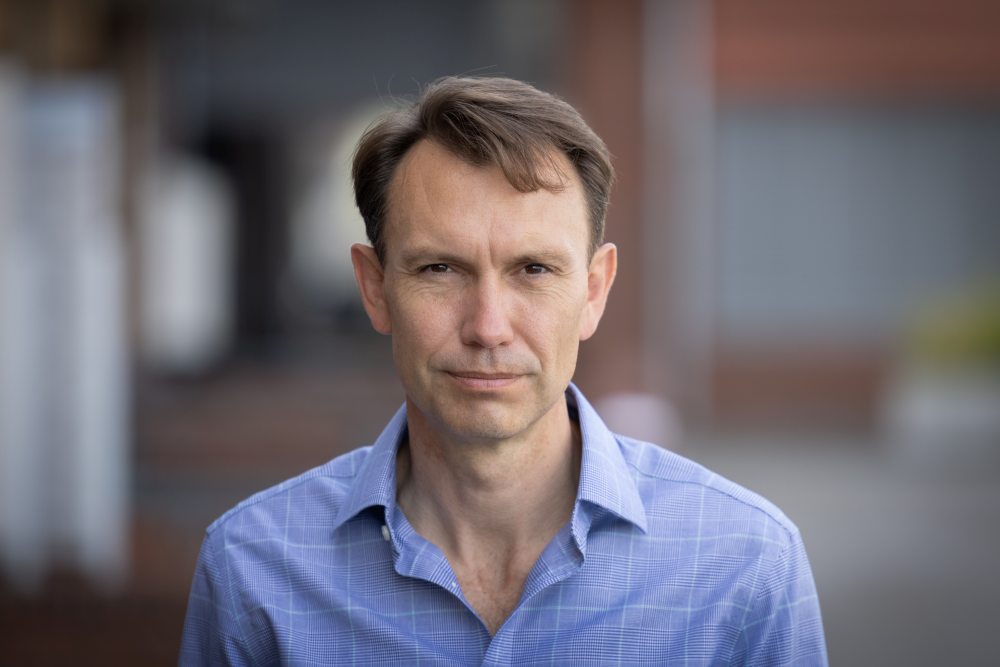
Louis Strydom, Director of Growth and Development for Africa and Europe at Wärtsilä Energy
South Africa’s Integrated Resource Plan 2025, approved in October, makes the point concretely: it projects 105 GW of new capacity by 2039 with renewables as backbone, yet includes 6 GW of gas-to-power by 2030 explicitly for grid stability. Even the continent’s most industrialised economy concludes it needs dispatchable thermal capacity to underpin a renewables-heavy system. The question is not whether firm power is needed, but how to make it as clean and flexible as possible.
Second: does this argument talk over Africa’s ambition to leapfrog fossil fuels?
No. It is designed around that ambition. Wärtsilä launched the world’s first large-scale 100% hydrogen-ready engine power plant concept in 2024, certified by TÜV SÜD, with orders opening in 2025. Ammonia engine tests now demonstrate up to 90% greenhouse gas reductions versus diesel. These are not roadmaps. They are ready-to-use technologies. The honest difficulty is timing. Sub-Saharan grids averaged 56 hours of monthly outages in 2024. The Africa diesel generator market is growing at nearly 7% a year, projected to reach 1.3 billion dollars by 2030. Nigerian businesses spend up to 40% of operational costs on fuel for backup power. That is the real counterfactual - not a continent neatly powered by sun and wind, but a billion-dollar diesel habit deepening every year the grid stays unreliable. Even Germany is tendering 10 GW of hydrogen-ready gas plants with mandated conversion by 2035 to 2040. If Europe’s largest economy needs transitional thermal flexibility to backstop an 80% renewables target, insisting low-income African nations skip that step is not climate leadership. It is development deferred.
Third: does the carbon comparison include full life cycle methane?
It must. Methane leakage materially worsens the climate profile of gas-to-power because methane is a far more potent greenhouse gas than CO₂. If leakage exceeds a few percent of production, gas loses its advantage over coal on a 20-year timeframe.
But the IEA notes that 40% of fossil methane emissions could be eliminated at no net cost with existing technology. My claim that gas has a lower footprint than coal is conditional on aggressive methane management - eliminating flaring and venting, enforcing measurement under frameworks like the EU Methane Regulation and OGMP 2.0. Without those conditions, the arithmetic fails. But the real choice in most African markets is not between pristine gas and pristine renewables.
It is between ageing coal, a growing fleet of unregulated diesel generators, and new fuel-flexible plants that start or transition to gas and convert to hydrogen or ammonia on a contractual schedule. Displacing diesel and coal with well-managed gas in future-fuel-ready engines cuts CO₂, local pollution, and water use now, while building the infrastructure for fuels that eliminate fossil dependence entirely.
The critics are right to demand rigour - full life cycle accounting, methane transparency, credible timelines. Those are exactly the conditions that make a lean-carbon pathway work. Africa does not seek permission to pollute. It seeks the tools to end energy poverty while peaking emissions early and declining fast. Build engine power plants that run on available fuel today. Mandate their conversion tomorrow. The carbon overdraft stays small. The payback stays fast. And the technology to switch to sustainable fuels is already here.
•Louis Strydom is the Director of Growth and Development for Africa and Europe at Wärtsilä Energy