By Kelechi Onwujuba
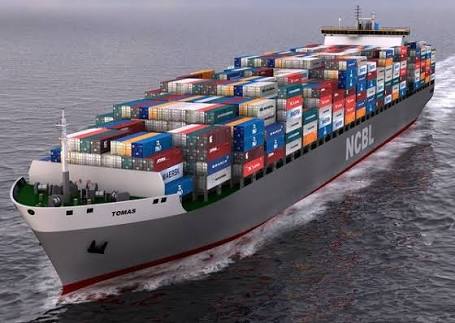
Nigeria’s petrol import bill has plunged by 96 percent, dropping from approximately N2.3 trillion in the first quarter of 2025 to less than N90 billion in the corresponding period of 2026, according to Olu Verheijen, Special Adviser to President Bola Tinubu on Energy.
Speaking at the 2026 Nigeria-British Chamber of Commerce Energy Day in Lagos, Verheijen described the sharp decline as evidence of a fundamental shift in Nigeria’s energy landscape, driven by growing domestic refining capacity and reduced reliance on imported petroleum products.

She noted that the country’s longstanding challenge has not been a lack of natural resources, but an inability to translate those resources into economic value, revenue generation and productivity.
According to her, ongoing energy reforms are aimed at reversing that trend and positioning the sector as a driver of economic growth.
“When energy works, factories run, farms process, transport gets cheaper, and government can invest in its people,” Verheijen said. “When energy fails, every Nigerian pays — in diesel costs, food prices, lost jobs and pressure on the naira. That is why energy reform is economic reform.”
She revealed that Nigeria’s petrol production has increased from virtually zero in 2023 to about 48 million litres per day, significantly boosting domestic refining output.
“For the first time in a generation, the majority of the petrol Nigerians consume is now refined here at home, not imported,” she said.
Verheijen explained that the rise in local refining has eased pressure on the foreign exchange market by reducing the demand for dollars previously required to fund large-scale fuel imports.
“For decades, every cargo of imported petrol was a standing demand for scarce dollars — a structural drain that weakened our currency,” she added.
Recent economic data appears to support the trend. Nigeria recorded a trade surplus of N7.54 trillion in the first quarter of 2026, representing a 340.88 percent increase from the preceding quarter, according to the National Bureau of Statistics (NBS).
The improvement was largely attributed to lower petroleum product imports and stronger crude oil export earnings. During the period, imports declined by 18.17 percent year-on-year to N13.61 trillion, while exports rose to N21.16 trillion.

Verheijen said the reduction in fuel imports reflects a deeper structural transformation of Nigeria’s fuel supply chain, with domestic production increasingly meeting local demand.
She added that the impact of the reforms is also becoming evident in government finances.
“Total federation revenue rose to about N21 trillion in 2024, up from roughly N12 trillion in 2023 — nearly doubling in a single year,” she said.
According to the presidential adviser, the broader objective of the reforms is to strengthen economic stability, eliminate market distortions and expand local value creation across the energy sector.
Further underscoring the shift, the Central Bank of Nigeria (CBN) reported on June 18 that imports of refined petroleum products fell by 87.5 percent to $310 million in the first quarter of 2026, compared with $2.48 billion recorded in the previous quarter.