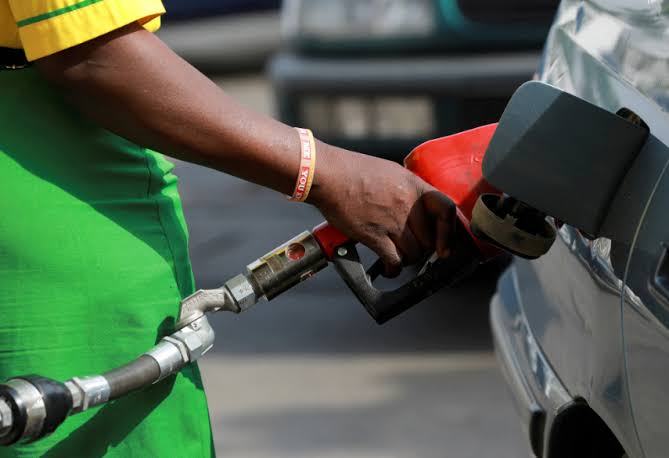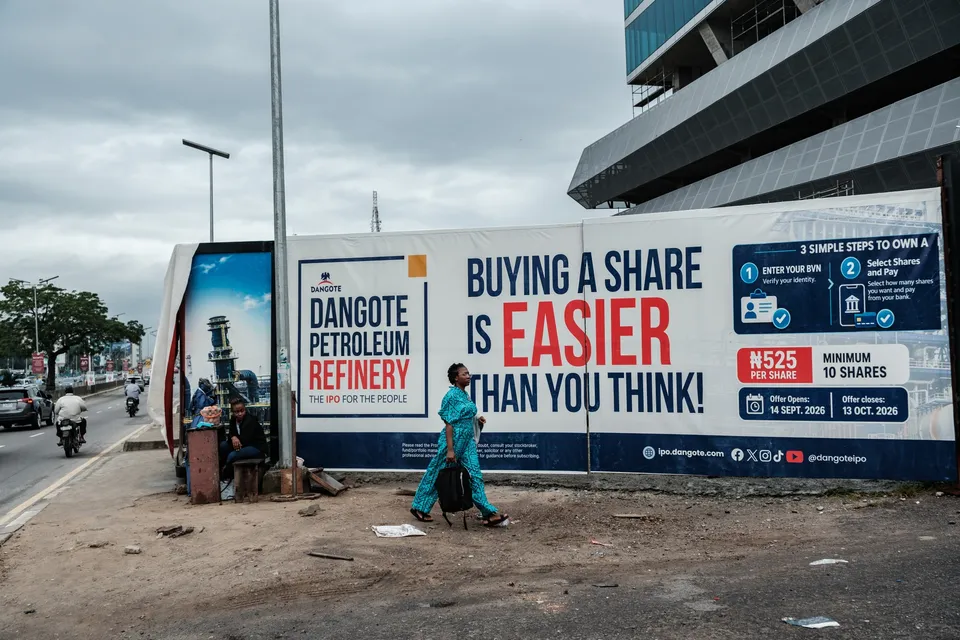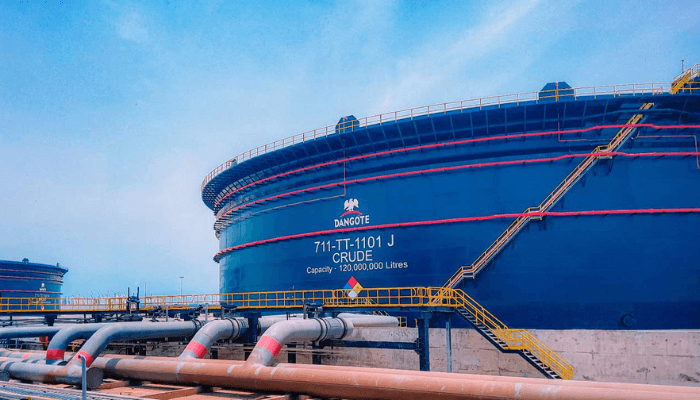
Petrol prices in Nigeria may climb to about N1,400 per litre this week as marketers await a possible repricing of Premium Motor Spirit (PMS) by the Dangote Refinery amid rising crude oil prices, supply constraints and logistics challenges.
Industry sources said petrol loading was halted at the refinery over the weekend, raising expectations that a fresh ex-depot price adjustment could be announced soon.
The development comes as global crude prices surge due to escalating tensions in the Middle East, which have increased feedstock costs for refiners and tightened supply in international energy markets.
With pump prices already averaging around N1,200 per litre in some parts of the country, marketers warned that retail prices could approach N1,400 per litre if crude oil prices continue their upward trend toward $100 per barrel.

Marketers confirm loading disruption
The Petroleum Products Retail Outlets Owners Association of Nigeria (PETROAN) said its members were unable to load petrol from the refinery on Sunday.
PETROAN National President, Billy Gillis‑Harry, confirmed the development, stating that marketers are awaiting clarity on the refinery’s next pricing decision.
“Today we didn’t load and we are not sure what will happen tomorrow. It is because of the possibilities around crude oil prices,” he said.
Sources within the Major Energy Marketers Association of Nigeria (MEMAN) also indicated that loading activities had slowed while industry operators anticipated a potential price review.
Similarly, the Nigerian Association of Road Transport Owners (NARTO) said tanker drivers were largely unable to lift products from the facility, adding that only a few marketers, including MRS Oil Nigeria and NNPC Retail, were reportedly allowed to load fuel.
Energy analyst Jide Pratt noted that the expected repricing could reflect current international crude oil prices rather than the refinery’s earlier ex-depot benchmarks.
He added that the refinery has faced challenges sourcing sufficient crude locally, forcing it to rely partly on imported supplies.
“This shows the risk of having a single dominant supply source for the market,” he said.
Dangote Group dismisses claims
However, the Dangote Group denied reports that loading had stopped.
The company’s Chief Corporate Communications Officer, Anthony Chiejina, described the claims as “nonsense,” maintaining that product pricing would continue to reflect prevailing international market conditions.

Pump prices above N1,000 in Lagos
Market checks across filling stations in Lagos show that petrol prices remain above N1,000 per litre, with pump prices ranging between N1,015 and N1,057, depending on location and supply chain costs.
At Mobil station in Idowu Egba along LASU–Isheri Road, petrol sold for N1,015 per litre, while Petrocam dispensed fuel at N1,050 per litre.
Similarly, MRS Oil Nigeria outlets sold petrol between N1,030 and N1,040 in parts of Alimosho, while other stations such as Heyden Petroleum and Northwest Petroleum recorded similar price ranges.
Data from the Major Energies Marketers Association of Nigeria shows that the current ex-depot price of PMS in Lagos ranges between N940 and N1,000 per litre.
The association’s energy bulletin also indicates that Nigeria’s import parity price averaged about N748.46 per litre over the past 30 days, while spot market prices rose to around N910 per litre, reflecting volatility in global petroleum trading.
Motorists express concern
For many Nigerians, the technical pricing dynamics offer little relief.
Commercial driver Ibrahim Lawal, who operates along the Iyana Ipaja–Oshodi corridor, said rising petrol costs may force transport operators to increase fares again.
“Fuel is now over N1,000 per litre in many stations. Every time the price changes, transport fares must go up,” he said.
Another motorist, Saheed Adeyemi, lamented the uncertainty surrounding pump prices.
“Some stations sell for N1,030, others for N1,050, and sometimes even higher. We now drive from one station to another looking for cheaper fuel,” he said.
Crude prices driving local costs
Market intelligence from MEMAN shows Brent crude trading around $85 per barrel, while Nigeria’s Bonny Light crude is above $83 per barrel, levels historically associated with rising refined product prices.
According to the Dangote refinery, Nigerian crude currently trades $3–$6 above Brent, and when freight costs of about $3.50 per barrel are included, landing costs rise to $88–$91 per barrel.
The refinery also disclosed that it receives about five crude cargoes monthly from the Nigerian National Petroleum Company Limited, far below the 13 cargoes needed monthly to sustain full-scale domestic production.
The supply shortfall forces the refinery to procure additional crude from international markets using foreign exchange, exposing the domestic fuel market to currency volatility.
Middle East tensions push diesel costs to N620bn
The impact of the Middle East crisis is also raising operating costs across Nigeria’s economy.
Estimates based on data from the Nigerian Midstream and Downstream Petroleum Regulatory Authority (NMDPRA) suggest Nigerian manufacturers may spend about N620 billion on diesel in March as companies increasingly rely on generators due to unreliable electricity supply.
Global oil prices have surged about 21 per cent, while aviation fuel prices have risen roughly 87 per cent in just over a week.
The disruption of shipping routes around the Strait of Hormuz has also driven freight costs sharply higher, with tanker rates for large crude carriers jumping more than 200 per cent.
Diesel prices in Nigeria have climbed from N929 per litre in late February to around N1,428, increasing the financial burden on factories, logistics firms and small businesses.
Aviation fuel surge may raise airfares
The price of aviation fuel has also spiked, rising from N965 per litre on February 25 to about N1,785 per litre, an increase of nearly 85 per cent.
With Nigerian airlines consuming roughly three million litres daily, the sector could spend about N166 billion on jet fuel in March, compared with N89.7 billion under previous price levels.
Industry analysts say airlines may soon raise ticket prices to offset the increased cost burden, noting that fuel accounts for 40–50 per cent of airline operating expenses.