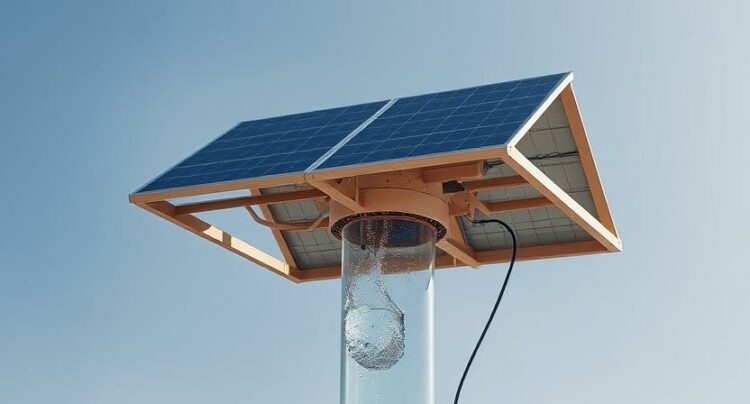

They developed an Air Water Generator receiving energy from 120 W solar panels, which includes a compact direct current heater, a heat removing device and a ventilator. The joint operation of these devices creates the conditions for condensate dropout, which is then collected into a tank. The intellectual controller using C++ language controls the operation and adapts the system to the current weather conditions. A 12 А·h battery assures the operation of the installation even when there is not enough sunlight.
Introducing the feedforward incremental conductance (FFINC) algorithm was the key innovation allowing for the solar panels to operate at their maximum capacity even when the lighting intensity changes. This improves the efficiency and reduces the energy consumption rate. On top of that, the team designed a small-size heater made of ceramics and wolframium (tungsten) featuring low cost and high heat conductivity.
The tests showed that the system is capable of producing up to 2 liters of water per day given the relative humidity about 40 %. The production cost of 1 liter of water is practically zero, if we do not take into account the initial equipment costs. To compare: the existing commercial analogues need approximately USD 0.59 to produce the same quantity of water.
The researchers believe that their development will be widely used and will become accessible technology highly demanded in emergency situations.