German engineering giant Siemens has revived the previously stalled $2.3 billion power agreement with Nigeria, signalling renewed momentum in efforts to modernise the country’s electricity infrastructure and expand national grid capacity.
The government-to-government partnership, originally initiated under former President Muhammadu Buhari, gained fresh traction after President Bola Tinubu assumed office. The revival marks a significant step in addressing Nigeria’s longstanding power supply challenges.

At the heart of the agreement is the Presidential Power Initiative (PPI), designed to modernise Nigeria’s transmission and distribution systems and significantly boost electricity access nationwide.
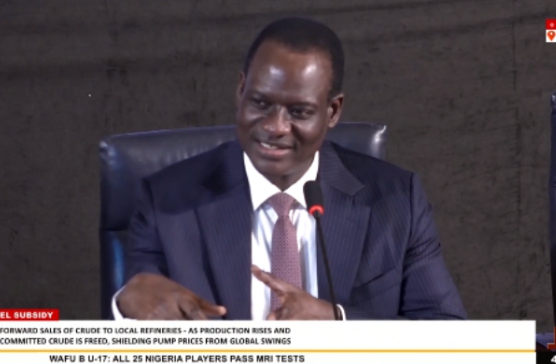
Speaking on Wednesday at the Sub-Saharan Africa International Petroleum Exhibition and Conference (SAIPEC) in Lagos, Germany’s Deputy Head of Mission in Nigeria, Johannes Lehne, said the agreement remained largely dormant until the current administration reactivated it.
“The strange thing was that this partnership was dormant until the beginning of President Tinubu’s time, where actually we revived this,” Lehne said.
The deal, valued at $2.3 billion, was conceived to overhaul Nigeria’s transmission and distribution infrastructure through a phased capacity expansion plan. Siemens set targets to increase available power from the current average of about 4,000 megawatts (MW) to 7,000 MW in the first phase, scaling up to 11,000 MW and ultimately 25,000 MW.
Earlier review signalled implementation challenges
In 2023, Nigeria’s Minister of Power, Bayo Adelabu, disclosed that the federal government would review the agreement to reflect changing economic and regulatory realities since its signing in 2018.
“The situation is no longer the same as we had in 2018. What we are doing is to have a holistic review of the entire scope of this project and amend it to suit the current situation,” Adelabu said during an interview on ARISE News.

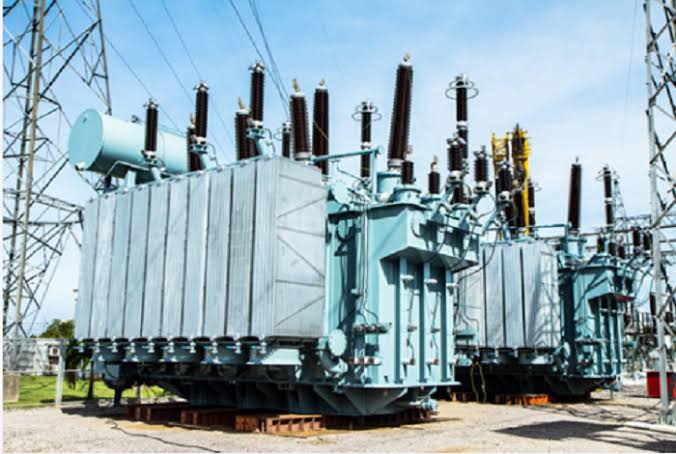
He attributed earlier delays to the COVID-19 pandemic, political transition, and ongoing reforms within the power sector. Despite these setbacks, a pilot phase moved forward, involving the importation of 10 mobile substations and 10 transformers. Once fully deployed, these installations are expected to boost transmission capacity by approximately 1,300 MW.
Germany eyes deeper energy cooperation
Beyond grid modernisation, Germany and Nigeria are expanding broader energy cooperation, including renewable energy development and sustainable energy practices.
Through its Energy Support Programme, Berlin is sharing expertise in diversifying energy supply and scaling renewables such as solar, wind, and geothermal power.
Lehne noted that many countries are undergoing what he described as “energy addition” rather than a complete transition away from fossil fuels, emphasising that natural gas will remain a critical industrial feedstock in Germany for decades.
Following the Russia-Ukraine crisis, Germany diversified its energy imports and rapidly developed liquefied natural gas infrastructure. Lehne said Berlin is open to sourcing gas from Nigeria as part of its long-term energy security strategy.
“It is not clever to put all your eggs in one basket,” he said.
Despite holding Africa’s largest proven gas reserves, Nigeria’s production levels remain below those of leading global producers — a gap both countries hope deeper cooperation could help narrow.
Source: Business Insider Africa