
IGU Secretary General Mel Ydreos at the LNG2026 conference in February.
The Strait of Hormuz disruption has exposed weakness in the global energy system and reignited debate over security of supply, but it should not be used to justify an accelerated shift away from fossil fuels, says the secretary general of the IGU
By Joseph Murphy
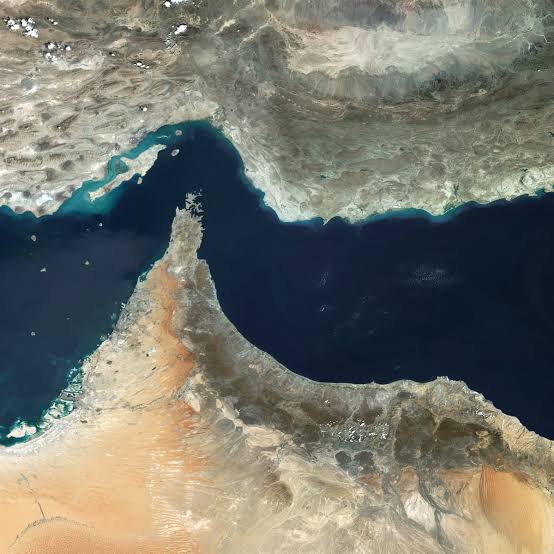
Policymakers should avoid politicising the oil and gas crisis triggered by the US-Iran conflict by using it to justify an accelerated shift away from fossil fuels, Mel Ydreos, secretary general of the International Gas Union (IGU), told Petroleum Economist. The closure of the Strait of Hormuz and other fallout across energy markets should not be responded to with “ideologically driven policy but realistic pathways forwards”, that recognise gas will remain essential to global energy systems for decades to come.
“Particularly in Europe, they are trying to politicise the current situation by saying, ‘we told you so, we have got to get rid of fossil fuels’,” he explained. “[But] you cannot replace them any time soon.”
Instead, the crisis raises deeper questions about security of supply, particularly the role of gas storage and the vulnerability of import-dependent economies to price shocks and supply disruptions.
“Energy systems are extremely complex. Policy should not be ideologically driven,” he said.
While acknowledging the expansion of renewables, Ydreos argued that their intermittency and limitations in industrial applications and heating mean gas will remain essential. He also pointed to the dependence of key sectors on hydrocarbon feedstocks.
“So many products, from pharmaceuticals to fertilisers, are produced from oil and gas, and there are no obvious alternatives,” he said.
At the same time, Ydreos said the industry’s efforts to reduce emissions—particularly methane—are often overlooked.
“We are actually leading the world in the reduction of methane emissions,” he said. “Yet we rarely get credit for it. We only get criticised for it.”
A fragmented global impact
The disruption has exposed stark regional differences in how gas markets absorb shocks, with Europe—which receives just 8% of its LNG from Qatar—facing a price crisis, Ydreos said. On the other hand, parts of Asia are contending with physical shortages given their level of dependence on the country.
In Europe, the supply is still there, although the loss of Qatari LNG flows globally has complicated the seasonal storage cycle. The continent was already contending with low storage levels before the crisis as a colder-than -usual winter led to increased withdrawals.
“While normally we would start to refill the stores at this time of the year, that will be deferred,” Ydreos said. The EU will need to reach 90% storage utilisation by the start of November, but trying to restock too fast will put further upwards pressure on prices.
In Asia, by contrast, the impact is more acute. Countries such as Pakistan and Bangladesh, heavily reliant on Qatari LNG, are struggling to compete for scarce spot cargoes at elevated prices.

“It is almost back to where we were in 2022… when Southeast Asia was priced out of the market,” Ydreos said. “The more affluent countries were able to bid for those cargoes… but it left the other countries very vulnerable.”
The recurrence of another crisis just four years later could prompt a reassessment of energy policy in developing Asia, he said.
North America remains largely insulated due to abundant domestic supply, with the impact felt mainly through higher fuel rather than natural gas prices. In Latin America, where LNG is typically used as a seasonal balancing fuel, the effects will depend on how long the disruption persists. Demand for LNG there typically peaks in the winter, which starts in mid-June.
While the closure of Hormuz has disrupted roughly 20% of global LNG supply, Ydreos stressed the impact on the broader gas market was more limited once pipeline flows are taken into account. If they are, it is only a 4% disruption.
“I am not trying to downplay the impact, especially for those countries that are highly reliant on gas and do not have pipeline access,” he said, adding that beyond the impact on oil and gas, the closure of Hormuz had also disrupted 30% of the world’s fertiliser supply.
Ydreos cautioned against market interventions, such as gas price caps by the EU and by some of its member states. While acknowledging the political pressure created by high energy costs, he said such measures risk distorting supply signals at a time when flexibility is critical.
Strategic gas reserves?
The crisis has also exposed a key structural weakness in gas markets compared with oil: the absence of true strategic reserves.
“Oil has the advantage that it has strategic reserves… there is no such thing on the gas side,” Ydreos said. “We have very important storage assets, but they are really part of the operational resilience of the system. They are not intended to be a strategic reserve.”
The debate over gas storage is emerging as a central policy question, particularly in regions with limited capacity such as Asia. China, for example, has storage equivalent to less than 8% of annual consumption, compared with 20–30% in Europe and North America. Beijing is already working to expand capacity, having added more than any other country since 2022.
Still, the role of gas storage across the world is to create a more optimal system that is responsive and resilient in meeting highs and lows in seasonal demand, rather than serving as a strategic reserve in the event of geopolitical crises such as the current one.
Expanding gas storage so it could become a strategic reserve would require a fundamental shift in policy—as well as funding.
“The question of strategic reserve takes a completely different mindset,” he said. “And the biggest question is: who pays for it?”
Developing large-scale storage assets, such as salt caverns or depleted fields, requires long-term investment certainty. That, in turn, depends on confidence that gas will remain part of the energy mix for decades.
“You need to tell people that their investment is not going to be wasted,” Ydreos said. “You have to tell people that we are going to need gas in 15 years, 20 years, not only five years.”
A long game with ‘speed bumps’
Even if shipping through Hormuz resumes quickly, the recovery of LNG supply will be gradual. Qatar has confirmed that two of its 14 liquefaction trains were damaged by Iranian strikes, knocking out 17% of its capacity for 3–5 years. And the remaining trains cannot be restarted with “just a flip of a switch”, Ydreos said.
“It will take some weeks before the plant comes back up, and weeks after that to get to full capacity.”
In the meantime, producers elsewhere are maximising output. Plants are running at about 95% of nameplate capacity and can go beyond that threshold safely. Operators are also deferring maintenance where possible, and new supply is also entering the market, with LNG Canada reaching full capacity in March and the first train of Golden Pass LNG in the US likely launching in the near future.
Despite the disruption, Ydreos said the crisis is unlikely to fundamentally alter the long-term trajectory of LNG, which is supported by a wave of new projects—with 270mt of new capacity expected by 2030 that is already sanctioned and under construction.
While acknowledging that the disruption may prompt policymakers to question their reliance on LNG—potentially turning back to coal or accelerating renewables—he said such decisions must be weighed against broader energy trade-offs.
“If you are highly reliant on LNG… I think it is very legitimate that those questions will be asked, but they need to be assessed within the context of the energy trilemma,” he said, balancing emissions targets, affordability and security of supply.”
Ydreos said the industry remains confident in its ability to meet global demand over the long term, despite periodic disruptions.
“It is a long game, and there are speed bumps along the way. Some of them are bigger than others,” he said. “But I have no doubt that the industry is well positioned to continue to serve the needs of the world.”
He added that the crisis should be seen as a reminder of the geopolitical risks inherent in global energy systems, rather than a reason to abandon gas.
Source: Petroleum Economist