By Olawale Aina
President Bola Ahmed Tinubu’s latest promise that Nigerians will begin to enjoy cheaper transportation from October 1 raises an uncomfortable question: after more than three years of fuel subsidy removal, where exactly are the benefits of the policy for ordinary Nigerians?
The President says state governors have agreed to leverage Compressed Natural Gas (CNG) and electric vehicles to reduce transportation costs, with a joint Federal and State committee expected to implement the measures immediately. He says a CNG-powered vehicle can spend 60–80 per cent less on fuel than a petrol-powered vehicle and wants Nigerians to begin benefiting from those savings from October 1.
The ambition sounds attractive. But Nigerians are entitled to ask why October 1 has suddenly become the date when cheaper transport should begin.
What exactly have Nigerians gained from subsidy removal?
The central argument for removing the petrol subsidy was that government could no longer sustain the cost and that the resources saved would be redirected towards development and improving citizens’ welfare.
But for millions of Nigerians, the immediate reality has been dramatically higher transport fares, food prices and operating costs.
Indeed, the government's own CNG programme was introduced as a response to the consequences of subsidy removal, rather than as a benefit that existed before the reform. The CNG initiative was specifically positioned as a cheaper alternative to petrol and a mechanism for cushioning the impact of the policy.

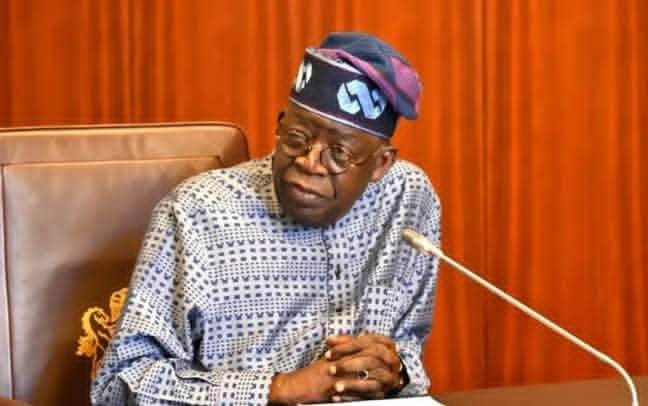
•President Bola Tinubu
That raises the fundamental question: if Nigerians have endured years of higher energy and transportation costs while waiting for the promised benefits of subsidy removal, when exactly should they expect to see a measurable return from the sacrifice?
The government says more than 120,000 vehicles have been converted to CNG and that more than 100 additional gas projects are being financed. These are important developments. But infrastructure statistics do not automatically translate into cheaper transportation.
Motorists in Abuja are reportedly spending hours, and sometimes overnight, waiting at limited CNG stations. The report also puts the number of active autogas stations at about 70, despite the growing number of converted vehicles.
A cheaper fuel that motorists cannot reliably obtain is not yet a cheaper transport system.

Why October 1?
The President's October 1 target deserves scrutiny. Why October 1? What specific mechanism will cause transport fares to fall on that date? Will the Federal Government subsidise CNG? Will states finance conversion and fleets? Will transport unions agree to new fares? Will there be enough CNG at filling stations?
The governors' own statement suggests that important details remain unresolved. They agreed to further consider the financing and implementation framework, while the timeline and operational details were still to be worked out.
That makes the October 1 declaration appear more like a political target than a clearly demonstrated economic timetable.
A credible promise should therefore come with measurable benchmarks: how many buses will be converted, how much CNG will be available, what fare reduction is expected, who will finance it and how will compliance be enforced?
Can Nigerians really hold governors accountable?
The President has said transportation is largely an intra-state matter and that state governments hold the levers. He is therefore asking Nigerians, in effect, to look to their governors for relief.
But this raises another question: do ordinary Nigerians have sufficient power to hold governors accountable for how they spend the increased allocations flowing to states?
Citizens can vote, demand transparency and challenge government decisions through legal and democratic channels. But between elections, accountability mechanisms remain weak when budgets, procurement and public spending are difficult for ordinary citizens to scrutinise.
The governors' response that they should not be blamed for failing to account for funds received from subsidy removal also deserves closer examination.
If states are expected to use public resources to reduce transport costs, Nigerians should not merely be told that governors have agreed. They should be shown the money, the projects, the contracts, the number of beneficiaries and the measurable reduction in fares.
Why now?
Perhaps the most politically important question is why this intervention is coming now.
The subsidy was removed in 2023. Nigerians have endured years of elevated living and transportation costs. Yet the government is now emphasising that cheaper fuel should translate into cheaper fares.

•Former Vice President Atiku Abubakar
This timing becomes particularly significant because the announcement comes amid a growing political argument with former Vice President Atiku Abubakar, who is proposing a redesigned subsidy focused on domestic crude supply to Nigerian refineries rather than imported petroleum products.
Atiku's argument is that subsidy savings have not adequately translated into improved purchasing power for Nigerians. Whether his proposed alternative would work is another question that deserves rigorous economic scrutiny.
But politically, his intervention appears to have forced an uncomfortable conversation: if the government itself now agrees that cheaper energy should produce cheaper transport, why has that principle not produced visible results earlier?
The President should therefore not merely promise cheaper transport from October 1. His administration should explain, in measurable terms, what Nigerians have gained from subsidy removal, where the savings went, why relief has taken so long and what precisely will change on October 1.
CNG may indeed be part of Nigeria's solution. But conversion numbers, committees and presidential directives cannot substitute for the one metric Nigerians ultimately care about: how much it costs to get to work, take their children to school, move food to market and keep a small business running.
After three years of sacrifice, Nigerians deserve more than another promise. They deserve evidence that the sacrifice was worth it.
•Aina is a public affairs analyst.