By Folasewa Oke
President Bola Tinubu’s decision to introduce a one-month petrol discount through the Nigerian National Petroleum Company Limited (NNPC Ltd) was presented as an intervention to cushion Nigerians against rising fuel prices and the accompanying increase in transportation costs. However, with the initiative having run its course, an important question deserves attention: how many Nigerians actually benefited, and what measurable difference did the intervention make to the cost of living?
Announced in October 2026, the intervention involved NNPC Retail foregoing its petrol retail profit margin and selling the product at cost for an initial 30 days, with public transport operators identified as priority beneficiaries. The arrangement followed an earlier N66-per-litre discount introduced on October 1 to commemorate Nigeria’s 66th Independence Anniversary. NNPC subsequently confirmed that the promotional discount would run until October 31 across its retail outlets nationwide.
The Federal Government, through the Minister of Finance and Coordinating Minister of the Economy, Taiwo Oyedele, maintained that the arrangement was not a return to the controversial petrol subsidy regime abolished in May 2023. Rather, it was a commercial decision by NNPC Retail to sacrifice part of its profit margin to provide temporary relief to consumers.
While the government's intention was understandable, the effectiveness of an economic intervention should not be determined by its announcement but by the number of people reached, the actual savings delivered and its wider economic consequences.
One major concern was the limited accessibility of the discount. Reports by PUNCH on October 10 indicated that motorists in Abuja needed to download the NNPC mobile application and make digital payments to access the N66-per-litre reduction. Customers paying directly at the pump were charged N1,405 per litre, compared with N1,339 for those using the application.

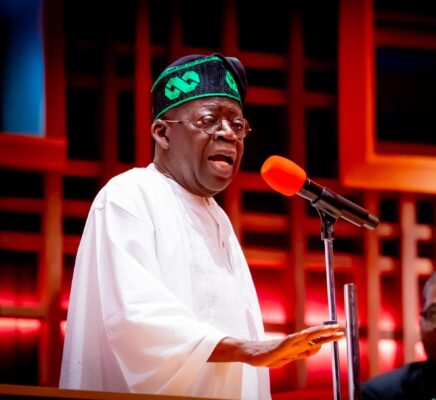
•President Bola Tinubu
This arrangement immediately raised questions about how many commercial drivers, particularly operators of buses, taxis and tricycles, were aware of the application-based discount? How many had smartphones, access to digital payment facilities or the patience to navigate the process?
More importantly, if public transport operators were the priority beneficiaries, why was there no clearly communicated mechanism for identifying, registering and tracking their participation?
A reduction of N66 per litre may appear helpful, but its actual value depends on the volume purchased and the frequency of purchases. For a commercial driver buying 40 litres, the saving would amount to N2,640. While this is not insignificant, it must be assessed against the substantial increase in fuel expenditure experienced by transport operators following subsidy removal.
There is also the question of whether the savings translated into lower transport fares because the primary economic justification for prioritising commercial transport operators was that reduced operating expenses would eventually benefit commuters. However, lower fuel costs do not automatically translate into cheaper transportation, particularly where operators face other expenses, including vehicle maintenance, spare parts, levies and financing costs.
A November 10 investigation by the Nigerian Tribune, covering different parts of the country, reported that the petrol discount had failed to produce the anticipated reduction in transport fares. Motorists and commuters also questioned the practical impact of the intervention.
This raises concerns about whether the government adequately considered the transmission of fuel-price reductions across the transportation value chain.
Another significant issue is the absence of publicly available performance data. As of November 22, Nigerians deserve to know how many motorists and commercial transport operators benefited from the intervention.
NNPC should publish the total litres of petrol sold under the discount arrangement, the number of unique customers reached, the number of commercial transport operators who participated and the geographical distribution of beneficiaries.
It should also disclose the total value of the discounts granted, the average savings per customer and the number of participating filling stations.
For perspective, the Finance Minister reportedly put NNPC Retail's average monthly petrol sales at approximately 70 million litres. Applying the N66 discount to that entire volume would produce a theoretical gross sales reduction of N4.62 billion. However, this is only an illustrative estimate, not the verified cost or actual value of the intervention, since not every litre necessarily qualified for the discount.

The government must therefore distinguish between projected savings and actual benefits delivered to Nigerians.
It is important to acknowledge that the intervention had some merits. It demonstrated an attempt by the government to respond to public concerns without immediately returning to a blanket petrol subsidy. It also provided an opportunity for NNPC Retail to attract customers to its digital payment platform while offering some price relief to eligible motorists.
Nevertheless, a temporary discount at selected retail outlets cannot adequately address the structural challenges responsible for high transportation costs and the rising cost of living.
Nigeria needs more sustainable interventions, including improved public transportation, wider deployment of compressed natural gas (CNG) vehicles, stronger competition in the downstream petroleum market and policies that promote predictable domestic fuel supply.
Ultimately, the success of government economic policies must be measured by outcomes rather than intentions. A policy that offers relief to a limited number of consumers but cannot demonstrate its reach or broader economic impact leaves important questions unanswered.
President Tinubu's one-month petrol discount may have provided some savings to motorists who successfully accessed it. However, without independently verifiable figures showing the number of beneficiaries, actual volumes sold, total savings and its impact on transport fares, it would be premature to describe the initiative as an effective nationwide relief programme.
The Federal Government and NNPC must therefore make the performance figures public. Nigerians should not have to rely solely on official assurances to determine whether a policy designed to ease their economic hardship actually worked.
Transparency is not an additional benefit of public policy; it is a fundamental requirement for measuring accountability, effectiveness and value for money.
•Folasewa sent in this piece via sewami123@yahoo.com