Excellencies, friends.
War in the Middle East is taking a terrible human toll across the region. Civilians suffering. Lives torn apart. Economies stalling.
And the conflict’s brutal social and economic impacts have spread like a pandemic to every nation – as fossil fuel cost chaos squeezes household, business and government budgets.
The fossil fuel cost crisis now has its foot on the throat of the global economy, and stagflation on the march.
From this tragedy, an immense irony is unfolding.
Those who’ve fought to keep the world hooked on fossil fuels are inadvertently supercharging the global renewables boom.
Last year, clean energy investment was set to be double that of fossil fuels.

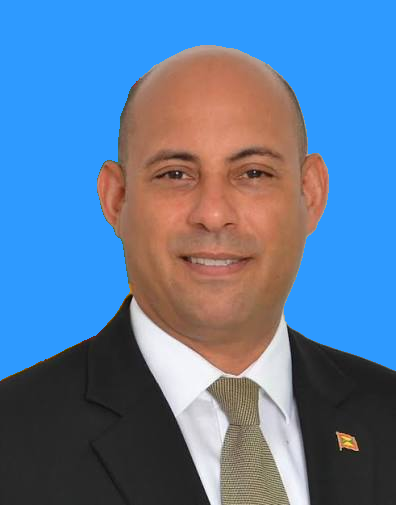
UN Climate Change Executive Secretary, Simon Steil
Solar generation was up 600 terawatt-hours on 2024, a colossal increase – though the transition remains uneven.
And this latest fossil fuel cost crisis has made the economic logic of renewables impossible to ignore.
Renewables offer safer, cheaper, cleaner energy that can’t be held captive by narrow shipping straits, or global conflicts.
Countries like Spain and Pakistan, rich in renewables, have been protected from some of the worst impacts of this fossil fuel cost crisis.
That’s why so many governments are pushing renewables plans into overdrive: to restore national security, economic stability, competitiveness, policy autonomy and basic sovereignty.
Here in France: finance for electrification is doubling.
And China, India, Indonesia, South Korea, Germany, the UK, and more, have been clear that pushing forward with the renewables transition is a cornerstone of energy security.
This is real momentum.
We must harness it to accelerate a truly global shift.
So that, when countries meet at COP33 to respond to the second Global Stocktake of climate action, they are closer to meeting the commitments made at the first.
That means governments taking care not to lock-in fossil fuels long-term as they deal with the current crisis.
Breaking the link between electricity prices and fossil fuels – so that low-cost renewables bring down bills.
And doubling-down on international cooperation to turn global commitments into real-economy results – faster.
Many developing countries want to embrace clean energy, and climate resilience. But major barriers, including lack of finance and debt crises, are holding them back.
We must get finance flowing, rapidly.
That includes delivering the New Collective Quantified Goal for climate finance in full and on time, and making the roadmap to $1.3 trillion a reality.
And we must unleash the full power of the Action Agenda – equitably, in both the global North and South.
This essential part of the Paris Agreement brings governments, companies, investors and civil society together to turn commitments into projects across the real economy.
Most immediately, we should focus on areas of greatest urgency and impact:
On grids and storage – more investment is essential to taking us to the next level of the clean energy transition.
And slashing methane – an ultra-potent greenhouse gas – delivering fast climate
benefits while saving money.
We must also be laser-focused on food security – protecting crop yields from climate shocks, as the war drives fertilizer shortages, threatening 45 million people with acute hunger this year.
Coalitions of the willing are already forging ahead. Just this week, governments and civil society are meeting in Santa Marta on fossil fuels.
In key sectors right across the Action Agenda, COP31 in Türkiye will provide a global stage to pick up the pace.
We must seize this moment. We’ve no time to lose.