By Oke Peter
Nigeria is one of Africa’s largest crude oil producers, yet it has struggled for decades to refine its own petroleum products. The country owns three major refineries located in Port Harcourt, Warri and Kaduna. These refineries were built to reduce fuel imports, save foreign exchange and guarantee energy security. Unfortunately, years of neglect, poor management and corruption have made them largely unworkable, despite huge public spending.
The Port Harcourt Refinery is Nigeria’s oldest, the first plant was established in 1965, while the second unit was completed in 1989. Together, they were designed to process about 210,000 barrels of crude oil per day. The Warri Refinery was commissioned in 1978 with a capacity of 125,000 barrels per day, while the Kaduna Refinery was completed in 1980 to process about 110,000 barrels per day and supply fuel mainly to Northern Nigeria.

Warri Refinery
Although these refineries worked reasonably well in their early years, their performance began to decline due to poor maintenance. Refinery equipment requires routine servicing known as turnaround maintenance every 18 to 24 months. In Nigeria, this maintenance was often delayed, poorly executed or not done at all. As a result, the refineries frequently broke down and operated far below capacity.
By the early 2000s, the refineries were already struggling. Port Harcourt last underwent major maintenance around the year 2000, while Warri and Kaduna had theirs around 2008. After that, all three refineries gradually stopped functioning. By the mid-2010s, Nigeria’s refineries were producing little or no fuel, forcing the country to rely heavily on imported petroleum products despite being a major crude oil producer.
Instead of fixing the refineries properly, successive governments adopted short-term solutions such as fuel importation and crude-for-product swap deals. These arrangements were costly and lacked transparency. They also removed the pressure to make the refineries work, as fuel imports became a profitable business for middlemen.
In recent years, the government announced plans to revive the refineries through massive rehabilitation projects. In 2021, the Federal Government approved about $1.5 billion for the rehabilitation of the Port Harcourt Refinery. The Italian company Maire Tecnimont was awarded the contract. About $1.484 billion was also approved for the rehabilitation of the Warri and Kaduna refineries, with Saipem and its partners handling the contracts.

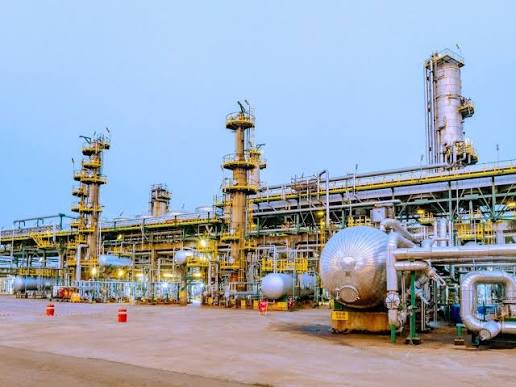
Port Harcourt Refinery
By late 2024, the Nigerian National Petroleum Company Limited announced that the Port Harcourt and Warri refineries had resumed operations. However, the celebrations did not last long. The refineries operated below expectation and were soon shut down again due to technical faults and incomplete rehabilitation work. Kaduna Refinery remained largely inactive. This raised serious questions about how the rehabilitation funds were used.
Over the years, the amount spent on turnaround maintenance and rehabilitation of the refineries has been enormous. Reports from lawmakers and industry experts show that trillions of Naira and several billions of Dollars have been spent with little result. In one period alone, nearly Three Billion Dollars was reportedly spent on refinery rehabilitation, yet none of the refineries was able to operate sustainably.
Beyond technical failures, corruption has played a major role in the collapse of Nigeria’s refineries. In 2025, the Economic and Financial Crimes Commission launched investigations into alleged fraud linked to refinery rehabilitation funds. Several former senior officials of the Nigerian National Petroleum Company Limited, including Managing Directors of the Port Harcourt, Warri and Kaduna refineries, were arrested or questioned.
During the investigation, huge sums of money were reportedly discovered in the bank accounts of some former refinery Managing Directors. In one case, about 80 billion Naira was allegedly found in the accounts of a former Managing Director, raising serious concerns about diversion of public funds. The EFCC has since recovered billions of Naira and millions of Dollars linked to the refinery maintenance projects, and investigations are still ongoing. Some officials may face prosecution if enough evidence is established.

Kaduna Refinery
The failure of Nigeria’s government-owned refineries is not accidental. The facilities are old and require consistent, professional maintenance, which has not been provided. Management instability, political interference and frequent changes in leadership have also weakened accountability. Most importantly, corruption and mismanagement have ensured that funds meant for repairs often do not translate into real work on the ground.
As long as these refineries remain under full government control without transparency, discipline and commercial efficiency, they are unlikely to function properly. The repeated cycle of spending huge public funds without results shows that the problem is deeper than equipment failure. It is a governance problem. Until Nigeria addresses corruption, poor oversight and political interference in the oil sector, government-owned refineries will continue to fail, no matter how much money is spent on them.