By Oke Peter
Nigeria’s electricity problem has become painfully familiar, the national grid collapses, power supply drops to zero, and homes and businesses are forced into darkness. These collapses are not rare accidents. They are recurring failures in a fragile system that struggles daily to meet demand in Africa’s most populous country.
Data from the Nigerian Electricity Regulatory Commission (NERC) shows that while Nigeria has an installed generation capacity of about 13,000 megawatts, the actual power delivered to the grid typically ranges between 4,000 and 5,000 megawatts. This gap between installed and available capacity is one of the clearest signs that the system is underperforming. In several recent years, the national grid has recorded multiple partial and total collapses, sometimes plunging the entire country into blackout within minutes.

Generation companies, known as GenCos, often point to liquidity problems and gas supply shortages as major obstacles. Many of the thermal power plants depend on natural gas, but gas pipelines are frequently vandalised or under-supplied. When gas pressure drops, power plants trip offline. According to statements from GenCos, a large portion of their capacity cannot be utilised because they are owed significant market payments, making it difficult to fund maintenance and operations. When power plants suddenly shut down, the grid becomes unstable and can collapse.
An energy expert, Dr. Kunle Adebayo, explains that the Nigerian grid is extremely sensitive because it operates with very little reserve margin. “In a stable system, you have enough backup capacity to absorb shocks,” he says. “In Nigeria, if one or two major plants go offline unexpectedly, the frequency drops quickly and the entire grid can fail.” He adds that the transmission infrastructure is old and overstretched. Many transformers and transmission lines were built decades ago and have not been upgraded to match population growth and industrial demand. Without strong transmission capacity, even available power cannot be safely wheeled across the country.
The Transmission Company of Nigeria (TCN), which manages the grid, has repeatedly acknowledged constraints in transmission capacity. Although improvements have been made in recent years, the network still struggles to evacuate all the power generated. When supply and demand are not properly balanced in real time, automatic protection systems shut down parts of the grid to prevent damage. These shutdowns can escalate into nationwide collapses.
Distribution companies, known as DisCos, are another weak link in the chain. NERC reports regularly show high Aggregate Technical, Commercial and Collection (ATC&C) losses among DisCos, meaning a significant portion of electricity supplied is either lost due to technical faults, stolen, or not paid for. In some cases, DisCos are unable to take the full load allocated to them because their networks are overloaded or poorly maintained. When generated power is rejected at the distribution level, it creates imbalances that can destabilise the grid.
For ordinary Nigerians, these technical explanations translate into daily hardship. A concerned citizen, Mrs. Chioma Okeke, who runs a frozen food business in Abuja, describes the impact clearly: “Any time the grid collapses, we immediately switch to generators. Diesel is expensive. If fuel runs out or the generator fails, our goods spoil. Sometimes we lose more in one day than we make in a week.” Her experience is common across the country.
Businesses bear some of the heaviest consequences, as manufacturers spend a large share of their operating costs on self-generation using diesel or petrol generators. This raises production costs and makes locally made goods more expensive. Small and medium-sized enterprises, which cannot always afford high-capacity generators, suffer productivity losses during outages. Digital businesses face interrupted internet services, damaged equipment, and loss of data. Hospitals and critical services must maintain backup systems at high cost, and when those backups fail, lives can be at risk.
The economic effect is significant because when electricity is unreliable, investors hesitate to commit capital. Production slows, unemployment rises, and economic growth weakens. Stable electricity is the backbone of industrial development, and without it, Nigeria’s ambition for large-scale manufacturing and technological advancement remains constrained.
However, fixing the problem requires coordinated action across the power value chain. First, generation capacity must become more reliable. This means resolving gas supply challenges, ensuring timely payment to GenCos, and enforcing stronger maintenance standards. Clearing outstanding market debts would improve liquidity and enable power plants to operate closer to their installed capacity.
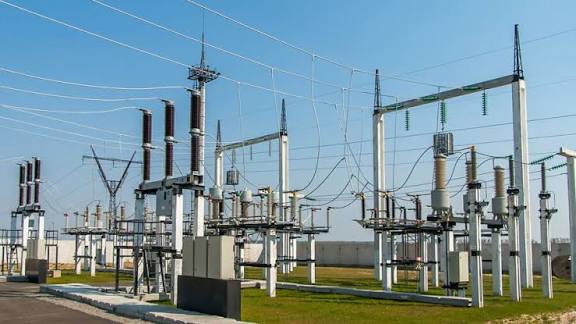
Second, transmission infrastructure needs urgent modernization. Investment in new substations, upgraded transmission lines, and modern grid management systems would reduce the likelihood of system-wide failure. A stronger grid with adequate reserve margin can absorb shocks without collapsing.

Third, distribution networks must be strengthened. DisCos need to reduce technical losses, expand metering to eliminate estimated billing, and improve revenue collection. When more customers are properly metered and bills are paid efficiently, the financial health of the entire sector improves. NERC’s regulatory oversight remains critical in ensuring compliance and transparency.
Finally, Nigeria should accelerate decentralised energy solutions such as embedded generation, mini-grids, and renewable energy projects. Reducing the pressure on a single national grid by encouraging regional and off-grid solutions can improve resilience.
Nigeria’s national grid keeps collapsing because it is fragile, underfunded, and overstretched. The causes are interconnected: weak generation, limited transmission capacity, distribution losses, gas shortages, and financial instability. The consequences are felt by every citizen and every business. However, with sustained investment, regulatory discipline, and genuine sector reform, the grid can become stable and capable of supporting the country’s economic aspirations. Reliable electricity is not a luxury; it is a necessity for national development.