



Shittu Oluwadamilola – Lagos
In a bold display of labour strength, the Petroleum and Natural Gas Senior Staff Association of Nigeria (PENGASSAN) has brought key institutions in Nigeria’s energy sector to a standstill, asserting its influence in response to alleged mass layoffs at the Dangote Refinery.
The union’s nationwide strike, which began in the early hours of Monday, September 29, 2025, has led to a total shutdown of the Nigerian National Petroleum Company Limited (NNPC), the Nigerian Upstream Petroleum Regulatory Commission (NUPRC), and the Nigerian Midstream and Downstream Petroleum Regulatory Authority (NMDPRA).
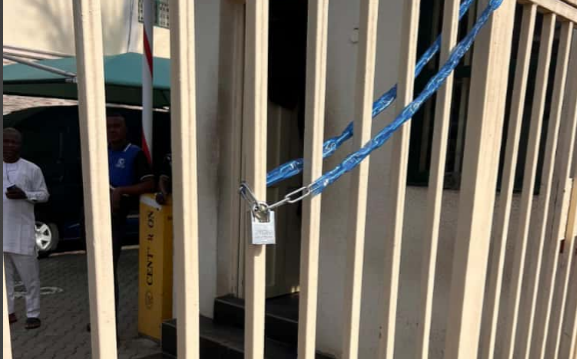
This coordinated industrial action, enforced across the country following a resolution by PENGASSAN’s National Executive Council, underscores the union’s commitment to defending workers’ rights and enforcing accountability in Nigeria’s oil and gas industry.
At the NUPRC headquarters in Abuja, operations came to a halt as union members locked the gates, leaving staff unable to access the building. The NMDPRA offices in the capital’s Central Business District also experienced a total shutdown, with full compliance reported by local union leaders.
“We have achieved 100 per cent compliance,” said Tony Iziogba, PENGASSAN Chairman at NMDPRA. “Our members are fully united in this action, and access to offices and facilities has been completely restricted.”
The strike was triggered by the reported dismissal of over 800 Nigerian workers at the Dangote Petroleum Refinery, who were allegedly replaced by foreign personnel after joining the union — a move PENGASSAN describes as a violation of both Nigerian labour laws and international labour standards.
In retaliation, PENGASSAN ordered the immediate suspension of crude oil and gas supply to the Dangote Refinery, a directive that could severely strain domestic fuel supply chains and energy production. The union’s resolution instructed all International Oil Companies (IOCs) to scale down operations connected to the refinery, warning of a broader industry impact.
With NNPC being the country’s sole petrol importer and the two regulatory bodies responsible for crude monitoring, gas supply, and fuel distribution, the industrial action poses serious risks to national energy stability.
Beyond physical disruptions, the union’s move has reignited national conversations about corporate accountability, local employment rights, and the role of foreign labour in Nigeria’s strategic sectors.
A high-stakes emergency meeting, convened by the Minister of Labour, is expected to take place Monday to negotiate a resolution. The outcome may determine whether Nigeria averts a fuel crisis or enters a new phase of industrial unrest.