



By Shittu Oluwadamilola
Nigeria sits on one of Africa’s largest natural-gas reserves, yet millions of citizens remain in darkness each day. The contradiction is stark. While power plants complain about insufficient gas supply, oil and gas operators continue to flare enormous volumes of gas that could be used to generate electricity. The result is a national energy crisis sustained not by a lack of resources, but by waste, weak regulation, and underinvestment.
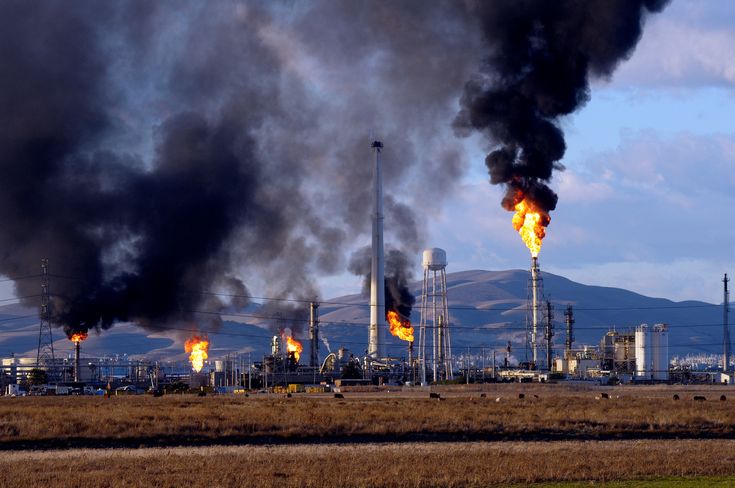
Recent data from the Nigerian Upstream Petroleum Regulatory Commission (NUPRC) shows that Nigeria produced an average of 7.59 billion standard cubic feet of gas per day in July 2025, an increase of more than eight per cent compared to the previous year. But despite this growth, the country continues to flare gas at alarming levels. In 2024, Nigeria produced about 2.5 trillion cubic feet of natural gas, and 192.89 billion standard cubic feet —roughly 7.69 per cent—was flared instead of being put to productive use.
The economic loss is enormous. Figures from the National Oil Spill Detection and Remediation Agency (NOSDRA) show that in January and February 2025, offshore operators alone flared gas worth $78.2 million (about ₦119 billion). That amount of gas could have generated around 2,200 gigawatt-hours of electricity, enough to significantly stabilise power in several regions. Over the first five months of 2025, the volume of gas flared rose to 154.1 billion standard cubic feet, valued at over ₦838 billion, with the potential to generate 15,400 GWh of power.
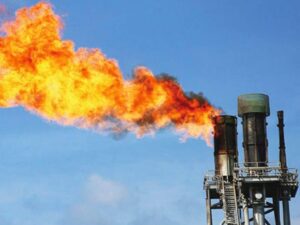
This is happening at a time when Nigeria’s grid struggles to deliver even 4,500 megawatts on most days. The tragedy is unmistakable, the country has more than enough gas to power its economy, but burns much of it into the sky.
The Petroleum and Natural Gas Senior Staff Association of Nigeria (PENGASSAN) has repeatedly blamed inconsistent government policy for deterring the heavy investment needed to build gas-processing plants, pipelines and other infrastructure that would reduce flaring. At a major industry summit in 2025, the union warned that constant amendments to the Petroleum Industry Act (PIA) were shaking investor confidence. PENGASSAN insists that without stable policies and clear investment protections, the gas sector will continue to suffer underinvestment, and flaring will remain an easy way out for operators.
The Nigeria Gas Association (NGA), for its part, has long advocated for stronger fiscal incentives to support gas-gathering facilities and midstream development. Industry analysts point out that many operators flare gas because capturing and processing it is still more expensive than burning it off, especially when contracts with power-generation companies are poorly structured or payments are delayed. Members of the Association argue that without deliberate government effort to make gas utilisation profitable, investments will continue to lag behind.
A senior engineer at a gas-powered generation company, who requested anonymity, put the issue bluntly: “We are asked to generate power, but the gas to do so is unreliable. Even when producers promise supply, payment delays from the electricity market discourage them. We can’t deliver steady power when gas supply is uncertain.”
The challenge is therefore not simply about supply, but about a broken value chain. Gas producers complain about payment risks. Power plants complain about inconsistent delivery. Regulators struggle to enforce compliance. And ordinary Nigerians pay the ultimate price through darkness, high generator costs, and closed factories.
Experts say the solution lies in firm political will and decisive action. First, government must make the nation’s zero-routine-flaring target more than a slogan. While NUPRC reports that flaring fell slightly to 7.16 per cent in mid-2025, this improvement is marginal and still represents enormous waste. Enforcing penalties, providing utilisation incentives, and ensuring operators have accessible alternatives to flaring are essential steps.
Second, Nigeria must fast-track investments in gas-processing plants, pipelines and storage infrastructure. Massive volumes of gas that could power the grid, industries, and households are lost because they cannot be transported or processed. A serious national gas-infrastructure plan, supported by investors and protected by policy stability, will reduce flaring and boost supply to thermal plants.
Third, the government must fix the payment dysfunction in the electricity market. Gas suppliers will not prioritise delivery to power plants when they remain some of the slowest-paying customers. Transparent, enforceable gas-to-power contracts and guaranteed payment systems are necessary to restore confidence.
Dr. Oluchi Onwude, an Abuja-based gas-policy expert, summarises the situation succinctly: “Every cubic foot of gas flared is not just an environmental loss — it is lost power, lost revenue and lost national opportunity. Nigeria is burning away its development.”
There is no mystery to solving the problem. The country must enforce anti-flaring laws, invest in the infrastructure to capture and transport gas, stabilise regulatory policies, and reform the electricity market to ensure suppliers are paid. Stakeholders — from labour unions like PENGASSAN to industry bodies like the Nigeria Gas Association — all agree on these broad principles.
Nigeria stands at a crossroads. It can continue to flare away its chance at stable power and industrial growth, or it can take bold steps to convert wasted gas into national development. With billions of naira lost each month and millions of citizens trapped in darkness, the cost of inaction is far greater than the price of reform.