



By Oke Peter
Have you ever wondered how energy is being generated through water? Energy generated through water is called hydropower.
According to research, hydropower does not have a single inventor; it developed over thousands of years.
However, there are individuals who contributed to its growth. For example, Ancient Greeks (around 200 BC) used water wheels to grind grain. Romans and Chinese also used water wheels for mechanical work. These early systems were mechanical, not electrical.
According to a research by Energy Worth Online, the invention of modern hydroelectric power began in the late 1800s. The first hydroelectric power plant was built in 1882 in Appleton, Wisconsin, USA, by H. J. Rogers, a paper mill owner, and the generator technology was based on designs by Thomas Edison.

Other key contributors include James Francis (mid-1800s), who invented the Francis turbine, the most widely used hydro turbine today.
Also, Jonas Jonsson and Viktor Kaplan in 1920 developed the Kaplan turbine, used for low-head water flow, while Lester Allan Pelton in the 1870s invented the Pelton wheel, used for high-head hydropower.
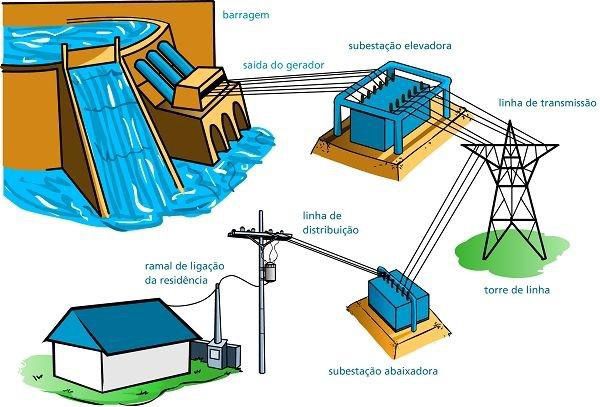
The following are the step-by-step of how hydropower generates electricity.
1. Water is stored in a reservoir (a large dam creates a reservoir or artificial lake). The stored water has potential energy because it is held at a height.
2. Water is released through the intake. When electricity is needed, gates and openings called intakes are opened while the water flows downward due to gravity.

3. The water moves through a large pipe called a penstock. As it descends, its pressure and kinetic energy increase.
4. High-pressure water spins a turbine. At the end of the penstock, the fast-moving water hits the turbine blades, causing them to spin. The turbine converts water’s kinetic energy into mechanical energy.
5. The turbine drives a generator. The turbine shaft is connected to a generator, and when the turbine spins, it turns magnets inside the generator. These moving magnets create a flow of electrons; that is electricity.
6. Electricity is sent to a transformer. A transformer increases (steps up) the voltage so electricity can travel long distances through power lines.
7. The high-voltage electricity is sent through transmission lines to cities, towns, and industries.
8. After passing through the turbine, the water flows out through a tailrace and rejoins the river downstream, as no water is consumed.
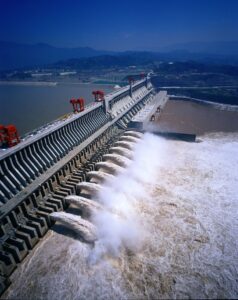
Here are some of the main hydropower plants in Nigeria and their generation.
1. Kainji Hydroelectric Power Plant, Niger State (760 MW).
2. Jebba Hydroelectric Power Station, Niger / Kwara States (578.4 MW).
3. Shiroro Hydroelectric Power Station, Niger State (600 MW).
4. Zungeru Hydroelectric Power Station, Niger State (700 MW).