






By Oke Peter
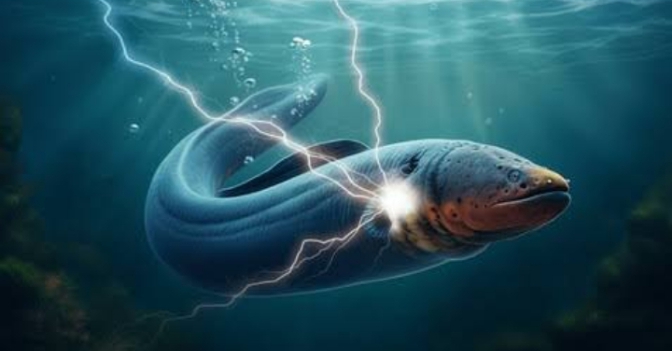
Electric fish are some of the most interesting animals found in water. They have special organs that allow them to produce electricity using modified muscle or nerve cells called electrocytes. This electricity helps them move around in dark or muddy water, communicate with other fish, protect themselves from predators, and in some cases hunt prey.
Some electric fish produce weak electric signals that are mainly used for sensing their surroundings, while others can produce strong electric shocks that can stun prey or scare away threats.
Well-known examples include the electric eel from South America, electric rays found in warm seas, and elephantfish from African rivers. Even though the electric eel is called an eel, it is actually a type of knifefish. These fish live in both freshwater and saltwater environments such as rivers, floodplains, and coastal seas, and they are well adapted to places where visibility is poor.
Electric fish are important to their ecosystems. Strong electric fish help control the numbers of smaller animals, which keeps the ecosystem balanced. Weakly electric fish use their electric fields to find food and avoid obstacles, allowing them to survive in environments where eyesight is not very useful. Because they are sensitive to changes in water quality, their presence often shows that a water system is healthy, while their disappearance can be a sign of pollution or habitat damage. Humans are also very interested in electric fish. Scientists study them to better understand how nerves work, how living organisms produce electricity, and how these ideas can be used in technology such as medical sensors and underwater robots. Electric fish are also popular in education and aquariums because their abilities are unusual and fascinating.
Some electric fish can be eaten, but this is not very common. Electric eels are rarely eaten because they are dangerous to handle, and their electric organs must be removed carefully. Some electric rays are eaten in certain cultures, but they must be properly cleaned. Most weakly electric fish are small and not used as food. The lifespan of electric fish depends on the species. Electric eels can live around 10 to 15 years in the wild, electric rays may live up to 25 years, and smaller electric fish often live only a few years. While electric fish are not especially valuable as a food for health benefits, studying them has helped science learn more about the human nervous system and has inspired medical technology.
Many people wonder if their electricity can be used as a power source, but this is not practical. The amount of energy they produce is very small and comes in short bursts, not steady power. Even the strongest electric fish cannot produce enough energy to power homes or machines. In the end, electric fish are valuable not because they can supply electricity, but because they show how creative and complex nature can be, and because they help scientists learn more about life, ecosystems, and technology.