By Oke Peter
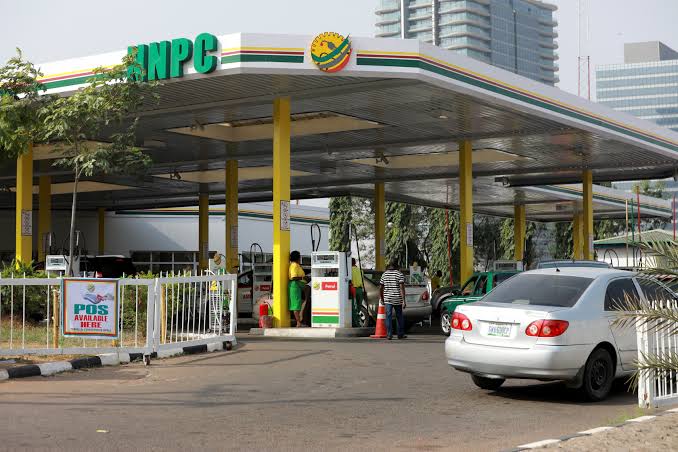
The Federal Government’s decision to offer Nigerians a 30-day petrol discount through the Nigerian National Petroleum Company Limited (NNPC) Retail may provide temporary relief, but it raises serious questions about the timing, scope and sincerity of the intervention. For millions of Nigerians struggling with high transport fares, food prices, electricity costs and rising business expenses, a one-month discount is hardly a solution to a crisis that has lasted for years.
Announced by the Minister of Finance and Coordinating Minister of the Economy, Taiwo Oyedele, the arrangement allows NNPC to forgo its retail profit margin and sell petrol at cost for the specified period. The government insists that this is not a return to subsidy.
But Nigerians are entitled to ask: why now, and why only for 30 days?Since President Bola Tinubu removed the petrol subsidy in May 2023, households and businesses have endured successive increases in living and operating costs. The administration repeatedly defended its economic reforms as necessary sacrifices for a better future. Yet, when fuel prices become politically difficult to ignore, the government suddenly finds room for a temporary intervention.

With the 2027 general elections approaching, the announcement risks being interpreted as a political gesture rather than a carefully designed economic policy and if the hardship has been acknowledged for so long, why has meaningful relief taken this form only now?
Former Vice-President Atiku Abubakar described the measure as a “panic-driven publicity stunt”, questioning its sustainability and political motivation. He asked a question that deserves a clear answer: “What happens on Day 31?”
Will petrol prices return to their previous levels immediately after the discount expires? Will transport fares rise again? Will food prices fall during the 30 days and remain affordable afterwards? Without a credible exit strategy or a lasting affordability plan, the intervention merely postpones the hardship.
Atiku also argued that Nigerians need lasting relief rather than a countdown to renewed suffering, he renewed his call for properly budgeted production support tied to petrol refined domestically, with safeguards to ensure consumers benefit. Whether or not one agrees with his proposal, the government must address the substance of the criticism instead of dismissing it on political grounds.

•Minister of Finance, Taiwo Oyedele
For goodness sake, why should NNPC Retail be the principal channel through which Nigerians can access the discount? Private marketers operate across the country, and many communities have limited access to NNPC stations. A motorist who must travel a considerable distance to find a participating outlet may spend the expected savings on transportation alone.
Paul Ibe, Atiku’s media adviser, similarly questioned how Nigerians living in communities without NNPC stations would benefit from the arrangement. The question exposes a fundamental weakness: a national relief policy should not depend on whether a citizen lives near a particular filling station.
The government should explain why the discount cannot be extended through a transparent mechanism involving willing private marketers, with clear pricing rules and safeguards against abuse.
Nigerians have also questioned whether a reduction of roughly ₦50–₦66 per litre, depending on the applicable price, can significantly ease the burden of petrol prices that have risen sharply. The ICIR reported that motorists and social media users challenged both the scale of the savings and the limited reach of participating stations. These are practical concerns, not merely partisan objections.
More importantly, the intervention should not have required opposition leaders to speak before the government responded to the suffering of citizens. Should Nigerians have to wait for Atiku, Peter Obi’s supporters or other political voices to challenge the administration before affordable energy becomes a priority?
Government exists to anticipate economic difficulties and protect citizens, not merely to react when public anger becomes impossible to ignore. If opposition criticism helps expose policy weaknesses, the appropriate response is to address those weaknesses rather than treat criticism as political hostility.

•Former Vice-President and presidential candidate of the ADC, Atiku Abubakar.
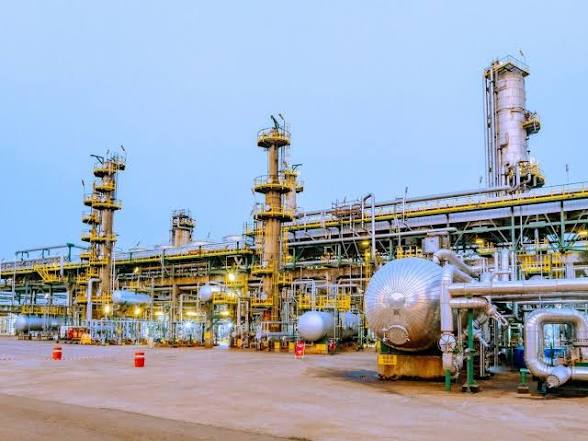
There is also a deeper question about Nigeria’s petroleum wealth – the country produces crude oil, possesses substantial gas resources and now has significant domestic refining capacity. Yet millions of citizens still struggle to afford the fuel required for transportation, small businesses, electricity generation and other daily needs.
Nigerians deserve more than 30 days of discounted access to an essential product derived from their country's natural resources. They deserve policies that improve domestic supply, support efficient refining, encourage competition, expand affordable public transport and prevent excessive costs from spreading throughout the economy.
The Tinubu administration must demonstrate that it can do more than announce temporary measures whenever economic pressure intensifies. Its broader proposals on compressed natural gas, domestic crude supply and assistance to vulnerable households should be judged by measurable results, not announcements.

A petrol discount at N1,350 benchmark may be a welcome gesture, but a gesture is not an economic recovery plan. If the government genuinely intends to cushion Nigerians against global oil-market shocks, it must explain how the relief will be sustained, how consumers will benefit and what happens when the deadline expires.
Nigeria needs a lasting energy affordability strategy, not a 30-day reprieve from an enduring national crisis.