By Gold Jeremiah
The death of 37 suspected illegal miners in the custody of the Nigeria Security and Civil Defence Corps (NSCDC) in Niger State is more than another troubling security story. It is a test of Nigeria's commitment to the rule of law, humane detention and accountability.
The suspects were arrested during NSCDC operations against alleged illegal mining activities around the M.I. Wushishi/Lukoto area on September 15 and 16, 2026. By the morning of September 17, 37 detainees were reported dead in NSCDC custody. The Niger State Government subsequently confirmed the figure.

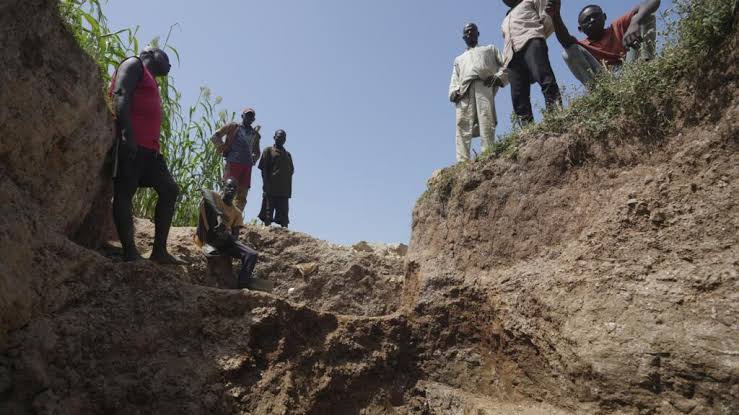
•Scene of the illegal mining site.
The question that should trouble every Nigerian is simple: how can 37 human beings arrested alive be found dead in detention within such a short period?
There is, as yet, no scientifically established answer because the NSCDC initially attributed the deaths to a suspected disease outbreak, while reports citing intelligence suggested overcrowding and inadequate ventilation. A survivor interviewed by the Associated Press alleged that about 65 detainees had been packed into a poorly ventilated cell and described a struggle for air. These accounts are allegations, not established findings. The authorities have said investigations and medical examinations are necessary to determine the actual cause of death.
A serious investigation must establish what happened rather than allowing speculation to become a substitute for evidence.
But one principle requires no investigation: illegal mining is an offence; it is not a death sentence. The government has legitimate reasons to confront illegal mining. Authorities and analysts have linked illicit mining in parts of Nigeria to environmental degradation, loss of public revenue and, in some areas, financing for armed groups. None of those concerns, however, removes the state's obligation to protect the lives of people once they are in official custody.

A suspect remains a suspect until due process determines otherwise.
The Federal Government has taken some immediate measures. Interior Minister Olubunmi Tunji-Ojo suspended the Niger State NSCDC commandant and 20 other officers connected with the incident. The government has also constituted a 10-member independent committee with a mandate to establish the identities of the dead, investigate their arrest and detention, determine the cause and circumstances of the deaths, identify responsibility and recommend appropriate action and compensation where applicable. The committee has two weeks to submit its report.
These are necessary steps. But they are only the beginning. Can a committee bring 37 people back to life? No.
Can compensation restore a father to children who have lost him? Can money replace a son, husband or brother? Can an official suspension erase the trauma of families who went to a detention facility expecting their relatives to return alive? No.
Compensation may provide some material relief, but it cannot constitute the whole meaning of justice.
The investigation therefore needs to go beyond identifying a medical cause of death. It should establish how many people were detained, the condition of the cells, the number of officers on duty, the detention records, the medical condition of detainees, whether complaints were made, when distress was first noticed, what emergency response followed and whether any official breached established detention procedures.
It should also establish whether the deceased were actually involved in illegal mining, because branding people criminals before due process raises another serious question.
The Nigerian Bar Association (NBA) and the National Human Rights Commission (NHRC) have called for a thorough and transparent investigation, with the NHRC specifically urging independent forensic examination and preservation of evidence.
Consequently, a government can and should enforce mining laws but enforcement must not become vengeance. Security agencies possess enormous power over people whose liberty has been taken away. With that power comes an even greater duty of care.
The Niger tragedy should therefore prompt uncomfortable questions about Nigeria's detention facilities, oversight mechanisms and accountability within security agencies.
The Interior Ministry's intervention is welcome but the real measure of the government's response will not be the number of officers suspended or the speed with which a committee submits its report.
It will be whether Nigerians eventually learn how 37 people died, who was responsible, whether the law was broken, what justice was delivered and what concrete safeguards will prevent another 37 families from receiving the same devastating news.
The dead cannot testify, that makes it the living people's responsibility to demand that the truth does.