By Shittu Oluwadamilola
The Nigerian Upstream Petroleum Regulatory Commission (NUPRC) has declared an end to the long-standing practice of oil companies holding exploration licences for years without developing them, stating that operators must now either develop their fields or relinquish them under new provisions of the Petroleum Industry Act (PIA).
The Commission Chief Executive of the NUPRC, Oritsemeyiwa Eyesan, made the disclosure while receiving a delegation from the Petroleum Directorate of Sierra Leone at the commission’s headquarters in Abuja.
Eyesan also expressed satisfaction with the level of investor participation recorded so far in Nigeria’s 2025 oil licensing round, describing the number of applicants as encouraging despite stricter bidding conditions introduced by the regulator.
The development was contained in a statement issued on Friday by the Head of Media and Corporate Communications at the commission, Eniola Akinkuotu.

According to Eyesan, the response from investors reflects renewed confidence in Nigeria’s upstream petroleum sector following regulatory reforms introduced through the PIA.
She explained that the ongoing licensing round has 50 oil blocks on offer, noting that the strong pre-qualification turnout was recorded despite a rule restricting companies to bidding for a maximum of two blocks, whether individually or as part of a consortium.
“For the 2025 licensing round, we have 50 oil blocks on offer, and the outcome of the pre-qualification submissions shows there is indeed strong appetite for the bid round,” Eyesan said.
She added that the restriction on the number of blocks was deliberately introduced to prevent asset hoarding and promote broader participation among investors.
According to her, the policy is designed to ensure that exploration assets are allocated to companies that are genuinely prepared to invest and develop them.
Eyesan also revealed that the commission had taken additional steps to strengthen transparency and boost investor confidence in the process by engaging an independent audit firm to assess the integrity of the digital bidding system.
“To ensure total transparency in the licensing round, the commission added an extra layer of validation by partnering with a reputable audit firm to interrogate and confirm that the system is foolproof. The outcome of that exercise will be made public to further boost investor confidence,” she said.
The NUPRC boss noted that the introduction of the “drill or drop” provision under Section 94 of the PIA has fundamentally changed the way exploration licences are managed in Nigeria.
The provision requires operators to either commence exploration and development activities within a specified timeframe or surrender the licence to the government.
“One of the beauties of the PIA is Section 94, which compels operators to either begin work or relinquish the licence—what we call the drill-or-drop provision,” Eyesan said.
She noted that prior to the reform, some operators held prospecting licences for up to 20 years without conducting meaningful exploration, slowing Nigeria’s drive to expand its petroleum reserves.
“In the past, some operators sat on these blocks for decades without doing anything. Now we have moved to a drill-or-drop regime,” she said.

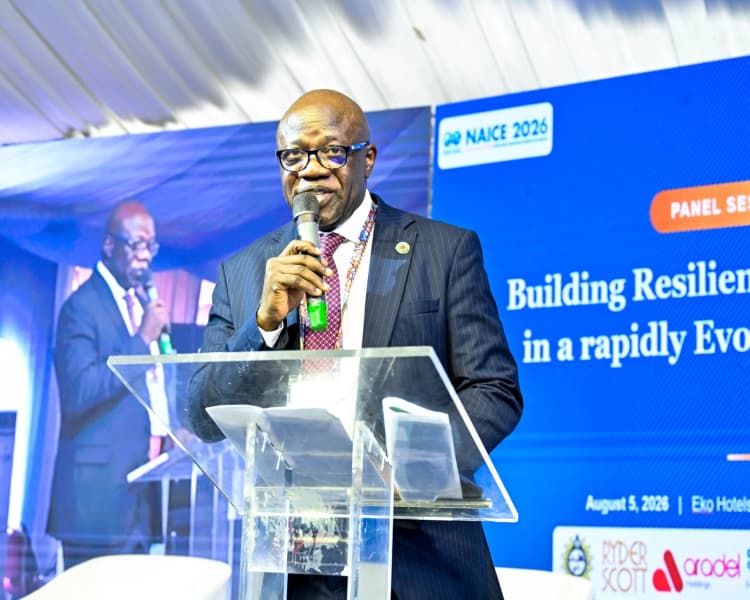
Chief Executive of the NUPRC, Oritsemeyiwa Eyesan
According to Eyesan, the reform has helped return dormant assets to the government’s portfolio, creating fresh opportunities for investors and enabling the country to consider more frequent licensing rounds, possibly on an annual basis.
Nigeria, which holds some of the largest hydrocarbon reserves in Africa, has seen exploration activity slow in recent years due to regulatory uncertainty, security concerns, and global energy transition pressures. However, the PIA, signed into law in 2021 by Muhammadu Buhari, introduced clearer fiscal terms and stronger regulatory frameworks aimed at restoring investor confidence.
Meanwhile, the Director-General of the Petroleum Directorate of Sierra Leone, Foday Mansaray, said his country is seeking to learn from Nigeria’s regulatory experience in developing its own hydrocarbon sector.
Mansaray explained that the delegation’s visit was aimed at strengthening bilateral cooperation and gaining insights into Nigeria’s petroleum governance framework.
“We are here to collaborate with the NUPRC and learn from Nigeria, our big brothers in the industry,” he said. “We are a small country of about eight million people but very ambitious, and we believe there is much to learn from Nigeria’s experience in managing the petroleum sector.”
He also proposed the signing of a Memorandum of Understanding (MoU) to formalise cooperation in regulatory capacity building and petroleum sector development between the two countries.
The 2025 oil licensing round, approved by President Bola Ahmed Tinubu, was formally launched in December 2025 to attract fresh investment into Nigeria’s upstream petroleum industry.
The round features 50 oil and gas blocks located across several sedimentary basins, including the Niger Delta, Anambra, Bida, Benue Trough, and Chad basins, with the goal of boosting exploration activity, increasing reserves, and supporting long-term crude oil production.
The pre-qualification stage closed on February 27, 2026, after which qualified companies are expected to proceed to the technical and commercial bidding phases. The entire process is scheduled to run for about eight months, from November 2025 to July 2026, when final approvals and awards are expected to conclude the exercise.