By Adeola Labzy
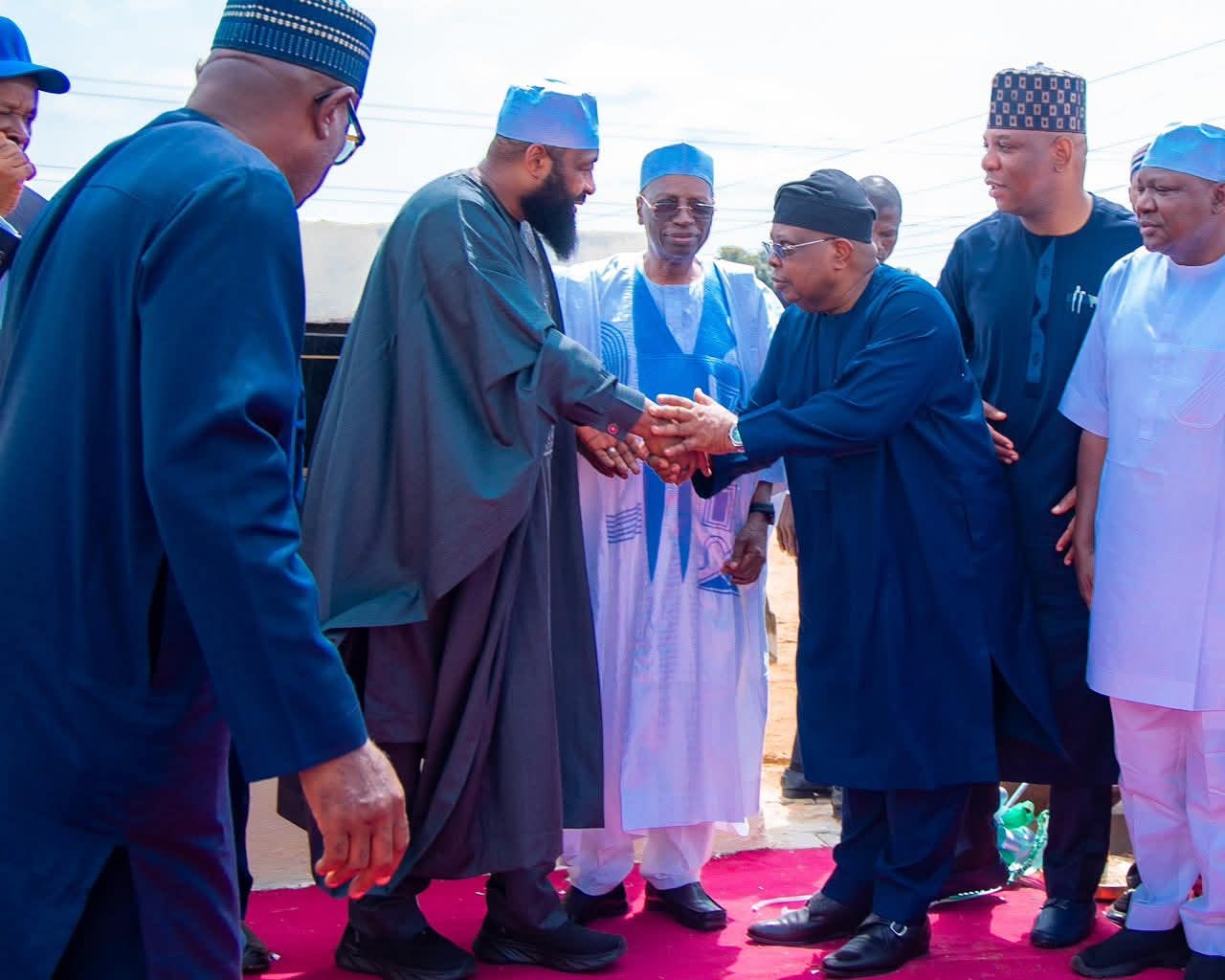
Nigeria took a significant industrial step last weekend as the Ministers of Power, Joseph Tegbe; Steel Development, Prince Abubakar Audu; and Industry, Trade and Investment, Senator John Owan Enoh; alongside Niger State Governor Mohammed Umaru Bago and the leadership of Abuja Steel Mills Limited, broke ground on what will become the largest solar power project in Sub-Saharan Africa dedicated to powering an industrial park, including a steel plant.
The ceremony, which included the formal handover of 500 hectares of land by the Niger State Government to Abuja Steel Mills, a subsidiary of the African Industries Group, marked the beginning of a project that carries implications well beyond the steel sector. It is, in many respects, a vivid expression of what President Bola Ahmed Tinubu’s Renewed Hope Agenda looks like in practice.

At the heart of the development is a 200MW solar mini-grid, the largest embedded renewable power installation of its kind in the region. But what defines this project is not just its scale; it is its intent. The decision to go off-grid was not a concession to circumstance. It was a deliberate strategy—a calculated choice to build Nigeria’s most ambitious solar project outside the central grid, and on purpose.
That distinction matters enormously. Off-grid, in the Nigerian energy conversation, has too often been treated as a second-best option—a workaround for what the grid cannot yet provide. The Abuja Steel Mills project entirely discounts that framing. Here, off-grid is the strategy: a 200MW solar installation purpose-built to power one of the most energy-intensive industrial operations on the continent, cleanly, reliably, and at scale. It does not wait for the grid to arrive. It builds the energy future it needs.
This is precisely the kind of initiative that President Tinubu’s Renewed Hope Agenda envisions for Nigeria’s power sector: clean energy, distributed generation, and private capital working in concert to drive industrial growth. The 200MW solar mini-grid at Abuja Steel Mills is not an outlier in that vision; it is an early proof point. It demonstrates, at commercial scale, that renewable energy is not merely an aspirational complement to Nigeria’s industrial ambitions. It is a viable, bankable foundation for them.

The opportunities this model presents are considerable. Embedded generation at industrial scale—where a facility produces its own clean power, sized to its operational requirements—creates a more predictable cost structure for manufacturers, insulates operations from supply variability, and opens the door to energy trading and surplus distribution within surrounding communities. In a country with abundant solar resources and a large, growing industrial base, the replication potential is significant. Every major industrial site is, in principle, a candidate for this model. Every such site that adopts it adds another node to Nigeria’s emerging distributed clean energy architecture.
The mini-grid model also accelerates Nigeria’s clean energy transition in a way that is commercially self-sustaining. Unlike centralized grid expansion, embedded renewable installations can be structured, financed, and delivered by private capital with targeted public enablement through land allocation, licensing, and policy certainty. Governor Bago’s allocation of 500 hectares is precisely that kind of enablement. It is a signal to the market that Niger State—and, by extension, the sub-national tier of Nigerian governance—understands its role in making this model work.

The presence of the Minister of Power at the groundbreaking ceremony, and his commitment to treat the project’s power infrastructure requirements as a national economic priority, reflects a Federal Government that sees off-grid and mini-grid development not as gap-fillers, but as a growth strategy. Under President Tinubu’s Renewed Hope Agenda, the Ministry of Power is creating the conditions under which diverse, clean, and distributed energy models can take root and scale. The Abuja Steel Mills project is both a beneficiary of that orientation and an advertisement for it.
The groundbreaking in Niger State is, in that sense, more than a milestone for one company or one sector. It is a signal—to domestic investors, international capital, and the communities that stand to benefit—that Nigeria’s clean energy and industrial futures are being built together, deliberately and at scale.
Off-grid, but very much on purpose.
•Adeola Labzy is the spokesperson to the Honourable Minister of Power.