By Oke Peter
State governments have called for a forensic audit of Nigeria’s crude oil-backed borrowing arrangements, warning that opaque crude-for-loan and swap deals may be reducing inflows into the Federation Account.
The call followed concerns over multiple crude-backed financing agreements entered into by the Nigerian National Petroleum Company Limited. These deals involve pledging crude oil production in exchange for loans used to fund government obligations and energy sector projects.
Available data indicate that about $8.86bn was secured through several crude-for-loan arrangements backed by roughly 272,500 barrels of oil per day. While about $2.61bn has already been repaid, roughly $6.25bn of the debt remains outstanding.
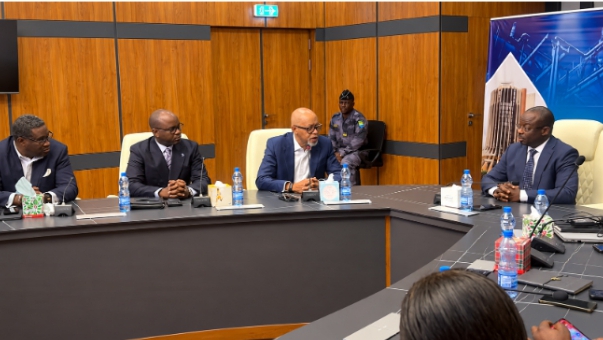
State finance commissioners made the demand for an audit in a communiqué issued at the end of the 2026 retreat of the Federation Account Allocation Committee Post-Mortem Sub-Committee.

The three-day retreat, held in Enugu from February 9 to 11, brought together fiscal authorities, representatives of federal and state governments, revenue agencies and policy experts to examine persistent revenue leakages affecting the Federation Account.
Participants at the retreat stressed the importance of transparency in managing public finances and insisted that all crude-backed borrowing arrangements must receive legislative approval, full disclosure and independent audit.
They also recommended that existing deals should be reviewed through forensic audits to restore confidence in the management of oil revenues and safeguard future inflows into the Federation Account.
The meeting reaffirmed the constitutional importance of the Federation Account, established under Section 162 of the 1999 Constitution, as the central pool through which revenues are shared among the three tiers of government.
However, participants warned that distributable revenues are being eroded by several structural challenges, including opaque deductions, institutional inefficiencies and weak oversight.
The retreat also raised concerns over increasing quasi-fiscal deductions such as power sector subsidy obligations, debt write-offs and operational expenses taken from revenues before they reach the Federation Account.
Participants further examined the implications of the Petroleum Industry Act, noting that certain operational practices within the petroleum sector may be reducing inflows into the Federation Account and weakening oversight.
They emphasised that stronger transparency, improved audit capacity and unrestricted access to Federation Account data for oversight institutions are critical to detecting leakages and recovering government revenues.
The retreat concluded that strengthening accountability in oil revenue management, particularly around crude-backed borrowing and swap arrangements, is essential to protecting Nigeria’s fiscal stability and ensuring fair revenue distribution to all levels of government.
Source: The Punch