By Kelechi Onwujuba
The All Progressives Congress (APC) Presidential Campaign Council has defended President Bola Ahmed Tinubu’s electricity campaign pledge, urging Nigerians to consider the full context of his 2023 statement and assess his administration’s performance against measurable developments in the power sector.
The council said the President’s commitment to addressing Nigeria’s longstanding electricity challenges remained unchanged, although efforts to fix the sector were still ongoing.
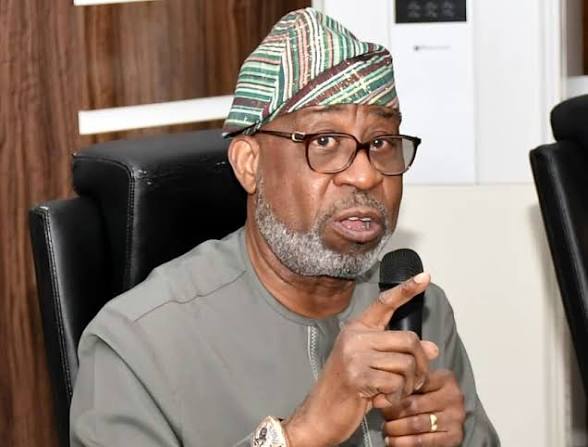
The council’s spokesperson, Dele Alake, stated this in a press statement dated November 1, 2026, in response to recent public commentary surrounding Tinubu’s campaign promise to end estimated billing and ensure reliable electricity supply.
At a meeting with members of the Organised Private Sector (OPS) in Lagos ahead of the 2023 general elections, Tinubu had promised to tackle the systemic and institutional challenges affecting the power sector.
He had specifically identified estimated billing as a major burden on households and businesses, promising to ensure that Nigerians enjoyed stable electricity without paying for estimated bills.
"Whichever way, by all means necessary, you will have electricity, and you will not pay for estimated bills anymore. A promise made will be a promise kept," Tinubu had declared.

•Dele Alake
He also challenged Nigerians not to support his second-term ambition if he failed to fulfil the promise without providing adequate reasons for his inability to deliver.
However, Alake argued that some recent commentaries had reproduced the President’s pledge without including his concluding qualification that he would provide Nigerians with an adequate explanation should he fall short of his commitment.
According to him, the administration's record should be assessed based on improvements in electricity supply, metering, infrastructure development and market stability.
Highlighting the administration's interventions, Alake said Tinubu signed the Electricity Act 2023 on June 9, barely two weeks after assuming office, opening up the power sector to greater participation by state governments and private investors.
He said the legislation removed electricity generation, transmission and distribution from the Exclusive Legislative List, enabling states to establish their own electricity regulatory agencies and develop independent electricity markets.
Alake identified Lagos, Enugu, Abia, Ekiti, Oyo, Kaduna and Niger as states that had begun taking advantage of the legislation to attract private investment and expand electricity access.
He further disclosed that the administration had taken steps to address more than N6 trillion in legacy debts accumulated in the power sector between 2015 and 2025.
On metering, the APC spokesperson said the government introduced the Presidential Metering Initiative to address an estimated shortfall of more than seven million meters.
He disclosed that over 1.5 million electricity customers had been metered under the initiative in the last three years.
Alake also said the administration had introduced tariff adjustments to improve the financial viability of the electricity market while establishing measures to protect low-income households.
He added that the Rural Electrification Agency had connected universities, hospitals and rural communities to solar power, while the government had unveiled plans to modernise the Osogbo Grid Control Centre, which was built more than 60 years ago, and develop an East-West super grid.
On efforts to address outstanding obligations to power generation and gas companies, Alake said the Federal Government established a N4 trillion bond programme to settle verified legacy debts owed to 21 generation companies (GenCos) and gas companies (GasCos).
He said the first and second tranches of the programme had raised more than N1.2 trillion to settle part of the verified debts.
According to him, the intervention is beginning to reflect in the investment decisions of power generation companies, citing Geregu Power Plc's recent announcement of investments in new power transformers to improve operations at its Geregu 1 Power Plant.
On transmission infrastructure, Alake said Tinubu had reviewed the existing Presidential Power Initiative (PPI), inherited from the administration of late President Muhammadu Buhari, and signed an Acceleration Agreement with German partners in December 2023 to fast-track projects across the national transmission grid.
He disclosed that the Federal Executive Council approved contracts in December 2024 for the first batch of five Transmission Company of Nigeria (TCN) substations located in key electricity load centres.

The projects, he said, were aimed at improving electricity supply to industrial and residential consumers and were expected to be completed and commissioned before the end of the administration's first term.
He further stated that the Federal Executive Council, in June 2026, approved another set of projects involving the construction of eight new substations and the upgrade of four existing ones in targeted load centres.
Alake explained that the implementation of major power infrastructure projects required long-lead equipment, making it impossible to deliver results overnight.
Addressing the commercial challenges confronting the electricity market, he said the administration introduced service-based tariff bands to improve the financial viability of electricity distribution companies and strengthen cash flow across the sector.
He noted that the policy was also designed to reduce the government's financial burden arising from electricity tariff subsidies.
According to him, the administration would continue to explore measures to improve the commercial sustainability of the electricity market while protecting vulnerable Nigerians from the impact of higher electricity costs.
"Fixing the electricity market and power sector is ongoing work," Alake stated.
He maintained that Tinubu remained committed to addressing the country's electricity challenges, adding that the President would present his administration's scorecard in the power sector and explain outstanding issues to Nigerians as he seeks a second term in office.