By Oke Peter
Nigeria’s ambitious electricity transmission expansion plans, fresh oil and gas partnerships, renewed industry engagements and growing renewable energy investments across Africa shaped developments in the energy sector during the week. Across the global industry, critical minerals security, power infrastructure investment and energy market restructuring remained prominent.

Nigeria: FG pushes transmission expansion as oil and gas partnerships deepen
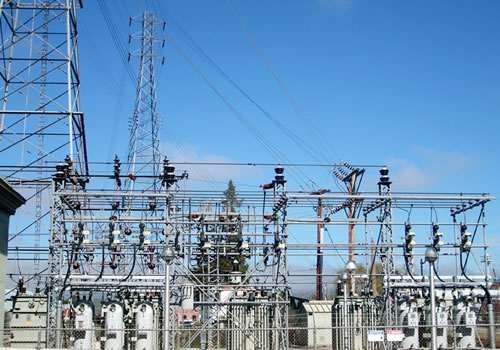
Nigeria’s power sector recorded a major policy development following the Federal Government’s approval of procurement for the proposed East and West Super Grids, designed to increase electricity transmission capacity from approximately 5,000 megawatts (MW) to 19,000MW within two years.
Minister of Power, Joseph Tegbe, announced the development after the Federal Executive Council meeting on October 28. The government also approved three transmission interventions, including three 300MVA transformers for Ikeja West Transmission Substation, a 33kV double-circuit line linked to Katampe Substation and the upgrade of the 35.6-kilometre Itumola–Mapasin–Sagamu transmission line.
Tegbe further disclosed that the government had paid ₦1.23 trillion out of the ₦3.3 trillion owed to gas suppliers and other power sector stakeholders. It also directed the clearance of more than 300 containers of stranded electricity equipment at Nigerian ports. The proposed investments reflect the administration’s attempt to address transmission bottlenecks, although implementation and improved electricity delivery remain the critical tests.
In another development, the Federal Government has stepped up efforts to strengthen Nigeria's electricity transmission infrastructure, with the Minister of Power, Engr. Joseph Olasunkanmi Tegbe, commissioning transmission projects in Kano and Katsina states to improve bulk electricity supply and ease network constraints.
The projects, commissioned on October 22 and 23, include four transmission substations in Kano and transformer installations at the Kankia Transmission Substation in Katsina. According to the Transmission Company of Nigeria (TCN), the interventions added 616MW of transmission capacity to the national grid, comprising 544MW in Kano and 120MW of additional transformation capacity at Kankia, based on the reported project figures.

In Kano, the projects covered Walalambe, Kumbotso, Dakata and Dan-Agundi substations, while in Katsina, two 60MVA transformers were commissioned at Kankia, increasing its installed transformation capacity from 60MVA to 150MVA. The minister also performed the groundbreaking ceremony for a new 120MVA substation at Mashi and inspected the ongoing 200MVA gas-insulated substation project in Katsina.
The infrastructure expansion came against the backdrop of broader discussions on how to translate Nigeria's installed generation capacity into reliable electricity for consumers.
Speaking at the 2026 Energy Conference and Exhibition in Lagos, TCN Managing Director, Engr. Sule Ahmed Abdulaziz, identified three critical interventions needed to unlock the country's electricity potential: restoring more generation through dependable gas supply and improved plant maintenance; strengthening transmission infrastructure to remove evacuation constraints; and addressing liquidity challenges across the electricity market through credible metering, energy accounting, improved revenue collection and predictable commercial settlements.
He noted that although Nigeria has over 13,000MW of installed generation capacity, actual electricity available to consumers remains significantly lower. He also disclosed that TCN has a simulated wheeling capacity of approximately 8,700MW, but its ability to transmit electricity depends on network availability, system stability and distribution companies' capacity to take up power.
Abdulaziz called for a 100-day implementation scorecard to track additional generation made available, network constraints and commercial actions required to sustain electricity supply.

The petroleum industry also recorded fresh developments. French energy major TotalEnergies signed an agreement to divest a 40 per cent participating interest in offshore block OPL257 to South Atlantic Petroleum (SAPETRO). Upon completion, TotalEnergies will retain a 50 per cent operated interest, SAPETRO will hold 40 per cent and Conoil will retain 10 per cent. The block, located approximately 150 kilometres offshore Nigeria, is being appraised for the potential development of the Egina South discovery.
In another cross-border development, Cameroon’s state-owned refinery, Sonara, signed a petroleum products supply agreement with Nigeria’s Dangote Group and MRS Oil & Gas. The arrangement is expected to strengthen Cameroon’s fuel supply following the shutdown of its refinery after a 2019 explosion. The deal also highlights the growing importance of Nigerian refining capacity to regional petroleum trade.
On electricity infrastructure, the House of Representatives warned against illegal structures and encroachment on federal transmission rights-of-way, threatening demolition of offending structures. The warning followed an inspection of the 132kV New Haven–Ninth Mile–Nsukka transmission line in Enugu State, underscoring concerns about infrastructure protection and project delivery.
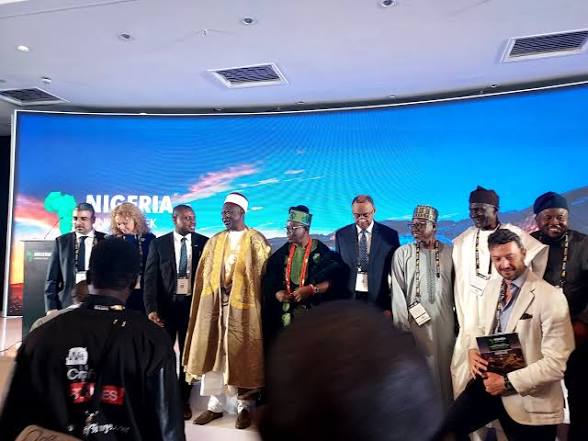
Industry engagement remained strong as Nigeria Energy 2026 held at the Landmark Centre, Lagos, from October 27 to 29. The 13th edition brought together policymakers, regulators, investors and technology providers to discuss grid reliability, gas-to-power, electricity market reforms, energy efficiency and electric mobility. Organisers projected more than 1,500 delegates, 120 speakers and over 40 sessions.
The OTL Africa Downstream Energy Week also took place in Lagos from October 26 to 29, bringing refiners, marketers and regulators together to examine competition, petroleum supply chains, refinery operations, financing and downstream market developments.

Africa: Renewable energy and power infrastructure attract investment
Across Africa, investment in electricity infrastructure and renewable energy continued to gain momentum.
In Zambia, Solarcentury Africa advanced plans for a major solar power project intended to supply First Quantum Minerals, reinforcing the role of private-sector renewable generation in meeting industrial electricity demand.
Africa50 also signed a power-sector partnership with India’s NTPC, opening another channel for cooperation on electricity infrastructure development across the continent.
South Africa’s renewable energy market recorded progress as Eskom Green prepared to commence battery storage procurement. However, the country’s gas-to-power ambitions encountered another setback after the first four bids under its Gas Independent Power Producer Procurement Programme failed to meet the required supply conditions.
Also, Tunisia moved towards procuring a renewable energy and battery storage project, while Egypt attracted attention over potential international financing for a wind energy development. Morocco also advanced procurement preparations for solar photovoltaic projects.
These developments reflect Africa’s continuing efforts to diversify electricity sources, strengthen grid reliability and attract private capital, although financing, regulatory certainty and infrastructure constraints remain significant challenges.
World: Critical minerals and energy investment remain in focus
Globally, energy security and supply-chain resilience continued to influence industry priorities.
The International Energy Agency (IEA) reported on October 28 that its member countries were strengthening critical minerals security through an emergency response exercise and diversification workshop. The initiative reflects growing concerns about the availability of minerals essential to batteries, electric vehicles, electricity networks and other clean energy technologies.
Meanwhile, China’s Huaneng Hydropower announced an agreement to acquire the remaining stake in HNYL Company for approximately 8.7 billion yuan, equivalent to about $1.3 billion, highlighting continued consolidation and investment in the global hydropower industry.

In Europe, Abu Dhabi-based Masdar also agreed to acquire a solar photovoltaic project in Greece with capacity exceeding 550MW from Lightsource bp, reinforcing investor interest in large-scale renewable energy assets.
Outlook
The week’s developments underline a changing energy landscape in which infrastructure investment, regional petroleum trade, renewable energy expansion and supply-chain security are increasingly interconnected.
For Nigeria, the proposed 19,000MW transmission target represents a significant ambition, but its success will depend on timely project execution, adequate gas supply, financial discipline and improvements across generation, transmission and distribution.
Across Africa, the challenge remains converting investment announcements and partnerships into operational capacity. Globally, the balance between energy security, affordability and the transition to cleaner energy will continue to shape investment decisions and policy priorities.