By Bolarinwa Adeleke
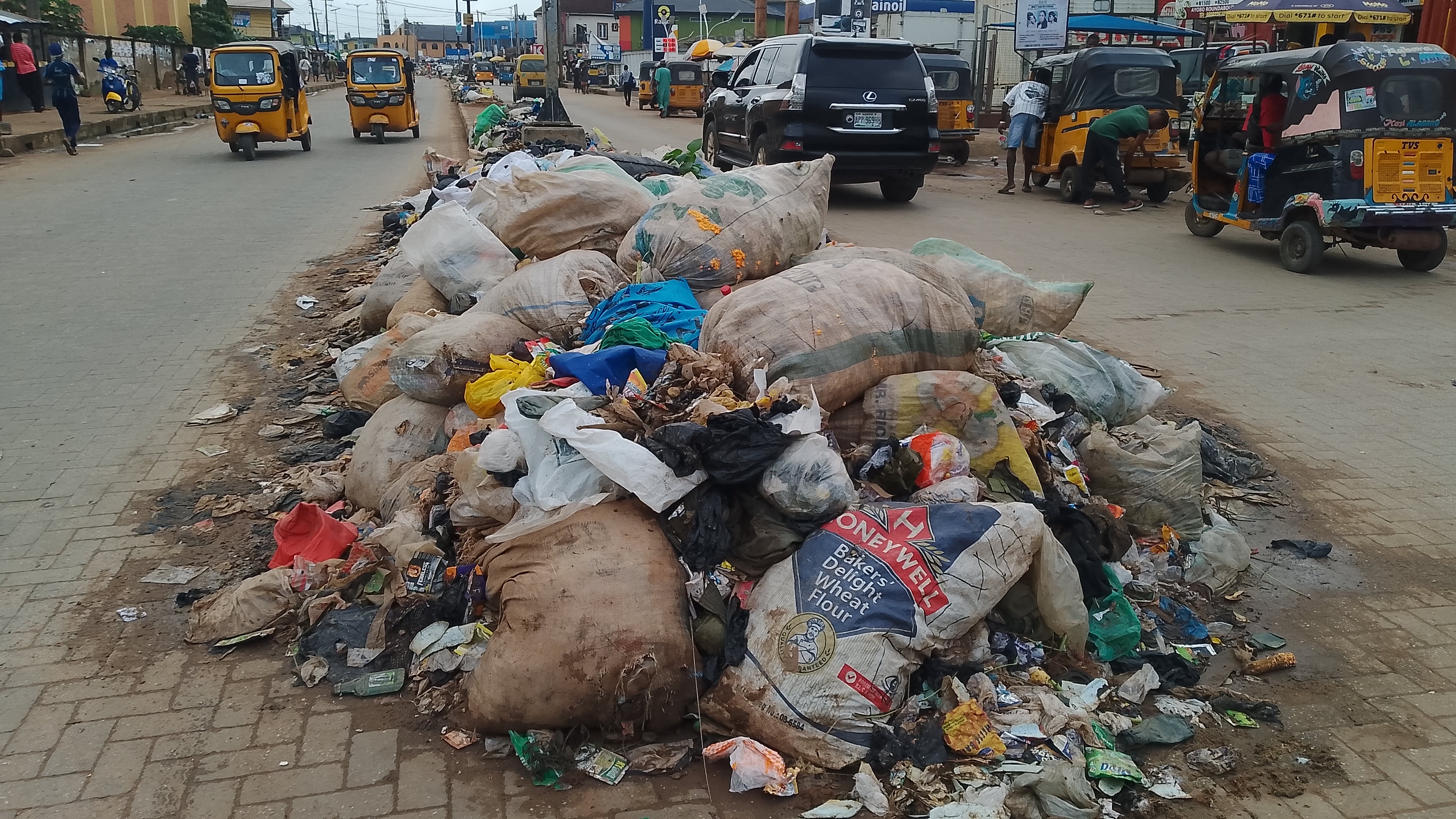
Lagos is Nigeria's commercial heartbeat, a city admired for its resilience, enterprise and endless energy. Yet, beneath its reputation as a megacity lies a growing crisis that can no longer be ignored. Across several parts of the state, heaps of refuse have become an all-too-common sight. From Ketu to Ayobo, Oshodi, Idumota and many other communities, piles of waste now line major roads, road medians and street corners, turning what should be gateways to economic activity into potential breeding grounds for disease.
This is no longer merely an environmental concern, but a public health emergency waiting to happen.

•A heap of refuse dumped on the road median at Ayobo Roundabout, Lagos.
The sight of overflowing waste bins and indiscriminate dumping has become disturbingly familiar. During rainfall, plastic waste blocks drainage channels, worsening flooding that disrupts businesses, damages property and leaves stagnant water where mosquitoes thrive. The foul odour from decomposing refuse pollutes the air, while rodents, flies and other disease-carrying pests flourish around these dumpsites.
History has repeatedly shown that poor sanitation creates the perfect conditions for outbreaks of cholera, typhoid, diarrhoea and other communicable diseases. Lagos, with its dense population and constant human movement, cannot afford to allow such risks to grow unchecked. Waiting until hospitals begin reporting rising infection rates would amount to reacting too late.
The Lagos State Government has demonstrated commitment over the years to improving waste management, while the Lagos Waste Management Authority (LAWMA) has introduced several initiatives aimed at keeping the city clean. However, the reality visible on many roads today suggests that the current system is struggling under the weight of the city's rapidly growing population and rising volume of waste.
Arresting residents caught dumping refuse on road medians may serve as a deterrent, but it addresses only one aspect of a much larger problem. People should certainly be held accountable for violating environmental laws, but government agencies must also ensure that residents have practical, reliable and affordable waste disposal options.

Questions need honest answers – are waste collection services reaching every community as scheduled? Are there enough trucks to evacuate refuse before bins overflow? Are transfer loading stations operating efficiently? Are licensed operators adequately supervised? Where these systems fail, illegal dumping inevitably fills the gap.
LAWMA must urgently review its operations across the metropolis. Waste evacuation should become more frequent in identified flashpoints, while emergency response teams should be deployed to communities where refuse has accumulated dangerously. Modern technology can also support cleaner streets through improved route planning, digital monitoring of collection schedules and better communication with residents.
Clean cities are not built by government alone; residents, market associations, transport unions, religious institutions and businesses all have responsibilities to protect the environment. Throwing refuse from moving vehicles, dumping waste into drainage channels or abandoning garbage on road medians should never become socially acceptable behaviour. Environmental education must therefore receive renewed attention through sustained public awareness campaigns rather than occasional enforcement exercises.
The private sector also has a role to play, as manufacturers, supermarkets and other businesses that generate significant waste should embrace stronger recycling programmes and support initiatives that reduce plastic pollution. Waste should increasingly be viewed as an economic resource capable of creating jobs through recycling, composting and energy recovery instead of simply ending up on the streets.
For a city aspiring to compete with the world's leading commercial centres, cleanliness cannot be treated as an afterthought. Investors, tourists and residents judge cities not only by their skyscrapers and highways but also by the condition of their streets and public spaces. A city overwhelmed by refuse sends the wrong message about governance, planning and quality of life.
Consequently, if immediate action is not taken, today's refuse heaps could become tomorrow's public health disaster. Lagos has overcome enormous challenges in the past because it acted with urgency. This situation demands the same resolve.

LAWMA must intensify waste evacuation, strengthen its operational capacity and restore public confidence in the state's waste management system. At the same time, every resident must recognise that environmental sanitation is a shared responsibility.
A cleaner Lagos is still within reach, but only if decisive action begins now. The refuse on our roads should not become the legacy we leave behind. It should become the problem we confronted before it grew into a crisis.
•Adelele is a public affairs analyst.