By Oke Peter
When Nigerians talk about high electricity consumption at home, the first suspects are usually air conditioners, refrigerators and electric cookers. But some less obvious appliances can also put significant pressure on household electricity bills—especially when they are used frequently or left running for long periods.
The amount of electricity an appliance consumes depends on its power rating, how long it operates, its efficiency and, in some cases, whether it cycles on and off. Here are five household appliances worth paying closer attention to.
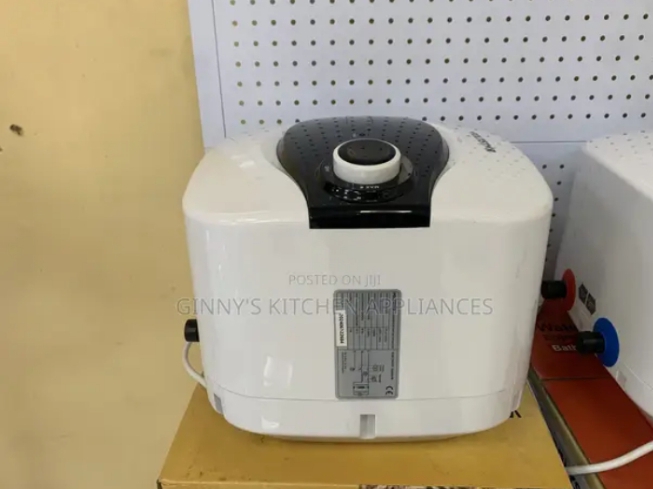
1. Electric Water Heater
An electric water heater can be one of the biggest electricity users in a home, yet it is often overlooked because it may only be used for relatively short periods.
Nigeria's National Bureau of Statistics (NBS) 2024 Residential Energy Demand-Side Survey puts the average rated power of water heaters in its survey at 1,916 watts, with reported ratings ranging from 1,500W to 5,000W.

At 2,000W, running a heater for just 30 minutes daily would consume about 30 kWh in a month. That is why reducing unnecessary heating time and switching off storage heaters when hot water is not required can make a noticeable difference.
2. Electric Kettle
The humble electric kettle looks harmless because it usually runs for only a few minutes. The problem is its high power rating.

NBS recorded an average rating of 829W for kettles in its 2024 survey, while an earlier Nigerian residential energy study found kettle ratings ranging from 800W to 3,000W, with a typical rating around 2,000W.
A 2,000W kettle operated for 30 minutes in total each day would use approximately 30 kWh per month. Boiling only the quantity of water needed, rather than repeatedly filling the kettle, can therefore save electricity.
3. Iron
Electric irons are another appliance that people rarely associate with high energy consumption. Yet their heating elements demand considerable power.
A Nigerian study compiled iron ratings ranging from 800W to 2,400W, with a typical rating of about 1,200W.

At 1,200W, using an iron for one hour every day would theoretically consume about 36 kWh per month. In practice, the actual figure may be lower because thermostats switch the heating element on and off during use.
The lesson is simple: ironing everything in one session can be more efficient than repeatedly heating the appliance for small loads.
4. Water Dispenser
Water dispensers are particularly easy to overlook because they are designed to remain plugged in. However, models with hot and cold functions use electricity not only when water is being dispensed but also to maintain temperature.
NBS recorded an average power rating of 829W for electric kettles, but its 2024 survey did not separately provide a national consumption estimate for hot-and-cold dispensers. An earlier Nigerian residential study identified water dispensers at about 607W on average.

The actual consumption of a dispenser depends heavily on its heating and cooling cycles. Switching off the heating function when hot water is not needed can reduce unnecessary consumption.
5. Freezer
A freezer may not have the spectacular wattage of a kettle or water heater, but its long operating time makes it important.
NBS reported an average freezer rating of 219W in its 2024 survey and estimated that about 256,841 Nigerian households in the survey's population estimate used freezers. Refrigerators were estimated at about 222,000 households.

Freezers cycle rather than operate continuously at full power. Their actual consumption depends on temperature settings, insulation, door openings, ambient temperature and condition of the appliance. A recent Nigerian study of 50 households in Maiduguri found refrigeration to be the largest contributor to household electricity demand in that sample, accounting for 14.74% of estimated consumption.
The bigger lesson
There is no single appliance that automatically determines a household's electricity bill. Power rating multiplied by operating time is the basic principle, but real consumption can be affected by cycling, efficiency and appliance condition.
Nigeria's 2024 Residential Energy Demand-Side Survey provides an important reminder: household electricity use is shaped by both the appliances people own and how often they use them.
So, the next time an electricity bill arrives, don't only look at the air conditioner. The kettle, iron, water heater, dispenser and freezer may also be quietly adding to the total.
Did you know? Sometimes the appliance you use for only 30 minutes can consume more electricity than one that stays on for several hours—because its power rating is much higher.