By Oke Peter
Did you know that producing crude oil does not automatically mean a country can meet all its domestic demand for petrol, diesel and other refined petroleum products?
Nigeria is one of the most prominent examples, but it is not alone in petroleum importation. Several major oil-producing countries, including the United States and Canada, produce substantial quantities of crude oil while also importing petroleum products.
The reason is that crude oil is not the same thing as petrol or diesel, crude must be processed in refineries before it becomes fuels such as petrol, diesel, aviation fuel and kerosene. A country can therefore be rich in crude oil but still lack sufficient refining capacity, have refineries configured for different crude grades, or face regional supply constraints.

According to the U.S. Energy Information Administration (EIA), Nigeria exported an average of about 1.7 million barrels per day (b/d) of crude oil and condensate between 2015 and 2024. In 2024 alone, crude oil and condensate exports averaged about 1.3 million b/d.
At the same time, Nigeria imported an average of about 376,000 b/d of petroleum products between 2020 and 2024. Almost 87% of those imports consisted of gasoline and its blending components or diesel/gasoil.
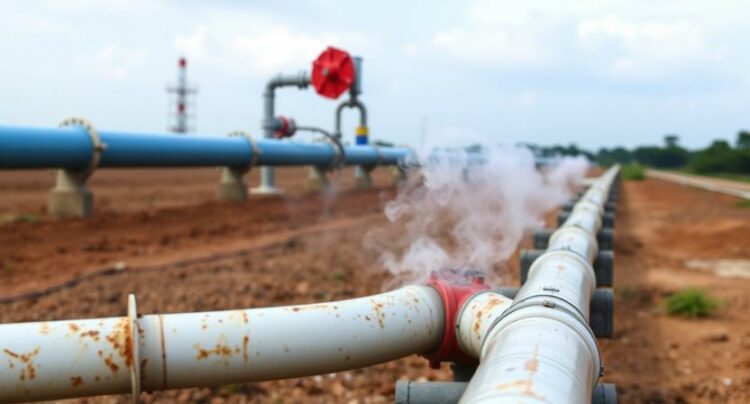
For years, Nigeria's state-owned refineries spent extended periods undergoing rehabilitation or remaining out of operation, leaving the country dependent on imported fuels despite being one of Africa's largest crude-oil producers.
However, the commencement of operations at the Dangote Refinery has increased Nigeria's domestic refining capacity and changed the country's petroleum trade. EIA data show that Nigeria's petroleum-product exports rose from about 46,000 b/d in 2023 to 146,000 b/d in 2024, with exports expanding beyond the traditionally limited volumes of products such as LPG and diesel to include naphtha, jet fuel, kerosene and fuel oil.
Also, EIA reported that Nigeria imported about 43,000 b/d of crude oil and condensate in 2024, despite normally producing enough crude for its domestic refining needs. In February and March 2025, U.S. crude exports to Nigeria reached 111,000 b/d and 169,000 b/d respectively, partly reflecting crude requirements at the Dangote refinery.
But Nigeria is not an isolated case because the United States, the world's largest oil producer, also demonstrates why oil trade is more complicated than simply asking whether a country produces enough crude. U.S. crude production reached a record 13.6 million b/d in 2025, while the country continued importing petroleum products. EIA data show that U.S. petroleum-product imports averaged about 1.8 million b/d in 2024. At the same time, the United States exported about 6.6 million b/d of petroleum products that year.
This seemingly contradictory trade occurs partly because different regions have different refinery configurations, transportation infrastructure and fuel requirements. For example, EIA says some U.S. regions rely on imported petroleum products even though the Gulf Coast produces more refined fuel than its local market requires.
Canada provides another example, the country produced an average of 4.6 million b/d of crude oil in 2023, compared with about 1.7 million b/d of refinery capacity. Canada also imported refined petroleum products; in 2025, such imports averaged 485,000 b/d, with the United States supplying nearly 80% of the total.

Therefore, being an oil producer does not necessarily make a country self-sufficient in petroleum products. What matters is the entire petroleum value chain: crude production, refinery capacity, refinery configuration, transportation infrastructure, domestic consumption and the economics of importing or exporting particular products.
For Nigeria, the growth of domestic refining could gradually reduce the country's historic dependence on imported petrol and other fuels. But crude production alone was never enough to guarantee fuel self-sufficiency.
A country can export millions of barrels of crude oil and still import petrol. In the global petroleum market, what matters is not simply how much crude a country produces, but how effectively it can transform that crude into the products its economy needs.