By Gold Jeremiah
Most people think of the internet as something that exists in the "cloud" — an invisible digital space where messages, videos and websites magically appear at the tap of a screen.
But there is nothing magical about the internet. Behind every WhatsApp message, Google search, YouTube video and online banking transaction lies a vast network of physical infrastructure that depends heavily on electricity and, in many countries, diesel fuel.
In fact, if power systems failed for an extended period, large parts of the internet would simply go dark.
The internet runs on three critical pieces of infrastructure: data centres, telecommunications towers and submarine cables.

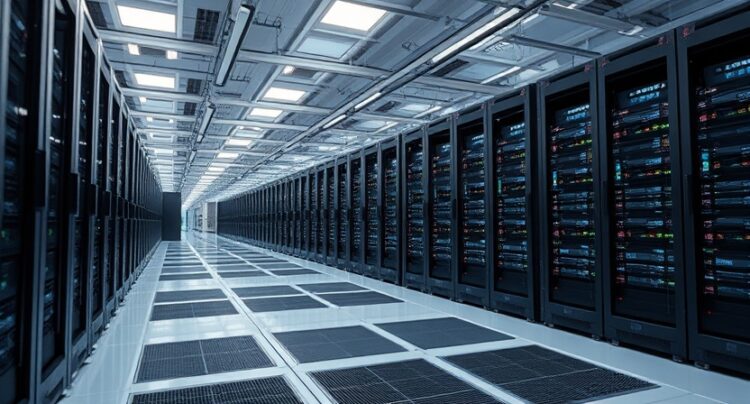
Data centres are giant warehouses filled with servers that store and process information. These facilities operate 24 hours a day, seven days a week. According to the International Energy Agency (IEA), data centres accounted for roughly 1.5 per cent of global electricity consumption in 2024, consuming hundreds of terawatt-hours of electricity annually.
Every email sent, video streamed or website visited requires electricity somewhere in the world.
Then there are telecommunications towers. These structures connect mobile phones to the internet and voice networks. Nigeria alone has more than 40,000 telecom towers spread across the country. While many are connected to the national grid, thousands rely partly or entirely on diesel generators because of unreliable electricity supply.
This means that every time a user sends a message from a remote location, there is a good chance diesel fuel is helping keep that connection alive.

The dependence becomes most visible during power outages. When electricity fails, data centres and telecom facilities do not immediately shut down. Instead, batteries provide short-term backup while diesel generators automatically start up to keep operations running. Without these backup systems, internet services could collapse within minutes.
The role of diesel in keeping digital services online is particularly significant in developing economies where grid reliability remains a challenge. Telecom operators often spend billions of naira annually on fuel, generator maintenance and backup power systems to ensure uninterrupted connectivity.
Even submarine cable landing stations, which connect countries to the global internet, require continuous power to operate critical equipment.
The irony is that many people associate the internet with software, apps and artificial intelligence, while rarely considering the energy infrastructure working behind the scenes.
A simple video call may travel through a mobile tower powered by diesel, pass through fibre-optic networks supported by grid electricity, reach a data centre consuming megawatts of power, and then return to another user through the same energy-intensive chain.

As artificial intelligence, cloud computing and video streaming continue to grow, the energy demands of the digital world are expected to rise further.
The next time a social media post loads instantly or a video streams without interruption, it is worth remembering that the internet is not floating in the sky. It is powered by a complex network of cables, servers, batteries, generators and power stations.
Without electricity—and in many places, without diesel—the internet as we know it would not exist.