By Energy Worth Online
Nigeria’s electricity supply challenges, renewed efforts to increase domestic oil production, major renewable energy financing deals across Africa and rising international crude oil prices shaped the energy industry during the week. Developments across the sector highlighted the need to balance energy security, investment, affordability and environmental sustainability.
Nigeria: Power supply concerns and oil sector reforms
Nigeria’s power sector came under renewed scrutiny on October 19 after electricity generation plunged to 476.70 megawatts (MW) from 3,840MW earlier in the day, according to reported grid-monitoring data.
The Nigerian Independent System Operator (NISO) denied that the incident constituted a national grid collapse, attributing the disruption to system abnormalities and generating plant trips. The episode renewed concerns about generation reliability, grid stability and the need for stronger operational coordination.
Also, the power sector recorded major transmission infrastructure upgrades during the week as the Federal Government commissioned new equipment in Kano and Katsina states, while the upstream petroleum regulator moved to enforce deadlines for inactive oil licences.
In Kano, the Minister of Power, Joseph Tegbe, inaugurated upgraded transmission infrastructure at four substations — Walalambe, Kumbotso, Dakata and Dan-Agundi — on October 22. The projects added a reported 544MW of transmission capacity, strengthening the network serving industrial, commercial and residential areas.

At Kumbotso, the installation of a 300MVA transformer at the 330kV level and a 100MVA transformer at the 132kV level increased upstream transformation capacity from 600MVA to 750MVA, a 25 per cent rise. The intervention is expected to ease transmission constraints and support businesses requiring more dependable electricity. However, additional transmission capacity will translate into improved supply only when sufficient generation and effective distribution are available.
In Katsina, Tegbe commissioned two 60MVA transformers at the Kankia Transmission Substation on October 23. The new equipment raised the substation’s capacity from 60MVA to 150MVA, representing a 150 per cent increase. The minister also performed the groundbreaking ceremony for a new 120MVA transmission substation in Mashi Local Government Area, comprising two 60MVA transformers. Completion is targeted for March 2027. The projects are intended to improve bulk electricity delivery and support agriculture, agro-processing and other economic activities in the state.
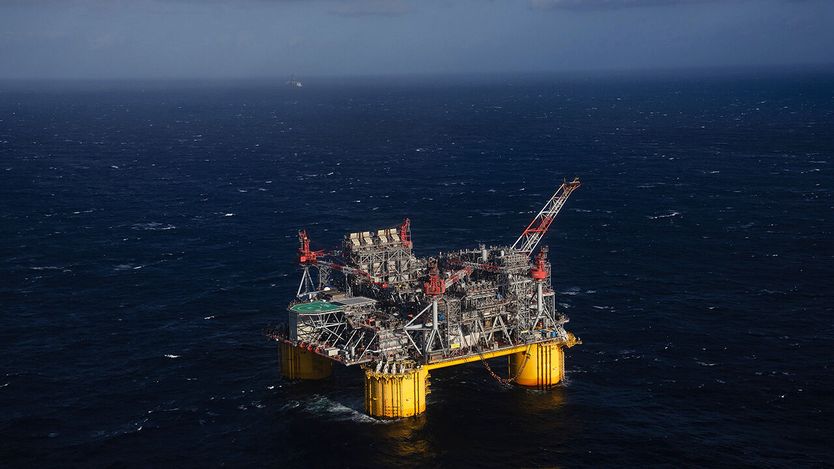
Meanwhile, the Nigerian Upstream Petroleum Regulatory Commission (NUPRC) warned holders of inactive oil and gas licences that they risk losing their assets if they fail to meet stipulated work commitments. Commission Chief Executive Oritsemeyiwa Eyesan said the regulator would begin reclaiming qualifying inactive blocks by October 31, enforcing the “drill-or-drop” provisions of the Petroleum Industry Act 2021.
The directive applies to licence holders who have failed to undertake required activities within the applicable periods, including three years for onshore assets and five years for offshore assets. The commission has also urged new licence holders to move promptly from licence acquisition to exploration and production.
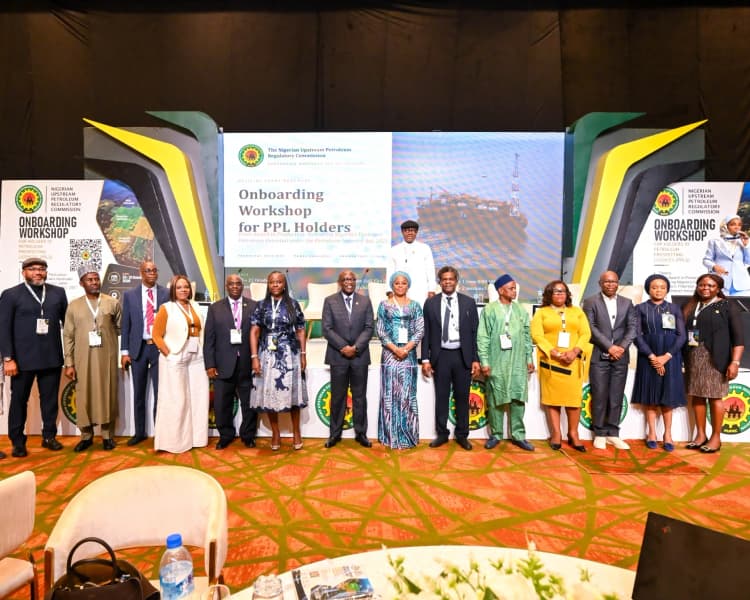
At an onboarding workshop for 22 new licence awardees, the NUPRC projected that the licences could contribute 250,000 barrels of oil per day to national output within five years. The regulator’s position signals a shift towards making licence ownership more directly accountable for investment and operational progress. While enforcement could encourage faster development of petroleum resources, operators will still need access to financing, technical expertise, infrastructure and secure operating conditions to bring discoveries into production.

Attention also turned to Nigeria’s renewable energy pipeline, with reports that the National Board for Technology Incubation had unveiled a proposed $600 million solar investment pipeline targeting campuses and small businesses. If implemented, such projects could expand access to electricity and reduce dependence on diesel generators. However, financing arrangements, project delivery and affordable end-user tariffs will determine their actual impact.
Africa: Solar financing gains momentum
Côte d’Ivoire recorded a significant renewable energy financing milestone as the Kong Solaire project secured up to €55.5 million in long-term financing from Dutch development bank FMO. The 50-megawatt-peak solar plant is expected to generate approximately 96 gigawatt-hours of electricity annually, with construction already underway and commissioning scheduled for 2028.
The project is expected to supply electricity to about 240,000 people and avoid approximately 54,000 tonnes of carbon dioxide emissions annually. Its 25-year power purchase agreement with CI-ENERGIES provides a framework for selling electricity into the national grid. The development demonstrates how long-term financing and contractual certainty can help advance utility-scale renewable projects in emerging markets.
Egypt also advanced plans for large-scale solar generation and storage. The European Bank for Reconstruction and Development arranged financing of up to $265 million as part of a broader $566 million debt package for a proposed 1.2-gigawatt solar plant and 600-megawatt-hour battery storage system in Minya.

The project is expected to supply electricity to more than 1.4 million homes and avoid over 1.5 million tonnes of carbon dioxide emissions annually. Battery storage is particularly important because it can shift daytime solar generation into evening peak-demand periods, although successful implementation will require effective grid integration and reliable project delivery.
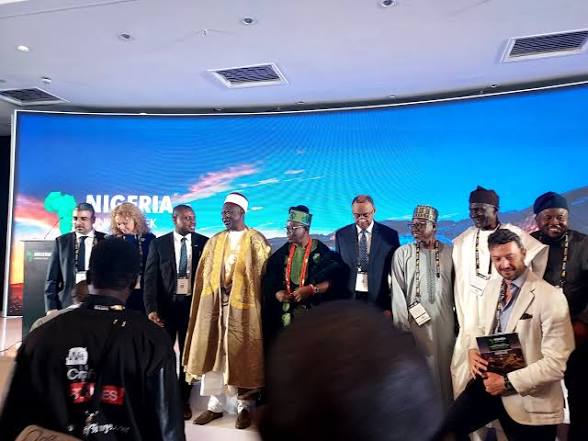
These investments follow the African Energy Week 2026 conference in Cape Town, South Africa, held from October 12 to 16. The event brought together governments, investors and energy companies to discuss oil and gas development, electricity infrastructure, renewable energy and investment opportunities across the continent. Reports following the conference put energy investment commitments at approximately $17 billion, although commitments should not be confused with funds already disbursed or projects completed.
World: Oil prices climb amid supply concerns
International oil markets experienced a sharp rally on October 23 as heightened Middle East tensions and concerns about potential supply disruptions strengthened prices. Brent crude settled at $116.72 per barrel after gaining $3.55, or 3.14 per cent, during the session. US West Texas Intermediate rose $3.80 to $103.27 per barrel.
The increases reflected concerns about attacks affecting regional energy infrastructure and maritime transport, alongside wider supply risks. Higher crude prices could improve export earnings for producing countries such as Nigeria, but they may also increase domestic fuel costs and inflationary pressures in oil-importing economies.

Industry events and outlook
The 16th International Renewable Energy Congress (IREC) is scheduled for October 24–26 in Sousse, Tunisia, bringing renewable energy research and industry discussions to North Africa. Meanwhile, the IEEE International Conference on Intelligent Power and Systems is scheduled for October 24–26 in Dalian, China, reflecting continuing international attention to power system development and technological innovation.
Overall, the week’s developments reinforced a central challenge facing the energy industry: expanding reliable supply while financing infrastructure, managing price volatility and accelerating cleaner energy technologies. For Nigeria and other African economies, the critical test remains converting investment announcements and production gains into dependable electricity, stronger industrial activity and tangible benefits for consumers.