By Oke Peter
The global energy industry recorded significant developments during the week as governments, regulators, investors and operators intensified efforts to address electricity supply challenges, attract investment, strengthen energy security and accelerate the deployment of cleaner technologies. In Nigeria, attention centred on transmission infrastructure expansion, electricity market reforms, oil and gas investment opportunities and renewable energy financing. Across Africa, discussions focused on power financing, gas infrastructure and energy access, while international developments highlighted the growing importance of energy security, climate resilience and the changing global energy outlook.
Nigeria: Transmission expansion, electricity reforms and oil investment gain momentum
Nigeria’s power sector recorded fresh infrastructure developments as the Federal Government intensified efforts to improve electricity transmission capacity and strengthen grid reliability.
On November 19, the Minister of Power, Joseph Tegbe, commissioned a new 2x60MVA transmission substation in Billiri, Gombe State, alongside 300MVA and 100MVA power transformers at the Gombe Transmission Substation. The commissioning represents another effort to strengthen the transmission network and improve electricity delivery within the North-East.

Beyond infrastructure expansion, the Nigerian Independent System Operator (NISO) engaged grid-connected steel and cement manufacturers on maintaining acceptable harmonic levels on the national grid. The November 19 engagement in Abuja examined harmonic assessment, power factor correction, resonance risks, equipment interactions and monitoring requirements.
The engagement is important because industrial facilities with heavy electrical loads can introduce power-quality disturbances capable of affecting grid performance and equipment reliability. Improved compliance and monitoring will therefore be necessary as industrial electricity demand grows.
The Federal Government's efforts to address the financial constraints confronting electricity generation companies also remained significant. At the Power Correspondents Association of Nigeria conference, Tegbe disclosed that an additional ₦3.3 trillion in verified legacy debts owed to GenCos had been identified, while ₦1.23 trillion had been raised under the intervention. The settlement is expected to improve liquidity across the electricity value chain, particularly payments to gas suppliers and the maintenance of generating facilities.

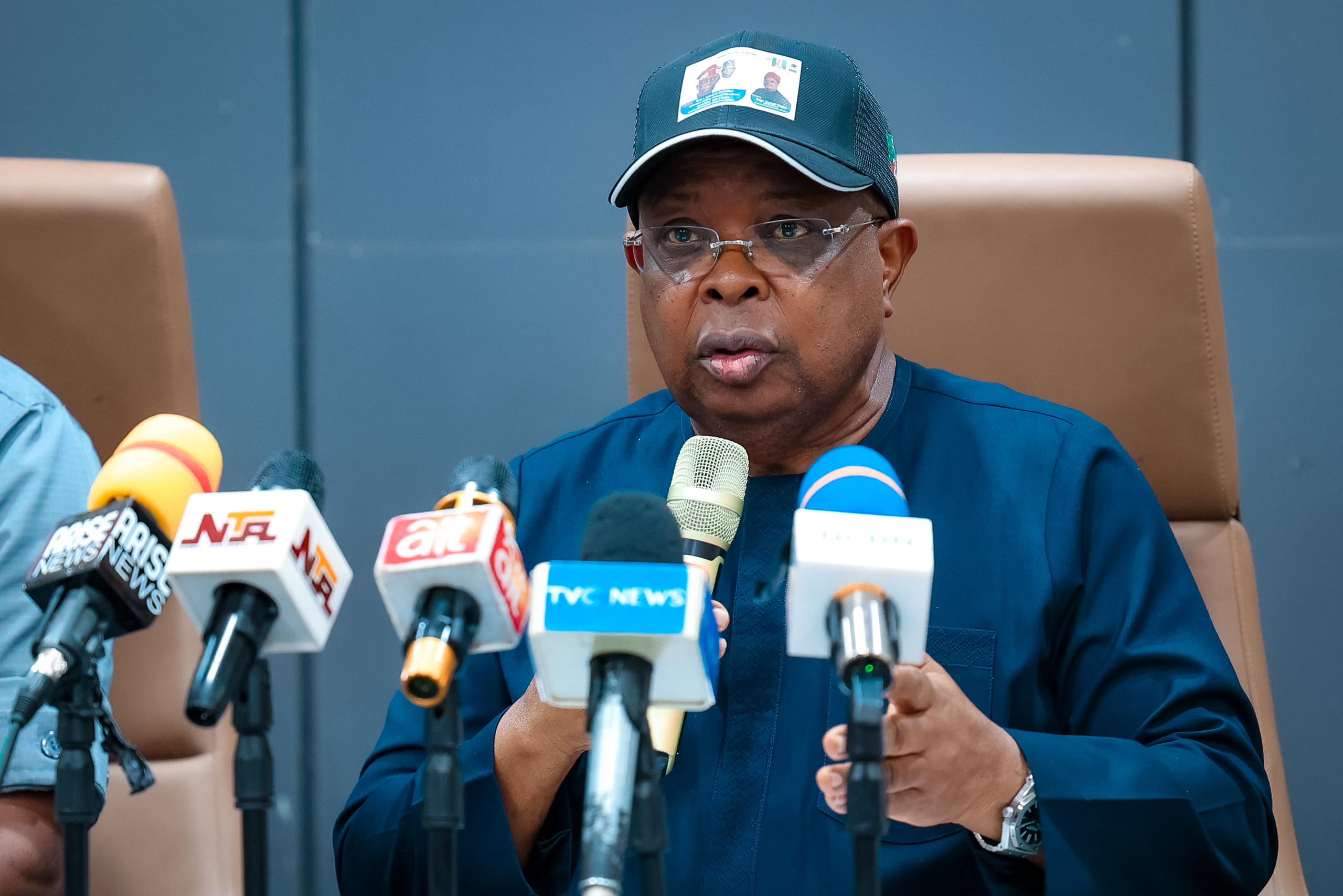
•Minister of Power, Joseph Tegbe
Meanwhile, the Nigeria Electricity Supply Industry Week (NESI Week 2026), holding in Abuja from November 15 to 22, provided a platform for stakeholders to examine electricity market development, technology, financing, innovation and infrastructure investment. Organisers projected more than 5,000 physical delegates, 50,000 virtual participants and over 100 participating organisations.
In the upstream petroleum sector, the Nigerian Upstream Petroleum Regulatory Commission (NUPRC) opened its 2026 oil and gas licensing round portal on November 20, offering 40 blocks to prospective investors. The exercise represents an opportunity to attract fresh capital into exploration and production, expand reserves and strengthen Nigeria's production capacity. However, investor confidence will depend on fiscal certainty, regulatory transparency and the commercial viability of the available assets.

Renewable energy financing also featured prominently. Nigeria was reported to be seeking an additional $500 million from the World Bank for its Distributed Access through Renewable Energy Scale-up (DARES) programme, potentially increasing the bank's support to $1.25 billion. The proposed funding would support the expansion of distributed renewable electricity access, particularly through solar mini-grids.
Africa: Gas development, renewable projects and regional electricity trade
Across Africa, the need to mobilise investment for electricity generation, transmission and natural gas infrastructure remained a major industry concern.
Mozambique recorded an important development in its ambition to become a leading LNG supplier, as the government approved a revised development concept for the Rovuma LNG project, bringing the long-awaited investment decision closer. The wider offshore and onshore gas developments could attract more than $100 billion in aggregate final investment decisions, strengthening Mozambique's position in the international gas market.
The development is strategically important for Africa because new LNG capacity could increase export earnings, attract international capital and create opportunities for domestic gas utilisation and electricity generation. However, infrastructure delivery, financing and market access remain critical challenges.
Renewable energy investment also advanced in different parts of the continent. In Egypt, a major milestone was reported for one of Africa's largest wind power projects, while Benin signed an agreement with a developer for what is expected to become its largest solar photovoltaic plant. These developments demonstrate the growing interest in utility-scale renewable electricity as African countries seek to diversify their energy sources.
In South Africa, financial close was reported for another phase of the Free State solar photovoltaic independent power producer programme, reinforcing the country's efforts to expand private-sector participation in electricity generation.
Meanwhile, African energy stakeholders gathered in London on November 17 and 18 for the Africa Investment Exchange (AIX) Power and Renewables and Gas and Infrastructure meetings. Discussions focused on project development, financing, electricity markets, gas commercialisation and the practical challenges of attracting investment into African energy infrastructure.
The discussions highlighted an important issue: Africa's energy transition requires not only renewable generation capacity but also reliable transmission networks, storage systems, bankable power-purchase agreements and sustainable financing arrangements.
Global energy: IEA outlook, oil security and growing electricity demand
International energy developments during the week were strongly influenced by the publication of the International Energy Agency's (IEA) World Energy Outlook 2026 on November 19.
The report examined how the global energy supply shock and changing geopolitical circumstances could reshape energy policies, investment decisions and the balance of fuels and technologies in the coming years. It reinforced the importance of energy security, affordability and diversification as governments reassess their dependence on international fuel supply chains.
The IEA also released a report on November 18 examining the growing risks extreme weather poses to international oil and natural gas shipping. The findings drew attention to the vulnerability of maritime energy infrastructure and the potential consequences of disruptions to critical shipping routes, particularly for countries heavily dependent on imported fuels.
Another major development was the growing electricity demand associated with artificial intelligence and data centres. According to reporting on the IEA's latest outlook, global electricity consumption by data centres could double to approximately 1,000 terawatt-hours by 2030. Their associated carbon emissions are projected to increase by 70 per cent over the same period.
This trend presents a major challenge for electricity markets. Governments and utilities must expand generation and grid capacity while ensuring that the additional demand does not undermine emissions-reduction commitments.
Renewable energy, nuclear power, battery storage and improved energy efficiency are expected to play increasingly important roles in meeting this demand.
Climate diplomacy: COP31 puts energy transition financing in focus
The 31st United Nations Climate Change Conference (COP31), which concluded its scheduled November 9–20 programme in Antalya, Türkiye, provided another important platform for negotiations on climate finance, emissions reduction, energy security and adaptation.
Nigeria used the summit to advance international cooperation, including a non-binding energy security and transition partnership with the United Kingdom. The cooperation is expected to support methane monitoring, emissions reduction and improved energy security.
Nigeria also presented investment opportunities under its Gas Flare Commercialisation Programme, with potential investments estimated at $2.2 billion and opportunities to commercialise up to 250 million standard cubic feet of gas daily.

The negotiations exposed continuing differences over the pace of the global transition away from fossil fuels. A draft COP31 decision acknowledged progress towards low-emission development but also reflected disagreements over the language and ambition required to accelerate the transition. Consequently, the availability of affordable climate finance and practical implementation remain central concerns for developing economies.
Turning investment commitments into results
Developments during the week reinforced the interconnected nature of the global energy industry. Nigeria is seeking to improve electricity infrastructure, resolve market liquidity constraints, attract upstream petroleum investment and expand renewable energy access. Across Africa, gas projects and renewable electricity investments are competing for capital, while international markets are increasingly influenced by geopolitical risks, climate considerations and rising electricity demand.
For Nigeria and other African countries, the challenge goes beyond announcing projects, signing agreements or securing financing commitments. It requires converting these initiatives into completed infrastructure, dependable electricity supply, commercially viable energy businesses and improved access for households and industries.
Ultimately, the strength of the energy sector will be measured not by the number of investment announcements made, but by the projects delivered, the jobs created, the capacity installed and the improvements recorded in energy access, affordability and reliability.