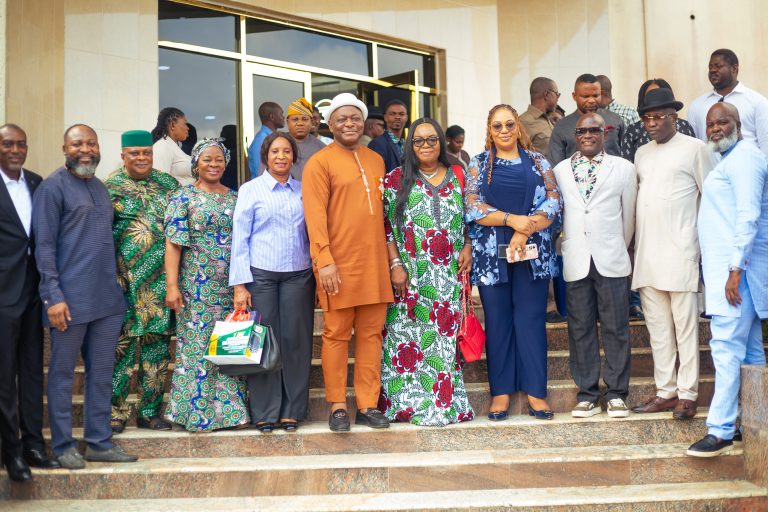
Eket, Akwa Ibom State – The Nigerian Content Development and Monitoring Board (NCDMB), through its Zonal Coordination Division (ZCD), has reiterated the importance of active community participation in Nigeria’s oil and gas industry as a catalyst for sustainable development, economic inclusion, and shared prosperity.
This position was emphasized during a One-Day Sensitization/Enlightenment Workshop on Community Content Guideline organized by the Board on Thursday, June 18, 2026, at Eden Hotel, Eket, Akwa Ibom State.
Delivering the keynote address on behalf of the Honourable Minister of State for Petroleum Resources (Gas) and Co-Chairman of the NCDMB Governing Council, Rt. Hon. Ekperikpe Ekpo, his representative, Lady Esitmbom Ekperikpe Ekpo, a renowned education consultant, commended the NCDMB and its partners for organizing the workshop aimed at deepening stakeholders’ understanding of community participation in petroleum operations.

She acknowledged the presence of representatives of the Akwa Ibom State Government, traditional rulers, community leaders, industry operators, youth and women groups, civil society organizations, and other stakeholders, noting that their participation demonstrated a collective commitment to fostering peace, inclusion, and sustainable development in host communities.
According to the Minister, Nigeria’s oil and gas industry remains a cornerstone of the national economy, but its long-term sustainability depends not only on investment, technology, and policy frameworks, but also on the active involvement and support of host communities.
He explained that the concept of Community Content recognizes host communities as critical stakeholders in the petroleum value chain and seeks to ensure that they derive tangible benefits from industry activities through employment opportunities, enterprise development, capacity building, social investments, and meaningful engagement in project implementation.
The Minister further noted that the enactment of the Petroleum Industry Act (PIA) 2021, alongside the continued implementation of the Nigerian Oil and Gas Industry Content Development (NOGICD) Act 2010, has strengthened the framework for community participation, transparency, and inclusive growth.
He described the Community Content Guideline as a strategic framework designed to promote the participation of qualified community-based businesses and individuals in petroleum operations. The guideline, he stated, is aimed at enhancing economic opportunities for host community members, encouraging the development of local enterprises, building capacity through training and skills acquisition programmes, promoting transparency and accountability, reducing conflicts arising from misinformation and exclusion, and creating sustainable partnerships between industry operators and host communities.
“When properly implemented, these guidelines will transform host communities from passive observers into active participants and beneficiaries of industry activities,” he stated.
The Minister emphasized the need for continuous collaboration among government regulators, operating companies, contractors, traditional institutions, community leaders, youth groups, and civil society organizations to ensure the successful implementation of community content initiatives.
He further urged communities to remain informed about available opportunities and participate responsibly, while encouraging industry operators to maintain transparent engagement processes and fulfill community development commitments.
Earlier in his welcome remarks, the General Manager, Zonal Coordination Division of NCDMB, Mr. Ifeanyi Ukoha, highlighted the significant progress recorded under Nigeria’s local content development drive since the establishment of the NCDMB.
He explained that the Board was established primarily to build indigenous capacity and ensure greater retention of industry expenditure within Nigeria through increased participation of local contractors, businesses, and professionals in oil and gas operations.
Mr. Ukoha disclosed that the Community Content Guideline provides opportunities for community members, especially in the allocation of non-skilled and semi-skilled jobs, while also creating pathways for skills development, scholarships, training programmes, and enterprise support.
He encouraged youths from host communities to register on the Nigerian Oil and Gas Industry Content Joint Qualification System (NOGICJQS) to access various opportunities offered by the Board and industry stakeholders.
The General Manager also highlighted funding opportunities available through the Nigerian Content Intervention Fund and other specialized financing windows designed to support community contractors and small businesses.
According to him, the implementation of local content policies has led to remarkable achievements in human and industrial capacity development, including increased indigenous ownership and management of oil and gas assets, greater participation of Nigerian professionals in executive leadership positions, and the emergence of indigenous companies acquiring major industry assets previously owned by multinational operators.
He cited recent acquisitions by indigenous energy firms as evidence of the success of Nigeria’s local content agenda and the growing capacity of Nigerian companies to compete effectively in the global energy sector.
Mr. Ukoha assured participants that NCDMB would continue to engage stakeholders and create awareness on opportunities available within the industry to ensure that host communities derive maximum benefits from petroleum operations.

The workshop featured presentations from various departments of the Board on capacity-building initiatives, opportunities within the NOGICJQS platform, access to funding programmes, and strategies for effective implementation of the Community Content Guidelines.
Participants included government officials from various local government councils, technocrats, traditional rulers, community leaders, community contractors, youth representatives, women groups, and other stakeholders drawn from oil-producing communities across Akwa Ibom State.
The event forms part of NCDMB’s ongoing commitment to promoting community participation, local capacity development, and sustainable economic growth within Nigeria’s oil and gas sector.